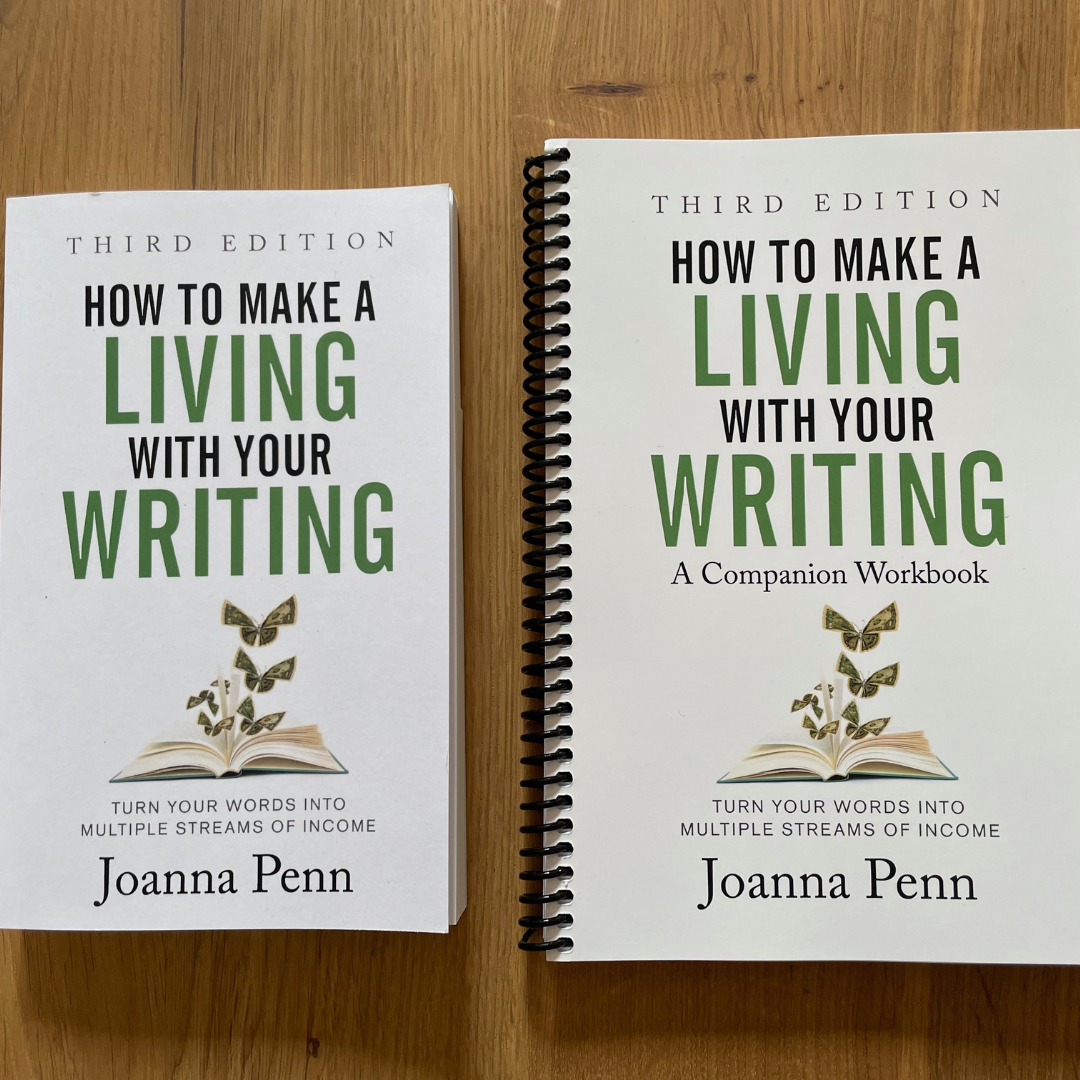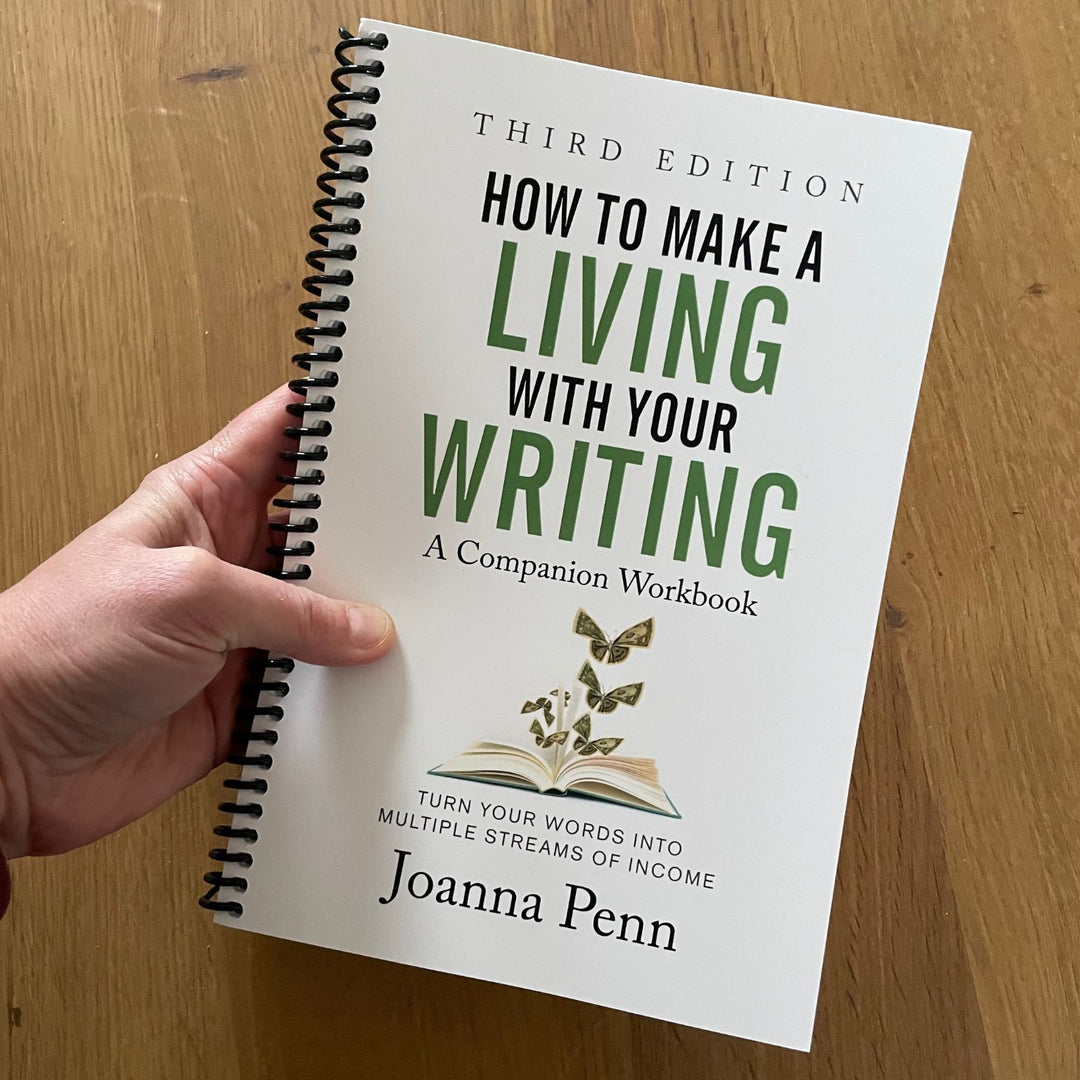

How to Make a Living With Your Writing: Write more books
You cannot make a living for the long term with just one book, however you choose to publish. One book with a great launch might have a spike of sales initially but over time the numbers will shrink, unless another book comes along to boost the signal.
Look at the Forbes Richest Author List and you’ll find that the wealthiest traditionally published authors like James Patterson, Nora Roberts, and Stephen King all have a lot of books.
In the independent author community, the Facebook group 20BooksTo50K is based on the principle that 20 books will make an income of around US$50,000 annually, and that has proven true for many authors. That number may sound daunting to the new writer, but if you love writing, and you assume a hybrid approach to publishing, it’s certainly possible.
The good news is that the more books you have, the less you have to market them because you’ll have an audience ready and waiting, a critical mass of product on the digital shelves, and multiple streams of income.
As you write more books, you will also become a better writer and that means you can write faster and satisfy your audience — which in turn leads to more book sales. It all compounds over time.
Travel writer and podcaster Jeremy Bassetti says, “Writers who want to make a living with their writing must produce a fair amount of high-value intellectual property. The more works you have, the more visible you will be, and the more potential you will have to make a living. The principle is similar to compounding interest.
Producing high-value work is especially important when lower-value opportunities and entire industries disappear in the blink of an eye, as we have experienced with the coronavirus pandemic. Streams of income are like actual streams of water. Some are seasonal, drying up in the summer months, freezing in the winter months, and flooding in the spring.”
Here are some ways you can write more books.
Improve your productivity
Every professional author has some kind of regular process to produce words on the page. Books don’t magically appear. You need to schedule time to create them.
Identify your most creative period in the day and schedule that time to write. You have to find time from somewhere. Go through your schedule, book in your writing time and then turn up for that appointment with yourself.
I use Google Calendar and add writing time slots on weekday mornings for writing and editing. I had a day job for the first five years of my author career and I wrote between 5 am and 6 am before work. While I have more time to create now, I still write in the mornings.
Once I’m at my laptop ready for my writing session, I put on noise-cancelling headphones and play rain and thunderstorms to shut out the world. You will find your own way to get into the flow of writing, but definitely shut off your notifications and stay away from email and social media. You’re here to write, everything else can wait!
For more writing productivity tips, check out Productivity for Authors.
Use tools to help you
There are a few key tools that can help you write more books. I use Scrivener software to keep track of ideas and research, structure and plan the content, write the first draft and edit. I also use ProWritingAid to self-edit and improve the book as much as I can before working with my editor.
I use Google Calendar to organize appointments and schedule my time, and the Things app (Mac only) for my To Do list.
Some authors use dictation to increase their word count per writing session. I have dictated some of my books, and as speech to text tools improve, I expect to do more of this. Most computers and phones now have built-in options, or you can use a specialist app like Dragon Anywhere.
You can find more tips on dictation and interviews with authors who dictate at TheCreativePenn.com/dictation
Write a series
Writing a series is a great way to speed up the writing process, satisfy your readers, and make more money, because customers will often buy more than one book. It’s also easier to promote a series because you can set pricing deals on book one and still make a profit on the sale of multiple books.
For fiction authors, once you determine your series characters and world, you only have to come up with a new plot for each book. My ARKANE series has 11 books at the time of writing, and I have two other trilogies.
For non-fiction, you can create a series around a target audience or a theme, for example, I have Books for Writers.
All the publishing platforms enable you to add a series name which groups books together and aids discoverability. Some stores have a series page so readers can see which ones they’ve bought.
Award-winning author of equestrian fiction Natalie Keller Reinert says, “Writing in series and finding a unique, personal spin on a niche genre is the best way, in my opinion, to create longevity. I have been publishing and selling successfully for ten years by writing for an underserved market with a unique subject matter. It has given me very loyal readers, and also allows me to fine-tune my social media marketing in very precise ways.”
For more on writing a series, check out my interview with prolific fantasy author Lindsay Buroker at TheCreativePenn.com/writeseries
Write non-fiction
There are many benefits to writing non-fiction, even if you’re primarily a fiction author. It’s easier to market as readers are looking for specific keywords which are usually in the title or sub-title. Non-fiction books often sell in multiple formats, for example, I listen to a lot of non-fiction audiobooks and I buy the ones I want to keep in hardback as well.
Non-fiction books can be more profitable as readers are less price-sensitive. They value the information and ideas and don’t care so much about length. You can write a short non-fiction book and still charge premium prices, and full-length non-fiction often sells for more than fiction.
You can also turn non-fiction into other streams of income, for example, workbook editions or online courses, covered in more detail in later chapters.
If you write fiction, consider non-fiction related to your research. Fantasy author Neil Gaiman wrote Norse Mythology, whose myths underpin many of his novels. Scottish crime writer, Val McDermid, wrote Forensics: The Anatomy of Crime, about the science behind her stories. Literary fiction author, Roz Morris, wrote the memoir, Not Quite Lost: Travels Without a Sense of Direction, about the places that spark her novels.
You can also write helpful books for the author niche and many of the top writing books are written by fiction authors. On Writing: A Memoir of the Craft by Stephen King is one of my favorites and I recommend all the non-fiction books written by Dean Wesley Smith and Kristine Kathryn Rusch published under WMG Writer’s Guides.
If you want to keep your author brand and audience separate, then consider using different names for your non-fiction, as I do with Joanna Penn and J.F. Penn.
More information and ideas in How To Write Non-Fiction: Turn Your Knowledge into Words.
Write short stories, novellas and other shorter works
There are genre conventions on the length of a book. 50,000-150,000 is the approximate range, but you can also write shorter works to earn more income and reach more readers.
Short stories can introduce new readers to your work, enable you to play with different creative ideas, and bring in income in multiple ways. You can license them to a primary market and once the rights revert, use them in anthologies and boxsets and as marketing on your website or in your email list. Novellas are slightly longer fiction works which you can use in a similar way.
For ideas around making money with short fiction, check out my interview with award-winning author, Douglas Smith, at TheCreativePenn.com/shortfiction
For non-fiction authors, multiple shorter books can be useful to your audience, easier to write, and more profitable than a longer book on a particular topic.
Co-write with other authors
Co-writing and collaboration have many creative benefits in terms of writing faster, coming up with ideas, and splitting the workload around editing and marketing. When I co-wrote the dark fantasy thriller, Risen Gods, with J. Thorn, we were both thrilled to finish the first draft in 19 days, many times faster than either of us had written a story alone.
It’s also beneficial if both parties bring something different to the collaboration. I co-wrote The Healthy Author with Dr Euan Lawson, whose medical expertise alongside my anecdotal evidence and reach in the author community enabled a successful outcome for us both and a book that could not have existed if either of us had tried it alone.
Some fiction authors write in the same universe, with Michael Anderle and Craig Martelle sharing the success of this model in the 20BooksTo50K Facebook group.
With tools like automatic payment-splitting through Draft2Digital, it’s easier than ever to collaborate with other authors, but be sure to sign an author agreement that makes the relationship clear and defines terms of copyright and payment.
For more detail, check out Co-writing a Book: Collaboration and Co-creation for Writers.
Make more of your backlist
A book is new to the reader who has just found it, so don’t underestimate the power of your backlist. You can add new covers, change up the sales description, relaunch with a new marketing campaign, or even change categories if appropriate to reach a new readership.
Sweet romance and YA author Kat Bellemore says, “Your backlist is your moneymaker, so don’t ignore your older books. Even though new releases can be an important part of your strategy to become a full-time author, if you don’t have the best release, it’s not going to break you. I have my new releases up for pre-order and tell my newsletter. I use paid newsletters for the first book in my series. But that’s it. Focus on your backlist. Get it everywhere you can, in every medium you can.”
Questions:
• How could you write and produce more books?
• What is stopping you from writing more books?
• How can you break through those blocks?
Resources:
• Productivity for Authors: Find Time to Write, Organize Your Author Life, and Decide What Really Matters — Joanna Penn
• How To Write Non-Fiction: Turn Your Knowledge into Words — Joanna Penn
• Playing the Short Game: How to Market and Sell Short Fiction — Douglas Smith
• Taking the Short Tack: Creating Income and Connecting with Readers Using Short Fiction — Matty Dalrymple
• Co-writing a Book: Collaboration and Co-creation for Writers — Joanna Penn and J. Thorn
• WMG Writer’s Guides by Dean Wesley Smith and Kristine Kathryn Rusch — WMGPublishinginc.com/writers
• Scrivener software for writing — www.TheCreativePenn.com/scrivenersoftware
• ProWritingAid for editing — www.TheCreativePenn.com/prowritingaid
• Resources and interviews on dictation — www.TheCreativePenn.com/dictation
• Interview with prolific fantasy author Lindsay Buroker on writing a series — www.TheCreativePenn.com/writeseries
• Interview on making money with short fiction with award-winning author Douglas Smith at TheCreativePenn.com/shortfiction