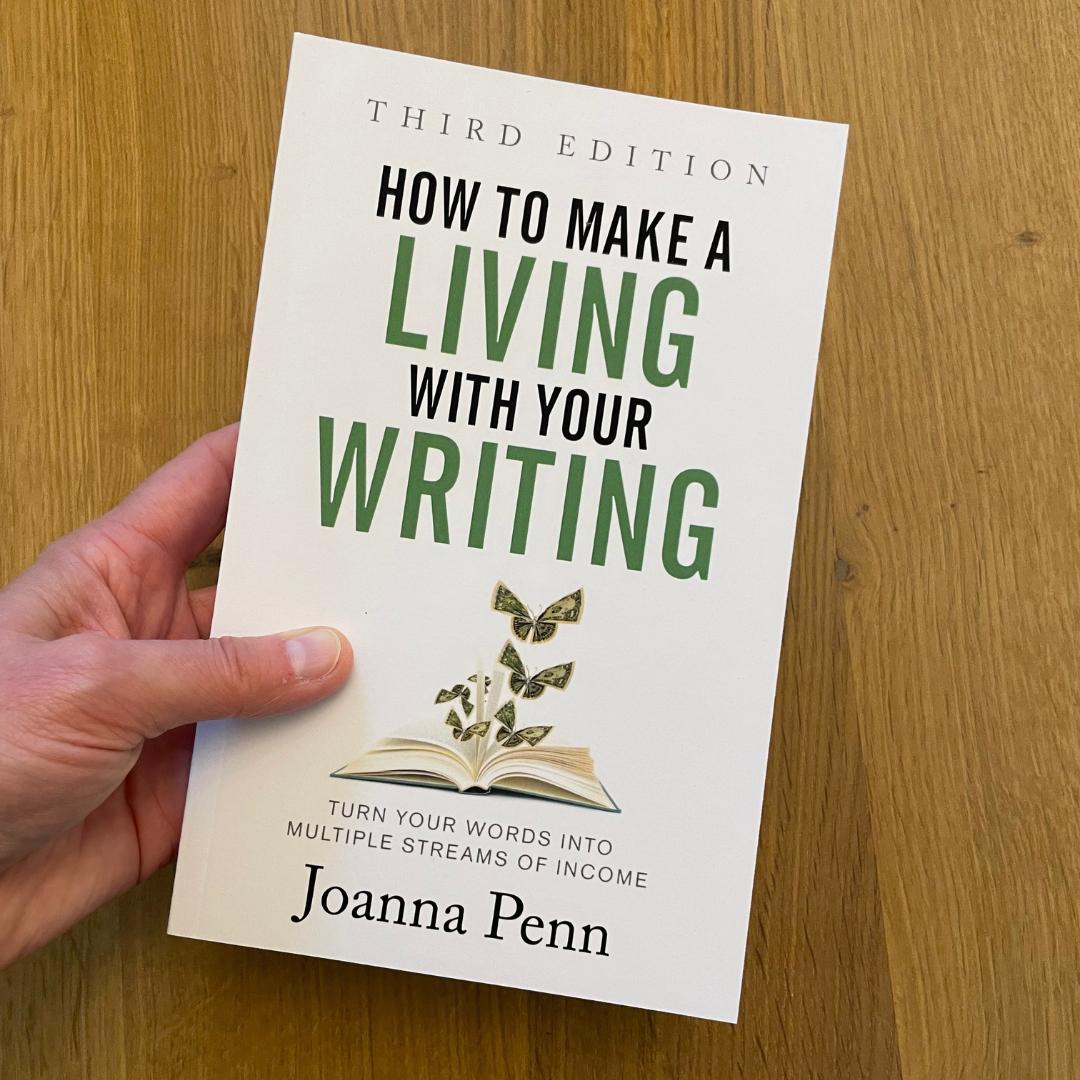
How to Make a Living With Your Writing: Self-publishing or becoming an indie author
“The only obstacle today to becoming an author is yourself. Stop making excuses.”
Alastair Humphreys, Author and Adventurer
It is now possible to reach readers all over the world with your books in multiple formats through online services. In fact, once you get the hang of it, publishing is the easy part. Writing and marketing remain the key challenge for authors, however you choose to publish.
This section provides an overview of options if you choose to manage publishing yourself. For more details, check out Successful Self-Publishing: How to Self-Publish and Market Your Book, available as a free ebook and also in print and audio editions.
Self-publishing is nothing new
Walt Whitman self-published Leaves of Grass, Jane Austen paid Thomas Egerton to publish Sense and Sensibility, Beatrix Potter self-published The Tale of Peter Rabbit, and William Blake wrote the text, drew the illustrations, and self-published Songs of Innocence and of Experience, among many other notable literary examples.
Authors have also started small presses to publish their own work and books by author friends. Virginia Woolf and her husband, Leonard, started Hogarth Press in 1917, “a business that could potentially free the couple from the whims of publishers and even a social outlet through which their diverse literary friendships could be monetised,” according to The Guardian.
What’s the difference between self-publishing and being an indie (or independent) author?
The term self-publishing implies doing everything yourself. There’s certainly nothing wrong with that, and it’s wonderful to create books in the world for the sheer love of creation. I helped my nine-year-old niece to self-publish her first book, and I helped my dad to self-publish Nada, a historical thriller, for his 65th birthday. These were one-off creative projects with no commercial intent.
But this book is about making a living with your writing, so the term independent author, or indie author, is more appropriate and it’s certainly the term I prefer. I work with professional freelance editors and cover designers to create quality products, and invest in marketing to reach readers. As much as writing is my art, it’s also my business, not a hobby.
Of course, many authors start out self-publishing and transition over time as they gain experience and knowledge. We all start at the beginning and learn along the way.
* * *
There are many benefits to being an indie author.
Creative control over content and design
You are free to write and publish what you choose — but of course, that freedom comes with a learning curve! There will always be genres that sell better than others, so the principles of book marketing always apply.
You have creative control over the look and feel of your book. There are free and cheap options for cover design, and easy-to-use formatting software. However, I definitely recommend working with a professional book cover designer to package your book effectively.
You can also change your books over time. You can re-edit, easily create a new edition, change your cover design and even your book titles, all of which I have done over the last decade. Just upload a new set of files.
Speed to market
This is the reason I went indie in the first place. I considered the timeline of traditional publishing for my first book, how it would take months or years to get an agent, and then months or years to get a contract, and then more time before the book hit the shelves. I didn’t want to wait that long.
Of course, you still have to spend the same amount of time writing and editing, but once you’re ready to publish, you can upload your files to the various services and your ebook and print book can be on sale within 24 hours. Audiobooks take longer on the major platforms, but you can sell them immediately from your author website. You can receive income from the book 60 days later, or even the same day with direct sales.
Publish globally in all formats
If you own and control your intellectual property rights, you can publish and sell your books in 190 countries, many of those in print and audio as well as ebook formats. When you upload your book to the various platforms, just select the option for world rights. No need to ask permission from anyone.
Many traditionally published authors license World English rights for all formats and yet have barely sold outside their specific country markets because their books aren’t available there. Many have also licensed audiobook rights, but the books have not been produced in audio.
As discussed in section 1.2, you can have the best of both worlds through selective rights licensing. If you’re traditionally published in some markets, revisit your contract. Consider self-publishing in countries where you haven’t yet licensed the rights, or in formats you still control. You might be leaving money on the table otherwise.
Sell niche books or market to specific audiences
Publishing companies need a certain number of sales for a book to be worthwhile, so they may not choose to publish a book if the audience is too small, especially if you consider territory- or country-specific markets. But niche readership may well be enough to satisfy your definition of success and bring in additional revenue, even more so if you publish globally, which expands the market.
If you already have a niche audience, it can be more lucrative to self-publish. For example, bloggers and podcasters, as well as business owners, often self-publish and sell direct in order to maximize their creative choices and revenue streams.
Higher royalties
Most ebook retailers offer royalties of 30-70%, and if you sell direct, you can take over 90% royalty, covered in more detail in section 1.9. Traditional royalty rates usually range from 7% to 25%, with some as high as 50%, varying by specific contract terms, so you need to sell far fewer books to make the same amount of money with self-publishing.
For print-on-demand books, you can set your own profit margin. I usually make around US$2 per book. Audiobook royalties vary by platform, usually 25-50%, again with 90% if you sell direct.
For a comparison of royalties between the traditional and indie models, check out #1 New York Times and USA Today bestselling author Ilona Andrews’ blog at www.ilona-andrews.com/2021/flowers-and-questions
But of course, self-publishing is not a get-rich-quick scheme. You can’t guarantee that you’re going to make as many sales as you would have done with a traditional publisher, or indeed, any sales at all. You cannot just upload your book and expect it to make you money. Section 1.10 goes into aspects of marketing.
Empowerment
The American Psychological Association reported that “freedom and personal autonomy are more important to people’s well-being than money,” and indie authors certainly have these!
It might take months or even years of rejection and criticism to get an agent and even after signing a contract, traditionally published authors have very little control — over pricing, timing of publication, marketing, sometimes over the cover, the title, and even the words themselves. Plenty of authors are told to change their books to fit what an agent or publisher wants.
Compare that to the empowerment of the indie author. Write and publish what you want, as fast as you like. Learn new skills, work with professionals, make mistakes and learn from them, earn money directly, and interact with your readers.
Yes, it’s hard work, but it’s certainly empowering if you take control!
Stop asking permission. You don’t need it.
Stop waiting to be chosen. Choose yourself.
Attract a traditional publishing deal
Many indie authors choose to work with traditional publishers, and if you’re successful, agents and publishers will come to you. The power balance is reversed and the empowered indie can often get a much better deal than a first-time author with no evidence of sales or marketing platform.
Hugh Howey took a print-only deal after his success with Wool, Andy Weir attracted a movie deal for The Martian after originally self-publishing the ebook on Amazon, and E. L. James made multi-millions from Fifty Shades of Grey after originally self-publishing the books.
While those are some big names, there are many indie authors who license foreign rights, or different formats, to publishers based on their independent success.
Of course, it’s not all roses and kittens as an indie author! There are downsides.
No prestige, kudos or validation by the established industry
Attitudes have shifted over the last decade, but there are still some who consider self-published books to be second rate. They see the choice to go indie as ‘vanity’ instead of a savvy business decision by an empowered creative entrepreneur.
Most literary prizes don’t accept indie books and most literary critics for mainstream media won’t review them, although the Alliance of Independent Authors is trying to change this with the Open Up To Indie Authors campaign.
If your definition of success is based on what traditionally published authors, agents, and publishers think of you, then indie might not be the best route for you.
You need to up-skill or find and manage freelancers
As with any new direction, going indie can be a steep learning curve. You need to write and market your book, but you also have to do the publishing. You have to find an editor and a cover designer, decide on the title and sales description, format your manuscript, and find suitable professionals to help.
This may sound daunting, but it’s easier than it used to be, as the indie author community share recommendations, tips and best practices online. You can also join the Alliance of Independent Authors, which vets service providers to make sure you get a good deal.
You will need to manage these tasks yourself, or find someone to help you. It is definitely a challenge at the beginning, but once you have your team in place, you just repeat the process with each book and it gets easier every time.
I love (almost) all aspects of being an indie author. It suits my personality and the way I like to work. If you can manage a small project or you want to learn the appropriate skills, then you’ll likely enjoy it too.
“Being an indie author is a wonderful job, with a high level of creative and commercial freedom, but that’s not to say that self-publishing is easy. To be an author, to be a publisher, to run a creative business: these are three challenging ambitions, all rolled into one indie author. You.”
Orna A. Ross, Creative Self-Publishing: Make and Sell Your Books Your Way
You need a budget upfront if you want a professional result
These days, you’re likely to invest in professional editing before submitting to an agent anyway, or at least buy books and courses for writers. Everyone spends on their hobby, so whether you’re knitting or writing or mountain biking, most people are happy to allocate money they never get back on something they love.
However, if you want to make a living this way, then you need to invest money in creating assets for your business with the intention of getting it back through multiple streams of income. Either way, you need a budget upfront if you want to be a professional indie author.
Between 2006-2011, I funded my new writing career from my day job. As I made money, I reinvested it in the business until I had enough assets and income streams to take a salary and dividends.
I go into this in more detail in Your Author Business Plan: Take Your Author Career to the Next Level.
It’s difficult to get print distribution in bookstores
“Economies of scale mean that few of us can compete with trade publishing in the print-book-to-bookstore model,” says Orna Ross in Creative Self-Publishing. “The economics of physical bookstore distribution—given the discounts retailers, wholesalers, and distributors need to make their profits—are punishing, even for big publishers.”
While many indie authors are frustrated by this, an increasing number of readers buy print books online, behavior that accelerated as the pandemic shut down physical stores, so print-on-demand options will make your books available to many readers.
However, it is possible to get your indie books into bookstores. If you publish through Ingram Spark, your books are listed in the catalogs that bookstores, libraries, and universities use and also available through online print-on-demand sites worldwide. You can specify significant discounts and even allow returns, as well as managing bulk orders on behalf of retailers. You can use a site like Bookshop.org to benefit independent booksellers with online sales.
Although I choose to focus on digital sales first, my books have been stocked in physical stores in the US and UK, as well as at university campus bookstores, libraries, and literary festivals — all because I publish print editions through Ingram Spark as well as KDP Print.
For more detail, check out An Author’s Guide to Working with Libraries and Bookstores by Mark Leslie Lefebvre, and Winning Shelf Space: How to Get Your Self-Published Book into Bookstores by Debbie Young and Orna A. Ross
How to self-publish your book
Once you have written and edited your book, you’ll need book cover design and formatting to prepare it for publication.
There are various distributors you can use depending on the format, and while some have minor charges, most are free to publish while taking a cut of sales. They only make money when you make money.
Personally, I publish direct through Amazon KDP, Kobo Writing Life, and Apple Books for ebooks, as well as using distributors Draft2Digital and PublishDrive to reach Google Play, Nook, Tolino and many more, as well as library services.
I use Amazon KDP Print and Ingram Spark for paperback, large print, and hardback editions, and I use ACX and Findaway Voices for audiobooks.
While this might sound a lot, most of the interfaces are similar and require the same files and metadata like book description, price, etc. Once you have done it a couple of times, it only takes a few hours to publish a book.
Exclusivity vs. wide publishing
There are some specific retailer programs that require exclusivity. The most significant are Amazon KDP Select, which includes your ebooks in Kindle Unlimited (KU), and ACX for audiobooks. If you opt into these exclusive contracts, you cannot publish on other platforms and you are limited to a particular audience in specific territories. In return, you get higher royalties, different marketing options, and in some cases, better visibility.
Importantly, you can still publish on these platforms and choose the non-exclusive publishing option.
Some authors do incredibly well publishing exclusively, and others find it doesn’t work at all. You can choose per book and there are time-limited terms, so you can change your mind later and opt in or out as you choose.
It’s important to do your own research and decide what’s best for you and your books. Two Facebook communities represent different ends of the spectrum: 20BooksTo50K focuses primarily on success within KU, and WideForTheWin offers advice and support for authors choosing the wide (non-exclusive) model.
You are empowered to make your own choice. No one can choose for you. That’s the power — and the pain — of being an indie author!
Other publishing options
So far, I’ve covered the two extreme ends of the publishing spectrum — traditional and self-publishing — but these days, there are many more options for authors, including the hybrid model outlined in section 1.1.
Author and publishing industry expert Jane Friedman has a downloadable chart which gives a wider view of the spectrum of possibilities at TheCreativePenn.com/publishingpaths
You, the creator, are empowered to choose per book how you would like to take it to market. Just make sure you understand the ramifications before you sign a contract or upload your book.
How do you evaluate author services?
Many authors want to use partnership companies to help manage the editing, cover design, publishing and marketing for their books. There is money to be made in the publishing industry and new companies spring up every month.
Some offer great service and value for money, others are sharks with expensive services that may leave you disappointed and out of pocket. The author community usually picks up on these pretty quickly, and you can easily find reputable services with good testimonials.
If a company is a Partner Member of the Alliance of Independent Authors, they have been evaluated and you can trust they have a good service.
For more detail, check out Choose the Best Self-Publishing Services: ALLi’s Guide to Assembling Your Tools and Your Team by John Doppler and the Alliance of Independent Authors.
The money side of being an indie author
If you go indie, you’ll need to pay for professional editing and book cover design before you publish. You can find free and cheap options, but if you want to make money from your books, you will need to invest.
Mark Dawson, bestselling author of the John Milton thriller series, says,
“Treat your writing as a business.
Your books will be on a virtual shelf with the books of traditional authors, and you’ll need to make sure that they can stand the inevitable comparison that readers will make. They don’t care who publishes the books they read, but they do care that the cover looks professional, the blurb offers the promise of a fun read, and, once they start that read, they want the experience to be enjoyable (no typos, etc.).
You don’t have to spend anything to get your books on Amazon, but that doesn’t mean that you shouldn’t. A small investment in your product will stand you in good stead.”
Costs will vary depending on your experience and requirements. For example, a first-time fantasy author with a 150,000 word manuscript will spend more on editing than an experienced business consultant writing their third non-fiction book of 50,000 words.
Once you have your finished book, it is free to publish on the major digital platforms like Amazon KDP for ebook and print, Kobo Writing Life, Apple Books, Nook, and Google Play, as well as distributors like Draft2Digital, and audio platforms like ACX and Findaway Voices. All these services take a cut of sales.
There is a small cost to publish on print distributor Ingram Spark, and PublishDrive has an upfront payment model instead of a royalty share. Check the platform terms and conditions as they change over time.
Each of these services pays by direct bank transfer or PayPal 60-90 days after the end of the month of sale: for example, you are paid for October’s sales at the end of December. There are reporting dashboards on all services so you can track the volume of sales, revenue, and the impact of promotions and marketing.
Many indie authors spend some of their revenue on marketing activities, which is an important part of any business. More details in section 1.10.
Questions:
• What’s the difference between self-publishing and becoming an indie author?
• What are the benefits of being an indie author?
• What are the downsides?
• How does the money work?
• Are you considering this route to publication? What are your reasons? What is your definition of success?
• How will you find recommended freelancers and services to work with?
• What do you need to take the next step?
Resources:
• Successful Self-Publishing: How to Self-Publish and Market Your Book — Joanna Penn
• Your Author Business Plan: Take Your Author Career to the Next Level — Joanna Penn
• Creative Self-Publishing: Make and Sell Your Books Your Way — Orna A. Ross and the Alliance of Independent Authors
• An Author’s Guide to Working with Libraries and Bookstores — Mark Leslie Lefebvre
• Winning Shelf Space: How to Get Your Self-Published Book into Bookstores — Debbie Young, Orna A. Ross, and the Alliance of Independent Authors
• Choose the Best Self-Publishing Services: ALLi’s Guide to Assembling Your Tools and Your Team — John Doppler and the Alliance of Independent Authors
• Wide for the Win: Strategies to Sell Globally via Multiple Platforms and Forge Your Own Path to Success — Mark Leslie Lefebvre
• WMG Writer’s Guides by Dean Wesley Smith and Kristine Kathryn Rusch — WMGPublishinginc.com/writers
• Downloadable chart with spectrum of publishing possibilities by Jane Friedman — TheCreativePenn.com/publishingpaths
• List of editors — TheCreativePenn.com/editors
• List of book cover designers — TheCreativePenn.com/bookcoverdesign
• List of formatting options — TheCreativePenn.com/formatting
• List of useful tools — TheCreativePenn.com/tools
• Alliance of Independent Authors Watchdog listing — SelfPublishingAdvice.org/best-self-publishing-services
• Alliance of Independent Authors — AllianceIndependentAuthors.org
• Alliance of Independent Authors blog and podcast — SelfPublishingAdvice.org
• Mark Dawson’s Self-Publishing Formula 101 Course — www.TheCreativePenn.com/101
• Wide for the Win Facebook group — Facebook.com/groups/wideforthewin
• 20BooksTo50K Facebook group — Facebook.com/groups/20Booksto50k