
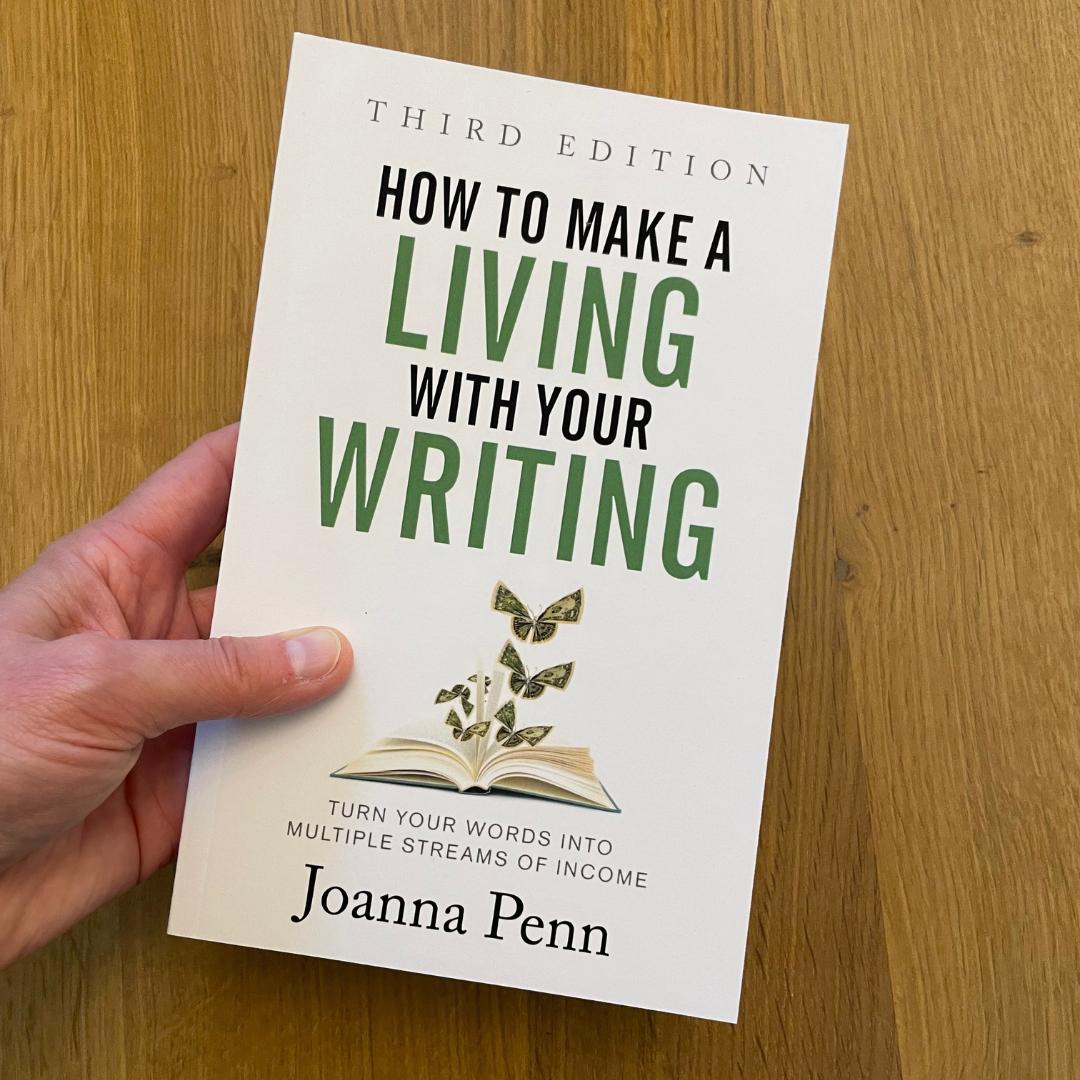
How to Make a Living With Your Writing: Professional speaking, teaching, performing, and live events
Speaking, teaching, performing and writing work well together because they offer different ways to deliver the same core message. They enable multiple streams of income through book sales and up-sell offers, as well as income from speaking fees and ticket sales.
Online speaking, teaching and performing is now more accessible than ever due to technological adoption in the pandemic, with top rates available for conferences and events that are now (at least partially) online.
Successful authors will need to speak at some point, whether that’s at a conference, an online event, or in the media, so it’s a skill that is well worth developing.
This section is just an introduction and if you’re interested in pursuing this further, check out my book, Public Speaking for Authors, Creatives and Other Introverts on the practicalities, mindset, and business side of professional speaking.
Why ‘professional’ speaking?
Many writers speak and teach at conferences or online summits, or perform their work or read at library and bookstore events. However, many do this ‘in return for’ publicity or book sales, or other opportunities that may or may not follow.
Some publishers or events cover costs for authors, but often, it is at the writer’s expense. This may leave the writer out of pocket if they have to travel somewhere and stay locally for the event so should be considered marketing rather than professional speaking, which is always paid.
I started speaking professionally back in 2008 when I published my first non-fiction book. I joined the National Speakers Association in Australia, where I lived at the time, and started to run my own events as well as delivering workshops and keynotes at conferences.
Over the years, I’ve spoken professionally in the US, UK, Europe and Asia Pacific, earning speaking fees and enjoying expenses-paid travel.
These days, speaking remains part of my author business, but I focus on topics I’m passionate about, events in locations I want to visit, or conferences that I’d like to attend anyway. I charge premium professional rates, and speaking opportunities come to me through my books, website, and podcast. If you regularly produce quality content that educates, inspires, or entertains, you are likely to be asked to speak at some point.
If you’re unsure on speaker fees, check out the Society of Authors (UK) guidance on rates and fees. You can always translate that to your local currency and use it as a place to start.
Here are some of my top tips on speaking.
Decide on your target audience
The most highly paid professional speakers write non-fiction because their target market includes corporate events and conferences that have a significant budget. Fiction authors don’t usually get paid much to speak at writing events (unless they are very famous) because the organizations that run them rarely have a lot of money to spend.
If you want to make five figures or more for a speaking event, then research the audience that will pay that kind of money before you choose your speaking topic, or even write your book.
Of course, you might have a passion that emerges from your writing — as I do! — which leads you to events that will never pay top dollar. That’s okay, as long as you realize upfront the range of income opportunities available and adjust your expectations accordingly. Clearly, an inspirational keynote on leadership to a thousand people at a corporate conference will pay more than talking to a writers’ group on self-publishing, or a school assembly, even though the latter options might be rewarding in other ways.
You have to choose your direction.
Decide on your speaking topic/s
If you have a book already, the topic will naturally suggest itself, and then you can consider the possibilities in detail. You can also decide on your target market and then design a talk or write a book that will appeal to them specifically.
Once you have your key topics, you can adjust your presentation per audience. Although I often speak on the same broad themes, no live presentation is the same, as I always update and tweak the content to make it specific to the audience.
Call yourself a speaker
Create a speaking page on your author website and add ‘Speaker’ to your business card. Include the topic/s you speak on, contact details, testimonials, and upcoming events.
As an example, my speaker page is at TheCreativePenn.com/speaking
Start speaking for free to gain experience as well as testimonials
If you’re just getting started, speaking for free will help you build up experience, but start charging as soon as you can in order to make it a viable stream of income.
My first speaking event in 2008 was at a small writers’ group in Brisbane, Australia, where I shared my story of self-publishing for the first time. I was nervous and sweaty, unsure of myself, and I’d spent many days preparing for what was a short talk for no money. But it was a start, and I asked for testimonials afterward to add to my brand new speaker page.
More than a decade later, I’ve spoken at conferences to thousands of people in theaters and conference centers, as well as to smaller audiences all over the world. You just have to get started and over time, you’ll improve and so will your speaking income.
Understand and manage your anxiety
All speakers experience nerves or anxiety at some point, whether that’s because of the number of people, the venue, or the importance of the opportunity. The trick is to reframe those feelings as positive energy that can take your performance to a new level and also see it as evidence that you are pushing your comfort zone and that you care about what you’re doing. These are all good things!
I still go to the bathroom three times before going on stage — or even presenting on Zoom! My heart thumps and my mouth gets dry, but once I start speaking, those feelings dissipate. The key is to remember that it is never about you, it’s all about the audience. Serve them and deliver great value for their time and money, and things will go well.
Up-skill and join a professional organization
Toastmasters is great for learning the basics, but if you want to be a paid professional speaker, then check out the National Speakers Association in America, the PSA in the UK or one of the other affiliated organizations from the Global Speakers Federation. You will learn practical and business skills as well as the confidence to charge what you’re worth.
Questions:
• What are some benefits of speaking and how could you incorporate it as a stream of income?
• Research speakers in your niche. What can you learn from their websites around branding, pitching, products, and pricing?
• Who is your target market for professional speaking? How could you reach them? What rates do they pay?
• What topic/s could you speak on? Does this fit with your target market and your expectation of income?
• Do you need training and/or experience in order to charge for professional speaking? How will you develop these further?
Resources:
• Public Speaking for Authors, Creatives and Other Introverts — Joanna Penn
• The Society of Authors (UK) guidance on rates and fees: Societyofauthors.org/advice/rates-fees
• My speaking page — www.TheCreativePenn.com/speaking
• Toastmasters — www.toastmasters.org
• National Speakers Association USA — www.nsaspeaker.org
• Professional Speaking Association UK — www.thepsa.co.uk
• Global Speakers Federation with links to other country-specific sites — www.GlobalSpeakersFederation.net