
How to Write a Novel: Writer’s block
“If you get stuck, get away from your desk. Take a walk, take a bath, go to sleep, make a pie, draw, listen to music, meditate, exercise; whatever you do, don’t just stick there scowling at the problem.”
—Hilary Mantel
Most writers struggle with getting words on the page at some point. But writer’s block is not one monolithic thing, and it does not have one cause or one cure. The term encompasses issues with different root causes and varying solutions.
Here are some reasons you might feel blocked.
You don’t know how to write a novel
If you don’t know how to write a book, you can end up flailing around and wasting time, frustrated because you’re not getting anywhere.
Hopefully, this book will help you.
If you’re still struggling, go back to the first principles: schedule timed writing sessions, get your butt in the chair, and figure it out along the way.
You’re trying to write the wrong kind of book
If you try to write something you think you ‘should’ write because of the expectations of others, or a need for validation by other people, then you may struggle more than you need to.
I had this kind of block before writing my first novel. I thought the only book I should attempt to write was something literary and prize-winning, something that might attract literary acclaim. Those were the books I studied at school and university, those were the books praised by the media. But I didn’t really have any ideas for that kind of novel and, to be honest, a lot of them bored me.
But then I realized that the books I craved as a reader were the thrillers that helped me escape the job I hated. I read on the commuter train in the morning; I read with my sushi at lunch (if I could get away from my desk); I read on the train home again, in bed before sleeping, and in the hammock at the weekend. I read thrillers and escapist fiction every moment I could.
I decided to write an international thriller based around my fascination with religion and aim it at ‘commuter Jo.’ That shift freed me from my block and my writing took off.
So, don’t worry. You don’t need to write an ‘important’ book that becomes a literary classic and stands the test of time. Be honest with yourself. Write something you want to read.
You might also have ambitions that go beyond what you can write at this point, either with the length of the book or the scope. If you want to write a Tolkien-esque Lord of the Rings–style epic fantasy eventually, perhaps it’s best to start with something simple, something more like The Hobbit? You can work up to that magnum opus later once you have more experience.
You haven’t filled the creative well
“The word block suggests that you are constipated or stuck, when the truth is that you’re empty.”
—Anne Lamott, Bird by Bird
You cannot create from an empty mind. You have to fill it somehow. Research, read, watch, travel, talk to people, do whatever you need to, but fill your mind with the raw material it can use to create your story.
I struggled to write fiction during the pandemic because my story ideas come from places I visit. I need external input in order to create. Since I couldn’t travel far at the time, I walked The Pilgrim’s Way from London to Canterbury, and finally found inspiration for Tomb of Relics in the cathedral. I also wrote my short story Blood, Sweat, and Flame based on Blown Away, a series on Netflix about glassblowing.
You might find inspiration in different ways, but if you’re struggling, get away from the blank page and fill your creative well, whatever that means to you.
You’re trying to create in a way that is wrong for your personality or lifestyle
Sometimes we feel blocked because we try to force ourselves to create in a way that just doesn’t fit with who we are.
If you’re trying to outline and it’s not working, try discovery writing.
If you’re trying to write every day, stop for a week until the energy builds up and you need to binge write all the stuff in your brain onto the page.
If you’re trying to write early in the morning at your kitchen table and you’re distracted, try dictating on your phone while walking at lunchtime.
If you can’t carve out an hour because you have a busy family and work life, try writing in fifteen minute blocks instead.
If you’re feeling guilty because you’re not writing — then consider why. Perhaps it’s just not the right time in your life.
I know writers who have young children, elderly parents, a busy job, and health issues, and they feel guilty about not writing. But sometimes, life is just too much and writing can wait. You might not be blocked, you might just be overloaded.
You didn’t realize that writing a novel was this hard
Writing a novel is a challenge. It’s much harder than you expect it to be when you start out, so at some point, you will have to face the difficulty of knuckling down and doing the work.
People who haven’t written a book before expect it to be a simple process to turn thoughts into words on a page. But it’s tiring, and it takes stamina that you need to build up over time.
Some days you feel you’re in flow and everything is amazing.
The next day, each sentence is a grind.
But that’s not a block — it’s the creative process.
Sometimes you just need a break.
If I’m stuck in the middle of a chapter, or just feeling over it, I go for a walk. Sometimes, if I’ve been working on something for an extended period of weeks or months, I need a longer break. A few days or weeks away from the manuscript, and you’ll come back to the page renewed.
Fear of failure, fear of judgment, self-doubt, and other mindset issues
All these things will come up during the writing process and you can either choose to let them stop you, or you can spend some time wallowing, write in your journal about how hard it all is, and then get back to writing.
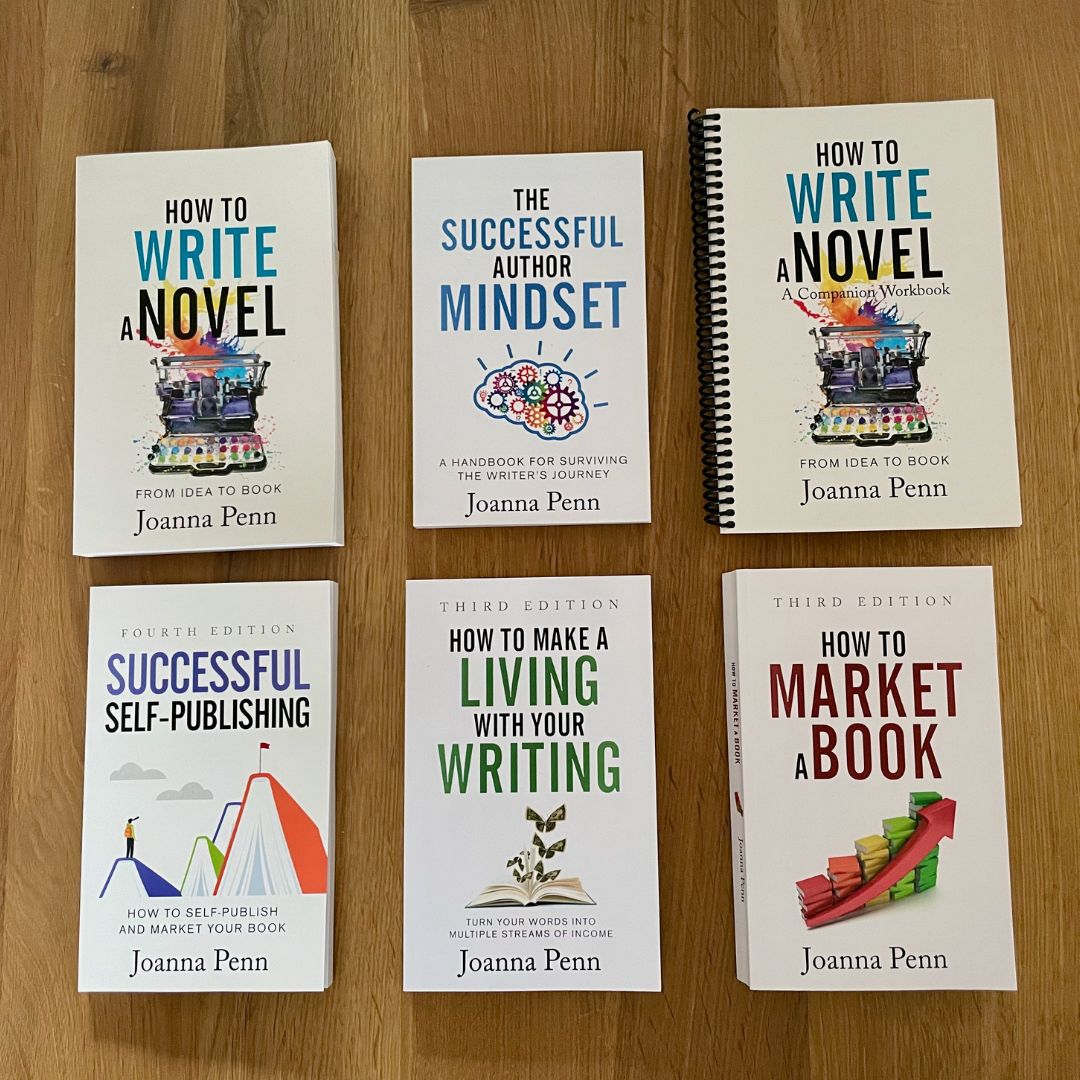
For more on the mindset side of the creative life, check out my book The Successful Author Mindset: A Handbook for Surviving the Writer’s Journey.
How much do you want this?
“Brick walls are there to stop the people who don’t want it badly enough.”
—Randy Pausch, The Last Lecture
If you’re feeling blocked, but you are committed to writing this novel, then you need to figure out the problem and deal with it.
There will always be challenges. Your job is to overcome them and finish this book.
I love being a fiction author. I am so proud of my creative body of work. I can hold my books in my hands and say, “I made these!”
Writing that first novel changed my life, and I want that for you.
You will have brick walls along the way. Only you can smash through them.
Questions:
• If you’re struggling with your writing, can you identify the reason behind the block?
• How can you deal with the block and still achieve your goal of writing a book? What practical steps will you take to move your project forward and still look after yourself?
Resources:
• Bird by Bird: Some Instructions on Writing and Life — Anne Lamott
• Conquering Writer’s Block and Summoning Inspiration: Learn to Nurture a Lifestyle of Creativity — K.M. Weiland
• On Writing: A Memoir of the Craft — Stephen King
• The Last Lecture: Lessons in Living — Randy Pausch
• The Successful Author Mindset: A Handbook for Surviving the Writer’s Journey — Joanna Penn
• Interview on how to banish writer’s block with K.M. Weiland on The Creative Penn Podcast: www.TheCreativePenn.com/weiland
• “Hilary Mantel’s rules for writers,” The Guardian, 22 Feb 2010 — www.theguardian.com/books/2010/feb/22/hilary-mantel-rules-for-writers