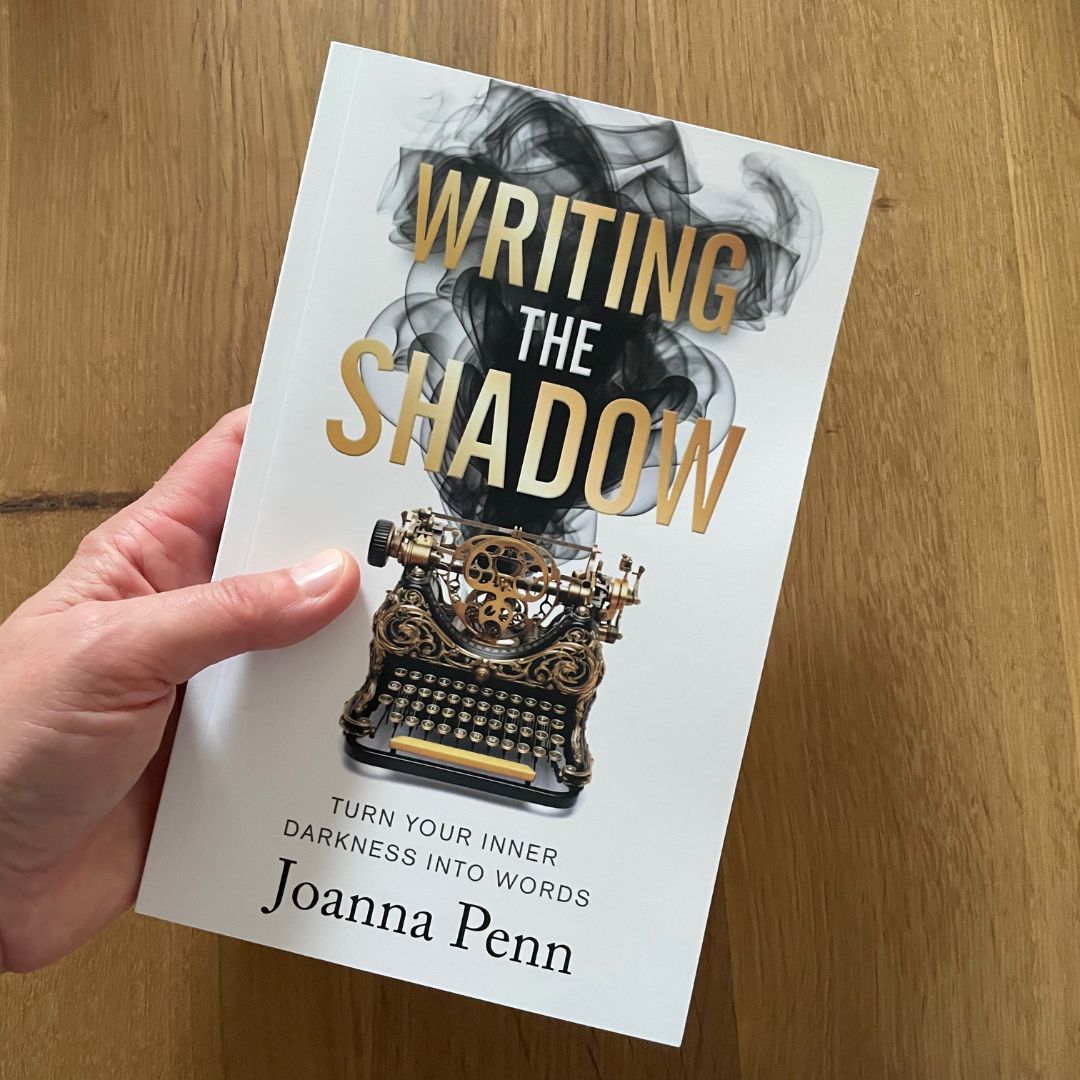
Writing the Shadow: Look at the opposite side of personality tests
There are many personality tests, and they’re all lenses through which to view yourself. They measure different things at different times, and shouldn’t be seen as a box to constrain yourself with, but more as a tool to gain insight into your personality.
Most of them will give both positive and negative aspects of a particular personality type. While many people prefer to focus on the positive, you may glimpse the Shadow in the opposite.
There are two tests I have found most useful.
Myers-Briggs Type Indicator
According to the Myers & Briggs Foundation, the Myers-Briggs Type Indicator assessment is about helping people “identify and gain some understanding around how they take in information and make decisions.”
There are different preference pairs:
• Extraversion (E) and Introversion (I), based on opposite ways to direct and receive energy
• Sensing (S) or Intuition (N) for different ways to take in information
• Thinking (T) or Feeling (F), which are opposite ways to make decisions and come to conclusions
• Judging (J) or Perceiving (P), which are different ways to approach the outside world and remain open to new information
I am INFJ, which stands for Introversion, Intuition, Feeling, and Judging. It’s a rare type in the general population but more common in the author community.
The INFJ type includes some positive aspects, like access to creativity, insight, inspiration, and the ability to make decisions intuitively, as well as the desire to help others achieve their potential.
So far, so good!
But the negative sides give more of an insight into the Shadow.
INFJs can be perfectionists and control freaks, becoming frustrated when things don’t go in the direction they want.
They can be overly sensitive and respond strongly when attacked or criticised.
Their introversion can go too far, leading them to be overly private, easily overwhelmed, and conflict averse to the extreme.
I recognise all of those things in myself, and by acknowledging what might lie in my Shadow, I can consider whether to accept my weaknesses or actively address them.
You can find the test at www.themyersbriggs.com
CliftonStrengths
The Gallup CliftonStrengths assessment is about discovering what you naturally do best and focuses on developing your strengths rather than fixing your weaknesses. It provides thirty-four different ranked themes, with your top five strengths being the most important.
After the test, you receive an extensive report which includes the positive aspects of your strengths and the blind spots that might hamper you.
My top five strengths are Learner, Intellection, Strategic, Input, and Futuristic, all of which are what Gallup considers strategic thinking strengths.
Towards the bottom of my thirty-four are the relationship-building elements, so I’m weakest in “building strong relationships that hold a team together.” As an independent author with a core personal value of freedom, this is not a surprise!
Many authors have Learner among their strengths, so here’s more detail on that particular theme. According to the Gallup organisation:
“You are drawn to the process of gaining knowledge and skills. You long to build on what you already know… You are determined to satisfy your need for knowledge as well as your desire to make measurable progress… You absorb all sorts of information from books, publications, or other written materials. You display a voracious—that is, never satisfied—appetite for knowledge… For you, a great day is one during which you have added new insights to your mind’s storehouse of ideas.”
Hell yeah, that’s me, and I’m happy with that!
But the blind spots contain aspects of Shadow.
The Gallup description of the Learner strength warns that we can pursue learning for learning’s sake, leading us to push learning on others or lose sight of our own goals. As they suggest, Learners must “be careful not to let the process of knowledge acquisition get in the way of your results and productivity.”
I caught a glimpse of my Shadow here because to be called ‘stupid’ or ‘dumb’ or an ‘idiot’ is a real trigger for me.
I want to know all the things all the time. I want to be respected for my knowledge, and in the process, I might come across as superior or judgmental of those who are not as educated.
But of course, I can never learn everything. Even if I became a world expert in one domain, I will always be ‘stupid’ in another.
This focus has also damaged my health. I prioritised learning over physical activity and fitness, preferring hours hunched over my books or the desk. That decision, made every day for decades, eventually resulted in chronic pain and a shoulder injury purely from postural issues. A physical Shadow made manifest from the dark side of my primary strength, which I cover more in Chapter 2.8.
You can take the test at www.gallup.com/cliftonstrengths
If you want to learn more about Strengths, particularly as they relate to the author career, check out Becca Syme’s books, courses, and coaching at BetterFasterAcademy.com.
I particularly recommend Becca’s book Dear Writer, Are You Intuitive? as that helped me discover aspects of my creative process that had remained hidden before.
Enneagram
The Enneagram is another kind of personality test which defines types by a core motivation — for example, The Achiever or The Peacemaker.
Though I haven’t delved into this system myself, many writers find it useful. Comedy author Claire Taylor teaches how to use the Enneagram in fiction in her book Reclaim Your Author Career, as well as offering masterclasses and coaching in this area.
Questions:
• What are the positive aspects of your personality? What are your strengths?
• What are the opposites of these positive traits? How might they go too far? Do you recognise elements of those opposites in yourself?
• How can you prevent the negative attributes from taking control?
Resources:
• Myers & Briggs Foundation — www.themyersbriggs.com
• CliftonStrengths assessment — www.gallup.com/cliftonstrengths
• Strengths coaching and resources for authors — BetterFasterAcademy.com
• Dear Writer, Are You Intuitive? — Becca Syme and Susan Bischoff
• Reclaim Your Author Career: Using the Enneagram to Build Your Strategy, Unlock Deeper Purpose, and Celebrate Your Career — Claire Taylor