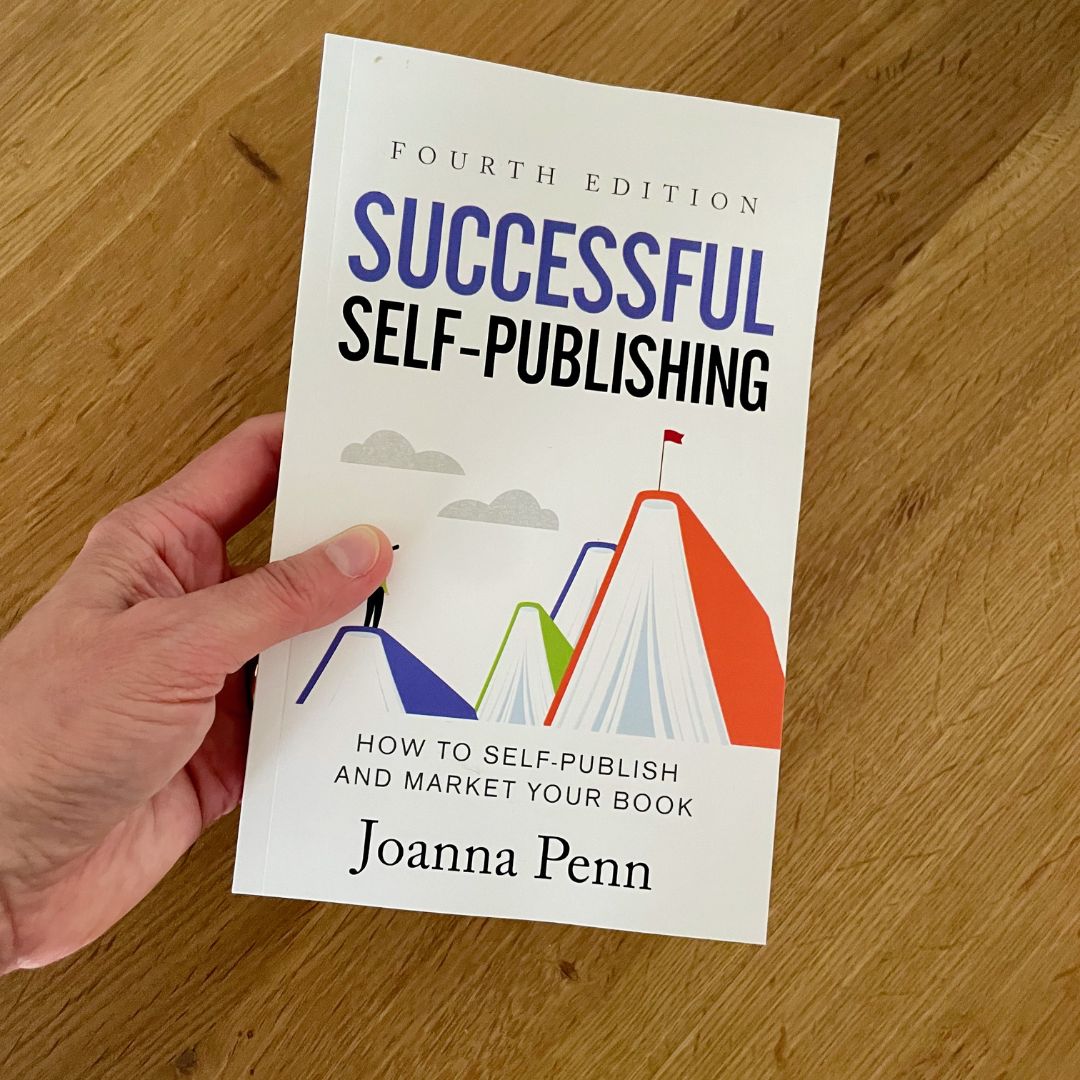
Successful Self-Publishing: Marketing principles
If you ask most authors about book marketing, they’re likely to grimace, shake their head, and sigh…
We became authors because we love to write, but if you want your books to sell — regardless of how you choose to publish — at some point you’ll need to embrace marketing as part of your author journey.
In this chapter, I’ll go through marketing principles that will be useful no matter how the industry changes. But first, let’s cover the question everyone always asks.
Do I have to do my own marketing? Can’t I just outsource it all?
There are many people and services you can hire for aspects of book marketing, but consider these questions:
• What specific area of marketing do you want to outsource?
• Is it worth doing at all?
• Is it worth paying for?
• What return on investment (ROI) are you expecting?
• Is this service short-term or long-term and how might that affect your budget?
Book marketing is not one thing, so you need to first consider what exactly you want to outsource. For example, setting up and running Amazon Ads is a different skill to pitching magazines and podcasts for interviews.
You also have to consider whether you even want to start something you might not sustain.
• Is it worth starting a TikTok channel if you hate making videos?
• Is it worth starting your own podcast when it might be a year or so before your listenership grows to a decent size?
• Is it worth paying a PR professional to get you interviews in magazines when you’re just starting out, you’re unsure of your brand, and there is no obvious return on investment?
• Do you want to keep paying people for months and years? Or could you spend some of that money learning new skills and building your own sustainable marketing strategy?
If you want to hire a professional, be specific about the tasks and your budget, as well as timeframe. For example, ‘Run Meta Ads for three months to the first book in my fantasy series’ or ‘Pitch media outlets for three months around my non-fiction self-help book on dealing with anxiety.’
If you want help with book marketing, you can hire vetted professionals from the Reedsy Marketplace and find people on the Alliance of Independent Authors Partner Member list.
While I have hired specific people over the years for short-term marketing campaigns, I primarily do my own marketing. Here are some principles that will help you if you choose to do the same.
(1) Reframe marketing as creative sharing
Many authors feel that marketing and sales are negative in some way, but that attitude makes the whole thing more difficult. Whether you have a traditional book deal or you self-publish, you have to learn to market if you want to sell books. So, it’s time to reframe what marketing is!
Marketing is sharing what you love with people who will appreciate hearing about it.
Marketing is not shouting ‘buy my book’ every day on social media or accosting readers in bookstores or at author events. You should never be pushing anything to those who are not interested. Instead, try to attract people who will love what you do once they know about it.
We’re readers too and we all love to find new books to immerse ourselves in, so think about other readers in the same way.
If you’ve written a great story in a genre that you love, why would you ever be embarrassed about promoting it ethically to fans of that genre?
If you’ve written a book on gluten-free weight loss, it’s likely that you’ve achieved success with your method. You’re trying to help people, so why wouldn’t you want to spread the word?
Once you change your attitude, the whole marketing landscape shifts. It becomes far more positive when you’re sharing things you love and attracting like-minded people.
If you start enjoying marketing and make it a sustainable part of your creative life, you’ll find it works a whole lot better — and might even be fun!
(2) Focus on the reader
Writing is about you. Publishing is about the book. Marketing is about the reader.
When we write, we are in our own heads. We’re thinking about ourselves. But when we publish and market, we have to switch our heads around to the other side of the equation and consider the person who reads or listens to the book and what they want out of the experience.
Step outside your own head and ask these questions: Who is my ideal reader? What emotion or outcome do they crave? What problem am I solving, or what entertainment experience am I providing?
The answers will help you with the words and images you use in marketing to attract the right readers.
(3) Own your platform
When you write a book, you need to have somewhere to direct people so they can find out information about you and what you write.
There are many options for building your home on the internet, but an important consideration is who owns the site you build on.
If you use a free site, it’s owned by someone else, whereas if you pay for hosting, you control it. You can back it up and make sure it’s always available. This matters because things change over time.
Some authors let their publisher build a website for them, but what if you begin working with a different publisher?
Some authors just use a Facebook page, but what about when Facebook changes the rules (as they have done several times over the years)?
Some authors use a free website service, but if that company disappears or gets bought or decides your book isn’t appropriate, what happens to your site?
If you’re serious about writing and selling books for the long-term, then consider owning your website.
You can do all kinds of other things to market your book, but at least you’ll always have somewhere to send people.
Equally, it’s important to build your own email list of readers who like your books, because again, who knows what will happen in the future with the book retailers or the publishers you use?
If you have an email list of readers, you can always sell books whatever changes come along.
You can find the services I use and more tips at:
www.TheCreativePenn.com/website-email-help
(4) Build a cohesive author brand
Branding is your promise to the reader. It’s the words, images, and emotions that surround your work and the way readers think of you.
Many authors consider using a pseudonym, or different names if they write books aimed at separate audiences. I write under J.F. Penn for my fiction and memoir and Joanna Penn for my non-fiction for authors. I have different types of books with almost completely different audiences, so I need separate brands.
Book cover design also expresses brand and differs by genre. You should have some idea of the books and authors that are similar to yours.
Examine their book covers and the color palette they use, as well as their author websites.
• What words, images, and colors do they use?
• What emotional resonance does their brand present?
• How does it make you feel as a reader?
Now try to apply those principles to your own author brand.
If you’re struggling with brand, don’t worry. It will emerge and become clearer over time as you find your voice and attract an audience over multiple books.
When I started out, I published everything under Joanna Penn, and eventually split my author brand to make things clearer for readers, as well as myself. But it took five books and several years before I understood that was the right decision for me.
(5) Find marketing that fits your personality. Double down on being human.
If you want a sustainable career as an author, you need to consider what kinds of marketing you can consistently do over time. You can’t fake it or force yourself to do things you hate. Marketing needs to fit with your personality and your lifestyle, and that will differ for everyone.
You also need to be personal and, in an age of AI, double down on being human. The more you share authentically, the more people will get to know, like, and trust you, and the more likely they are to want to buy your books.
Of course, you have to draw your personal line in the sand. I don’t share pictures of my family on social media, and some authors use codenames for their children so they can talk about being a parent while still protecting privacy.
You also need to know what’s best for managing your energy. I’m an introvert, so I find in-person events and group things difficult, and I tend to avoid in-person marketing. I also don’t watch video online so I produce little of it, and I don’t do short-form video like TikTok or Instagram Reels.
I listen to a lot of podcasts and audiobooks, so audio marketing is my primary channel. I have two shows, The Creative Penn Podcast for writers, which markets my Joanna Penn books, and my Books and Travel Podcast, which is for my J.F. Penn side. The shows go out on audio podcast feeds and also onto my two YouTube channels.
I also like taking photos, so I use Instagram @jfpennauthor and also share on X @thecreativepenn. I share pictures of my travels and what I’m up to for research, and over time, I’ve become a lot more open about what I like.
For example, I’m a taphophile. I enjoy walking around graveyards and I like ossuaries and crypts, as well as art history and cultural aspects of death and memento mori. It turns out there are many people with Gothic leanings like me, and people even send me photos of their favorite graveyards from all over the world now.
Sharing details about your interests might not be an obvious path to book sales, but attracting readers slowly over time in an authentic way can underpin a sustainable long-term career.
(7) Balance short-term and long-term marketing
New authors often focus on the launch of their latest book, but most indie authors and publishing companies make more money from the ‘back list,’ older books with more reviews and a sales history. A book is always new to someone who has just discovered it, and that ‘new’ book might not be your latest release.
Short-term marketing is a good option for new releases, for campaigns like a Kickstarter, or if you want to push a first-in-series book from your backlist to introduce people to your work. These kinds of campaigns usually include some form of paid marketing, which can drive a sales spike that drops once you stop pumping money and energy into it. For most authors, this is not sustainable.
Long-term marketing is more about building evergreen assets that drip sales every day. If you want a long-term career as an author, you need to think about building a sustainable baseline income, money that comes in from your books consistently every month without you having to keep paying for it.
Successful long-term marketing requires more books on the market, more streams of income, more readers on your email list, and consistent content marketing of some kind. It takes time to build but is worth the investment if you want a long-term career. The most successful authors combine these two approaches with sustainable marketing strategies.
(8) Measure the success of your marketing
If you’re not measuring the results of a promotion, how do you know if it worked?
Marketing should ultimately result in sales, and if you’re self-published, you can measure this easily, as you get daily sales figures from the self-publishing platforms. You can also check your rankings on the stores and take screenshots before and after the promotion to check results.
This is why I prefer online marketing to traditional media and PR. If you have a clickable link associated with your promotion, you can track results and understand what works and what doesn’t.
When I first started out, I had national TV, radio, and newspaper coverage, but it had no noticeable impact on my book sales. These days, I can pay for a BookBub ad or email my list with a link and see the resulting direct sales spike. Measure promotion results, rather than basing your opinion on assumptions or ego metrics (likes and comments rather than sales).
Track what matters to your author business: sales, income, profit, email subscriber growth, number of reviews, and use those to guide your next campaign.
(9) Build community and collaborate with other authors
Some people say being a writer is lonely, but that is a choice, because there are so many different communities you can join in person or online. You can also build one of your own.
People want to belong to something, they want to be part of a group, and together, we can achieve more and the journey will be a lot more fun!
I’m a member of the Alliance of Independent Authors, which has a thriving community online and also meets up in person at book industry events. I speak at and also attend lots of conferences, including Author Nation, the biggest indie author conference in the world. I’m also a member of several Facebook groups, for writing craft and author business, where I check in every day to see what’s going on.
I also have my own Community at Patreon.com/thecreativepenn, where I share behind-the-scenes details about running an author business.
Not every group is for every person, of course, so you must find the places that feel right for you. But give things a try, be generous and helpful and a good community member, and you will find author friends.
Being part of a community can also lead to marketing ideas and opportunities — for example, collaborating on email newsletter swaps or book recommendations, joint promotions, multi-author bundles and box-sets, and cross promotion on podcasts and social media.
* * *
Remember, as with writing, marketing gets easier with practice. Start small, be consistent, and focus on the principles that never change, even as the tools and platforms evolve over time. Marketing your book is not a onetime event but an ongoing process, so take one step at a time and iterate as you go.
Experiment to find what works best for your personality and lifestyle — for each book and at each stage of your author journey. Once you choose a strategy, commit to it for the long term, and you’ll build an audience and book sales in a sustainable manner.
Resources:
• How to Market a Book — Joanna Penn
• How to Market a Book: Overperform in a Crowded Market — Ricardo Fayet
• How to Self-Publish and Market a Children’s Book — Karen P. Inglis
• Alliance of Independent Authors — www.TheCreativePenn.com/alliance
• Advice from the Alliance of Independent Authors — www.selfpublishingadvice.org/category/marketing-promotion
• Reedsy Marketplace for vetted marketing professionals — www.TheCreativePenn.com/reedsy
• Alliance of Independent Authors Partner Member list — www.selfpublishingadvice.org/alli-self-publishing-services-directory
• Website and email list help — www.TheCreativePenn.com/website-email-help
• My Patreon Community — www.Patreon.com/thecreativepenn
• Author Nation conference — www.AuthorNation.live