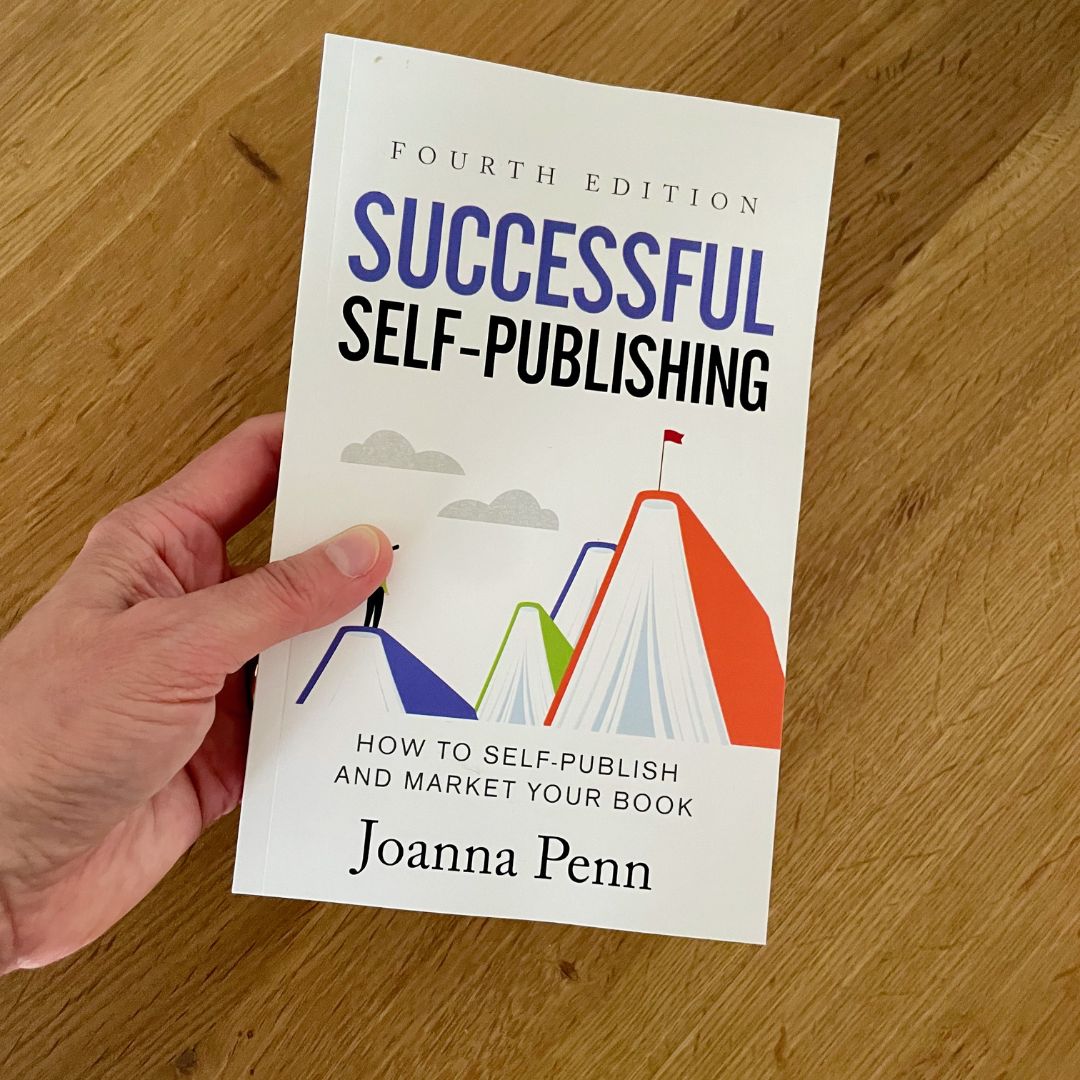
Successful Self-Publishing: Selling direct
Selling direct is about transacting directly with your readers and listeners. While you must handle payment processing and customer data, in return you get faster payments, more money per book, and more options for the products you sell. It’s an increasingly popular choice for business-minded indie authors.
There are three main ways that indie authors sell direct: Online from a storefront, via crowdfunding, and through in-person sales.
(1) Selling direct online
This option requires you to essentially build an online bookstore, like your own Amazon.
Readers buy direct from your store, the payment processor takes a small percentage, and the remaining money from the sale lands in your bank account, usually within days. Automated systems deliver ebooks and audiobooks to reader devices, while print or merchandise orders go to services that handle printing and shipping.
Some authors have their own warehouses, allowing them to order in bulk, then ship their own books to customers along with custom extras.
There are simple options that can handle taxes for you, like Payhip and Gumroad, through to more extensive solutions using Shopify or WooCommerce, and social selling like TikTok Shop. There are also specific reports and apps that can handle taxes. Running an e-commerce business requires some setup time and cost, as well as a mindset shift, but once it’s up and running, the ongoing maintenance is not significant.
I have two stores built on Shopify: CreativePennBooks.com for my books for authors as Joanna Penn, and JFPennBooks.com for my fiction and memoir.
Both use BookFunnel to deliver ebooks and audiobooks, and Bookvault for print, and I offer bundles, special editions, and workbooks that you can’t buy anywhere else. I don’t hold any stock and all the shipping is outsourced.
(2) Crowdfunding / Kickstarter
Most authors use Kickstarter for crowdfunding, which allows you to offer high-quality, limited-edition books and merchandise, then place your print order after you receive payment. This removes a lot of the risk of doing higher-priced products as it’s essentially a pre-order and you know how many books to print once the campaign is finished.
Crowdfunding is more effective if you already have readers and fans ready to buy. Even with an audience, it’s still a challenge and many authors fail to meet the minimum sales to fund a campaign. Others are too ambitious and lose money on the project. You also have to factor in costs of production and shipping, freelance services, and fees and taxes. You must also be good at project management to fulfill what backers ordered within a timely manner.
Personally, I love doing my Kickstarter signed editions with foiling, ribbons, custom end papers, sprayed edges, and other gorgeous print features.
I’ve done five Kickstarter campaigns over the last few years, raising over $120,000 for my travel memoir, non-fiction books, and several novels, as well as add-on webinars and consulting. I aim for two campaigns per year across different genres, and it gives me a wonderfully creative way to offer gorgeous books to my fans, and a bigger chunk of revenue alongside the regular monthly income from my store and the online retailers. Although I found it scary at first, and resisted doing a campaign for years, I now find Kickstarter one of my favorite parts of the author business.
For more tips on Shopify stores and Kickstarter, including an interview with Kickstarter’s Head of Publishing, check out:
www.TheCreativePenn.com/selldirectresources
(3) Selling in person
Many authors focus on selling in person at conventions, fairs, markets, bookstores, and other events. It’s labor intensive, and can be a challenge for introverts, but the benefits include connecting with readers and other authors as well as taking photos for marketing. You can also make a good chunk of cash if you organize your stall well.
For lots of tips, I recommend A Book in Hand: Strategies for Optimizing Print Book Sales via Signings and Other In Person Events by Mark Leslie Lefebvre.
* * *
Selling direct is an addition to the more established ways of selling books on the retailers and through distributors. It can give you more creative and financial freedom, as well as more direct engagement with your readers. But you also have to accept the extra work in setting things up, as well as managing accounting and taxation.
It might be a little much if you’re just starting out, but it’s definitely something to look into once you’re more established as an indie author.
Resources:
• Selling direct on Shopify and Kickstarter interviews and tips — www.TheCreativePenn.com/selldirectresources
• My Shopify store for Joanna Penn books for authors — www.CreativePennBooks.com
• My Shopify store for J.F. Penn fiction and memoir — www.JFPennBooks.com
• BookFunnel — www.TheCreativePenn.com/bookfunnel
• My Kickstarter campaigns — www.kickstarter.com/profile/thecreativepenn/created
• A Book in Hand: Strategies for Optimizing Print Book Sales via Signings and Other In Person Events — Mark Leslie Lefebvre
• Interview on selling in person with Mark Leslie Lefebvre — www.TheCreativePenn.com/selling-in-person