
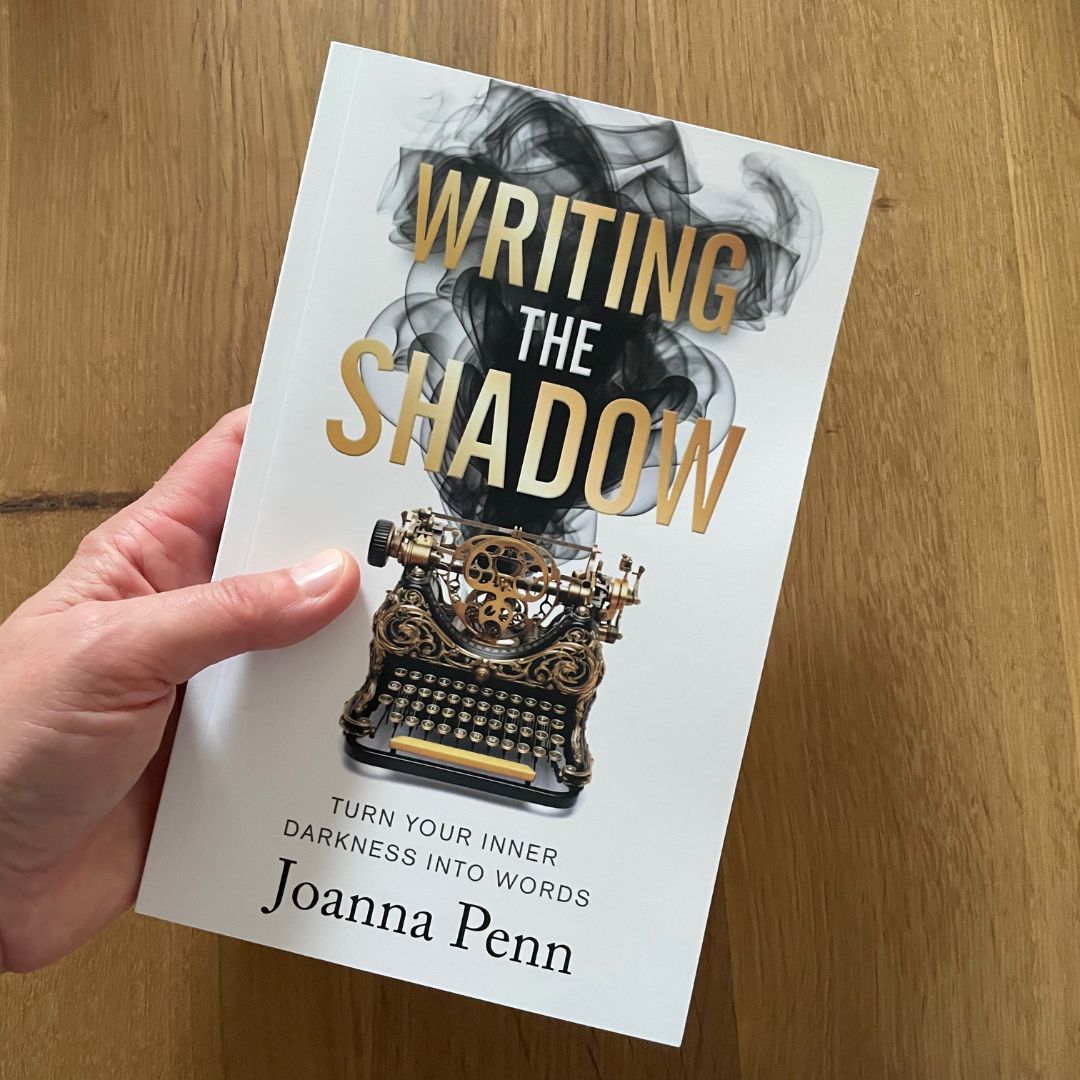
Writing the Shadow: The Collective Shadow in country, society, and culture
“Civilisation is like a thin layer of ice upon a deep ocean of chaos and darkness.”
—Werner Herzog
Some elements of our Shadow come from family, friends, and the choices we make in our lives. But other elements stem from our culture and the country we’re raised in, as well as common aspects of human nature that lie within us all in what Carl Jung called the ‘collective unconscious.’
He explained, “The collective unconscious contains the whole spiritual heritage of mankind’s evolution born anew in the brain structure of every individual.”
It also persists in the stories we tell; as Jung said, “the whole of mythology could be taken as a sort of projection of the collective unconscious.”
The collective Shadow can therefore emerge when certain tendencies, behaviours, or traits are commonly denied, suppressed, or disavowed at a societal level. It may manifest through projection, especially when extreme views are taken on either side of the spectrum, forcing the opposite into Shadow.
When nuance and balance are lost, the Shadow emerges.
Where can you see that happening in your culture?
Uncovering the Collective Shadow
“Wherever they burn books, in the end they will also burn human beings.”
—Heinrich Heine, Almansor
This is a vast area and ripe for misunderstanding, so rather than identifying specific things and triggering everyone, here is a list of questions to consider around your culture and your country.
Hopefully, they will spark thoughts and ideas about where aspects of the Collective Shadow lie and you can form your own questions to investigate further.
• Why might a society burn books? What does the content of those books tell you about the Collective Shadow?
• When a country is split between two major political parties, how might the extremism of one push the other even further?
• How might the Collective Shadow emerge through mob behaviour on social media? How did that occur during the pandemic? How did it affect you — and do you think differently now than you did at the time?
• When a country — or a group of people — think their customs or beliefs are superior, how might that spill over into imposing their values on others, in ways that range from critical comments to invasion and oppression?
• When a country’s self-definition has been based on exceptionalism and the might of Empire, how might the Shadow emerge in modern times when equality and equity are demanded by those who were once considered inferior?
• When a religion forces restrictive sexuality at the same time as valuing hierarchy and patriarchy, how might the Shadow express itself in sexual dysfunction, denial, shame, and abuses of power?
• When a culture has valued one race — or class — over another for generations while building wealth and privilege for themselves, how might aspects of the Shadow eventually erupt and disrupt the status quo?
• When healthy forms of masculinity and aggression are oppressed by society, how might the Shadow side emerge?
• When a culture is founded on the principles of religious faith and the primacy of men, how might that impact modern attitudes to women’s rights and bodily autonomy, as well as sexuality, and even innocuous behaviours like swearing?
Recognise the Collective Shadow in triggers
“The tendency to see one’s shadow ‘out there’ in one’s neighbour or in another race or culture is the most dangerous aspect of the modern psyche.”
—Robert A. Johnson, Owning Your Own Shadow
Here are some words and phrases to consider:
Capitalism, socialism, conservatism, liberalism, patriotism, globalisation, open borders, immigration, universal basic income (UBI), universal healthcare, democracy, feminism, drugs, military strength, racism, billionaires, climate change, assisted suicide, gender identity.
These simple words and phrases are loaded with conflicting beliefs and misunderstandings. However you feel about each topic, try to consider what aspects of it may be part of the Collective Shadow.
Are there topics you respond to instinctively without considering the possible nuance?
What other words and issues spark controversy in your culture and/or country?
Importantly, the Shadow is not the opposite of what you consider right.
It lies in judgment, fear, anger, violence, or the demonisation of the Other.
If we can reflect on why we are triggered, and then question our immediate knee-jerk reaction, we can explore why we respond in this way, and expose deeper aspects of ourselves and our culture. In this way, we bring the Collective Shadow into the light and can choose whether we want to keep responding this way in the future.
Look for the nuance
If you don’t want to be controlled by the Collective Shadow, then identify nuance rather than polarising issues.
Take the example of going to war.
Your personal and cultural experiences shape your initial thoughts. Here are some other possible opinions:
• War is always wrong. I’m a pacifist.
• I’m proud to serve my country and my family has always been proud to serve. We’re patriots and if war is necessary, I will fight.
• Drones killed my family. The invaders called it collateral damage. I will go to war to defend my country and my home.
• I will go to war to stop the killing of innocents, even if the aggressor does not directly threaten my country.
• It’s okay if people fight in wars, but autonomous drones and/or AI-powered weapons should be banned.
• It’s not war if no one is physically hurt. Cyber-war, or war between robots and AIs, is better than the annihilation of human life.
If you consider different perspectives, even if you don’t agree with them, you can discover nuance in any situation. This is the gift of story, either through fiction or personal experience in memoir and other non-fiction. We can portray different perspectives and hopefully encourage empathy across the divide.
There is polarity in every spectrum, but there is also nuance.
There may be black and white opinions, but there are also shades of grey in the Shadow.
The Collective Shadow is a rich vein for authors and artists
Many of the greatest books and films and TV shows use aspects of the Collective Shadow. They resonate because they strike a chord in people and evoke complex feelings on every side of a debate.
The Handmaid’s Tale by Margaret Atwood reflects a dystopian view of gender roles and a totalitarian patriarchal state.
To Kill a Mockingbird by Harper Lee demonstrates the injustice of racism in the USA.
White Teeth by Zadie Smith illuminates the complex legacy of British imperialism through intertwined families in post-war London.
Brave New World by Aldous Huxley questions where technology might take us and what we might give up for perpetual drug-enabled happiness.
These are not essays or lectures on contentious subjects. They are fictional stories that explore themes and bring nuance through a variety of characters. This may be the most powerful and effective way to bring the Collective Shadow to light.
How the Shadow in my city helped me call it home
Evidence of the Collective Shadow can also be found in physical places.
Every country, every city, every town, every home has a Shadow. Even if you remove the humans, nature is “red in tooth and claw,” as Tennyson wrote.
Wherever you live in the world, you will find a Shadow if you go looking, and that may be where you find a wellspring of story.
At the time of writing, I live in the UNESCO World Heritage City of Bath, England, famous for its ancient Roman archaeology and hot springs, and eighteenth-century Georgian architecture. It’s a beautiful place visited by tourists from all over the world and you might have seen it featured in the sweeping exterior shots of Bridgerton, Persuasion, and other period dramas.
I went to school in Bristol, the closest big city. I came to Bath for school trips back in the ’80s, visiting the two-thousand-year-old Roman baths, but never considered it somewhere I might live.
When Jonathan and I moved out of London in 2015, we visited Bath as part of a decision-making process on where to live next. We also visited Edinburgh and considered York, cities with the dense history and architectural and cultural riches I missed while living in Australia and New Zealand for more than a decade.
On the weekend we visited Bath, it was the Jane Austen festival, all bonnets and simpering women with parasols parading around the gardens arm-in-arm with their gentlemen. I couldn’t bear the faux-romance and the longing for another time that was terrible for women. It felt fake and contrived and I hated it.
(Yes, I know Jane Austen triggers me! Make of that what you will.)
And yet, something made me want to dig deeper. Surely a city with such a long history could not be all rainbows and unicorns. As Jung said, “How can I be substantial if I do not cast a shadow? I must have a dark side also if I am to be whole.”
If it’s true for an individual, then it must be true for a city or a country.
I first glimpsed that Shadow on the facade of the medieval abbey next to the Roman Baths. It features a stone carving of Jacob’s Ladder on either side of the main arched window with angels climbing towards heaven.
Except one angel crawls down.
What sparked the desire to include what might even be a demon on the most prominent part of the abbey?
Perhaps the same human drive that caused ancient Romans to throw curse tablets into the hot springs, a place consecrated to a pagan goddess before it was ever Roman. These inscribed metal sheets call for the gods to punish evil-doers and bring down catastrophe on hated rivals in love and business.
There is more darkness in the city. Mary Shelley wrote Frankenstein here, a fact that Jane Austen fans like to ignore, although the two — very different — literary museums now lie only doors apart.
You can find elements of Freemasonry and the influence of druids in the geometric layout of the streets. There is a pagan god with a huge phallus in the Botanical Gardens, and there are ghost signs around the city, evidence of the long dead.
These things enabled me to catch a glimpse of the Shadow side of Bath and I could finally see myself living here. I am a flawed human, and I couldn’t imagine living somewhere painted as so perfect and romantic, but I could see myself making a home somewhere with a dark side.
Since moving here, I’ve used the complexity of the city and its Shadow in my books.
In Map of Shadows, Sienna Farren inherits an antique map shop in Bath from her grandfather after he’s mysteriously murdered. When she moves to the city, she discovers her heritage as a Blood Cartographer and must join the Mapwalker team to cross over into a world off the edge of our maps and prevent a coming war with the Shadow Cartographers.
I didn’t consciously understand when I wrote the books that I was trying to make my home in Bath and find meaning beyond just a place to live. But I can look at the Mapwalker trilogy now and see how it reflects aspects of my journey in Sienna’s search for belonging.
Take a deeper look at the place you live and notice how elements of the Shadow might inspire your writing.
Can we escape the impact of the Collective Shadow?
Sometimes individual humans are swept away by forces greater than anything they can control.
Much has been written about the Collective Shadow of Nazi Germany and the Holocaust. Did individual Germans from different backgrounds try to stop what was happening? Yes, of course, many did. But the Collective Shadow and the power of the mob were too great to stop what happened.
In my lifetime, there have been other atrocities that individuals could not stop due to regional and international conflicts — disease, famine, and climate-related issues amongst others.
Sometimes it feels like we are nothing on the face of the earth, that our lives matter so little in the grand scheme of things, and that we have no power in these situations.
But as Robert A. Johnson said in Owning Your Own Shadow, “Any repair of our fractured world must start with individuals who have the insight and courage to own their own shadow.”
This is not about shame or guilt, but a greater awareness and responsibility. It is by making the darkness conscious that we can address our behaviour and then we might make a difference to those around us.
Questions:
• What traits, behaviours, or values does your culture proudly identify with? What potential Shadow might those traits conceal?
• What are the taboos in your culture and society?
• What kinds of people are marginalised or scapegoated or even demonised?
• What bias, prejudice, or systemic injustice exists in your society?
• What elements of your history or society get glossed over, idealised, or rationalised away?
• What addictions, self-destructive behaviours, or social dysfunctions are widespread in your culture? Why might that be?
• Are there books or movies or TV shows you feel illuminate aspects of the Collective Shadow?
• Where is the Shadow in the place you live, or have lived in the past?
• Are there ways in which you’ve written about aspects of the Collective Shadow? How might you bring facets into your work to give it more depth?
Resources:
• Druids, Freemasons and Frankenstein: The Darker Side of Bath, England — www.booksandtravel.page/bath-england/
• Map of Shadows and the Mapwalker trilogy by J.F. Penn — www.jfpennbooks.com/collections/mapwalker-dark-fantasy-thrillers
• In Memoriam — Alfred, Lord Tennyson
• Owning Your Own Shadow: Understanding the Dark Side of the Psyche — Robert A. Johnson
• The Archetypes and the Collective Unconscious — C.G. Jung
• Psychology and Alchemy — C.G. Jung