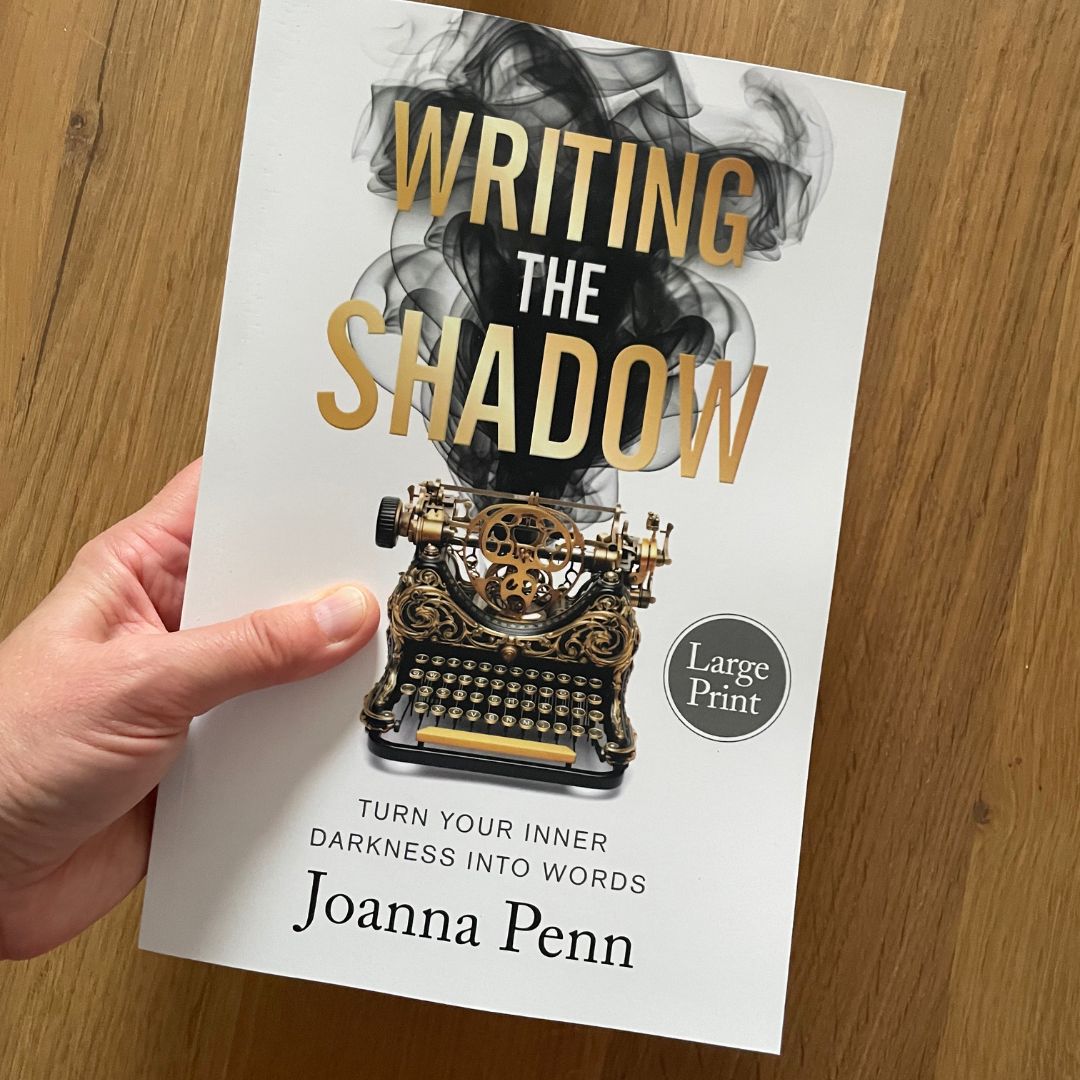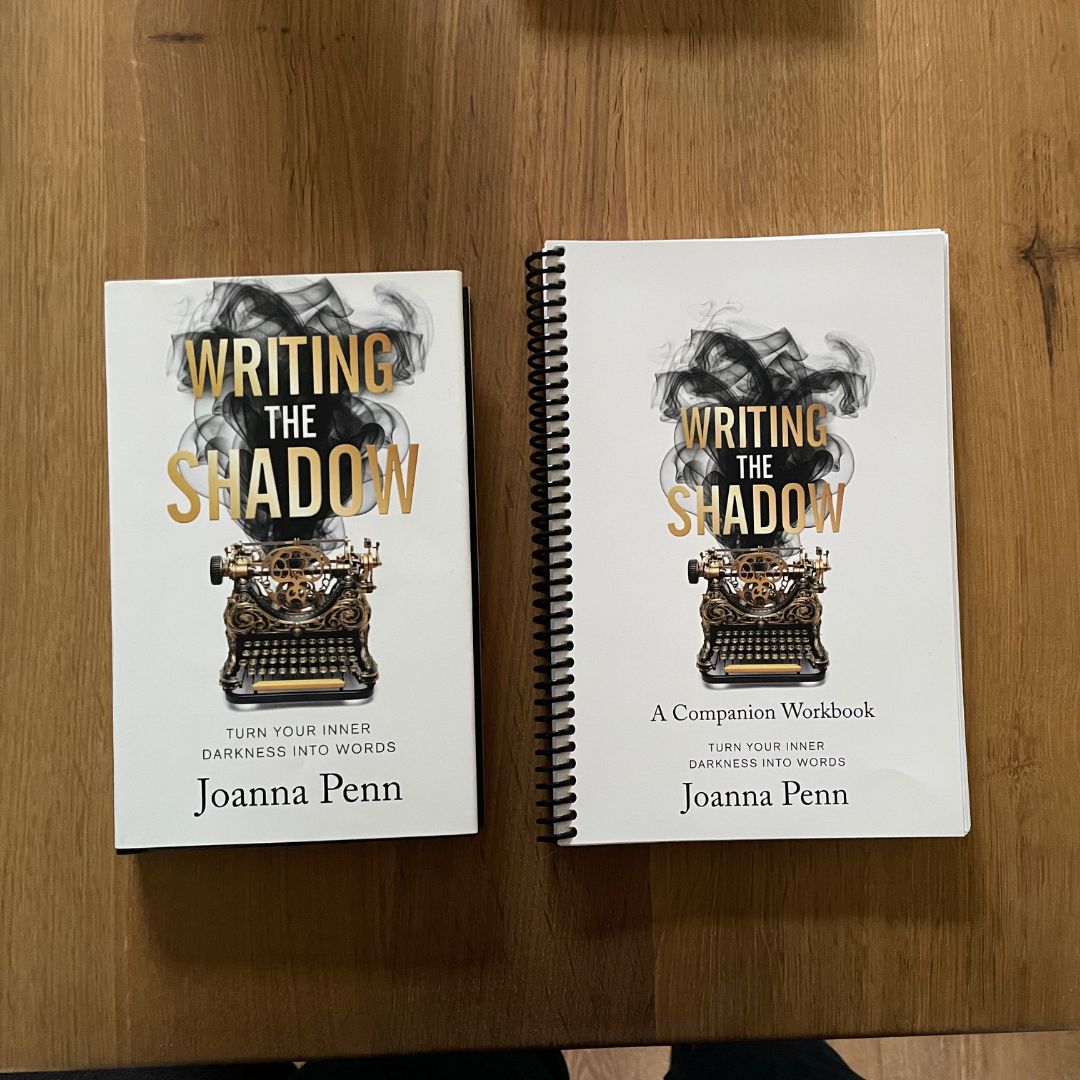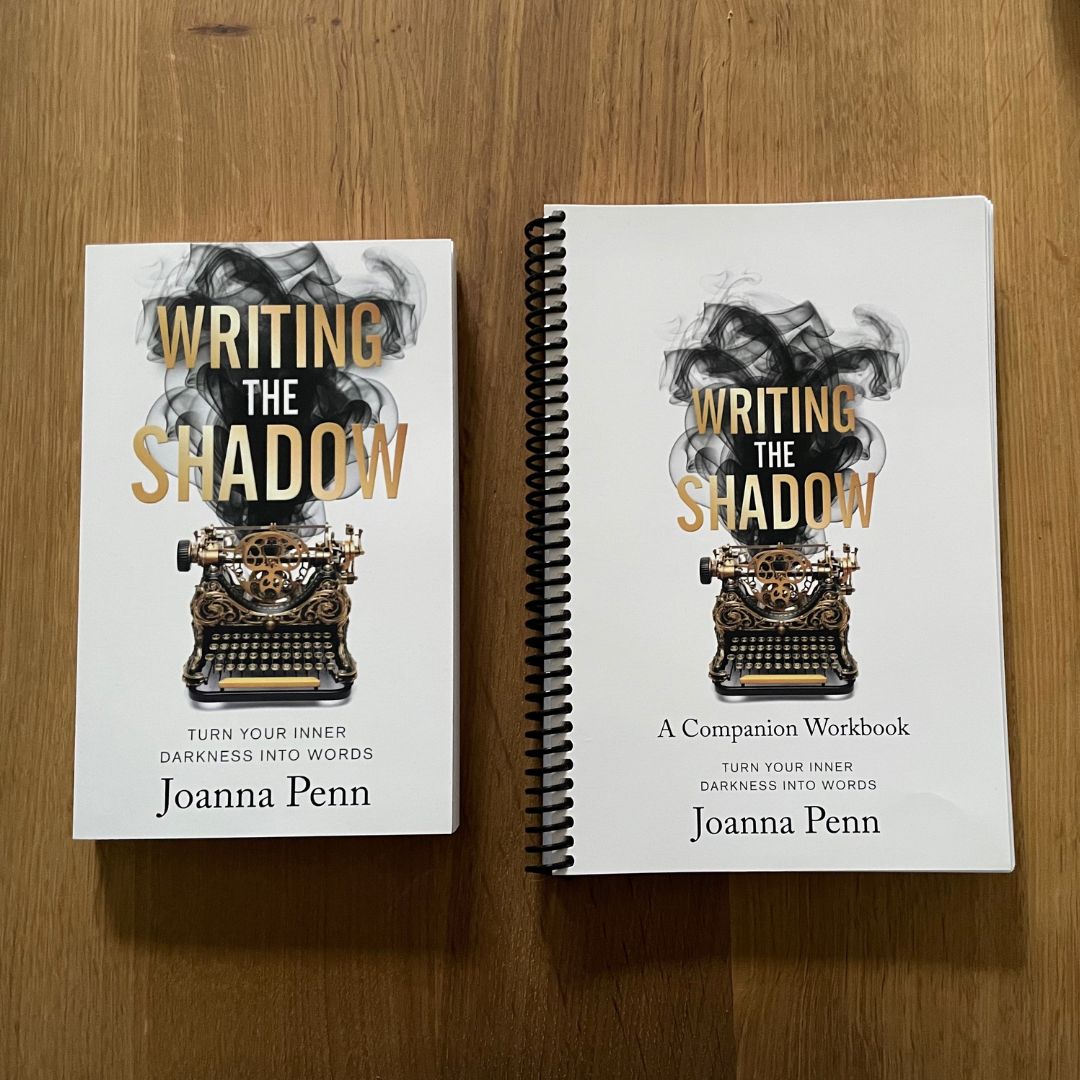

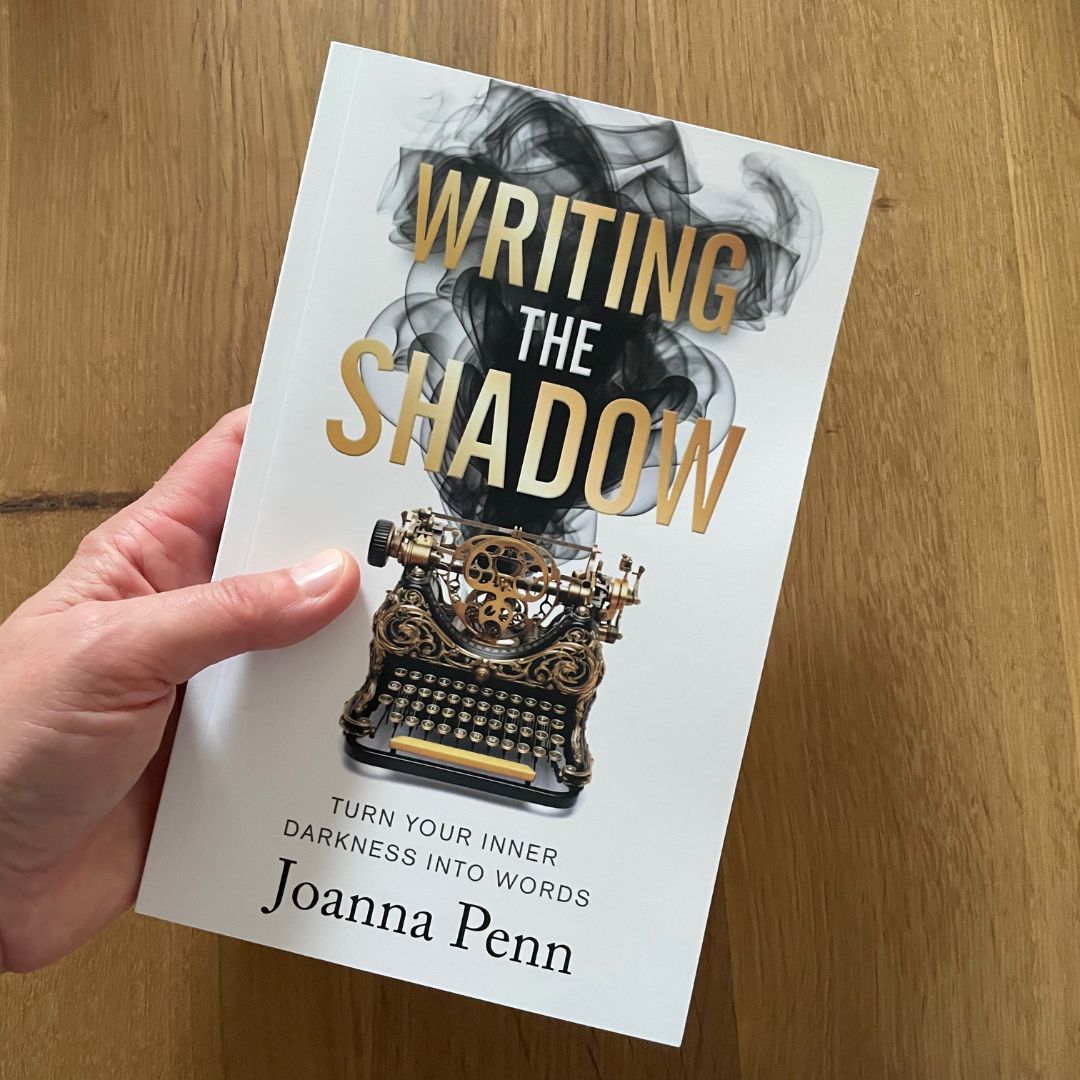
Writing the Shadow: The creative wound and the Shadow in writing
“Whatever pain you can’t get rid of, make it your creative offering.”
—Susan Cain, Bittersweet
The more we long for something, the more extreme our desire, the more likely it is to have a Shadow side. For those of us who love books, the author life may well be a long-held dream and thus, it is filled with Shadow.
Books have long been objects of desire, power, and authority. They hold a mythic status in our lives. We escaped into stories as children; we studied books at school and college; we read them now for escape and entertainment, education and inspiration. We collect beautiful books to put on our shelves. We go to them for solace and answers to the deepest questions of life.
Writers are similarly held in high esteem. They shape culture, win literary prizes, give important speeches, and are quoted in the mainstream media. Their books are on the shelves in libraries and bookstores. Writers are revered, held up as rare, talented creatures made separate from us by their brilliance and insight.
For bibliophile children, books were everything and to write one was a cherished dream. To become an author? Well, that would mean we might be someone special, someone worthy.
Perhaps when you were young, you thought the dream of being a writer was possible — then you told someone about it.
That’s probably when you heard the first criticism of such a ridiculous idea, the first laughter, the first dismissal. So you abandoned the dream, pushed the idea of being a writer into the Shadow, and got on with your life.
Or if it wasn’t then, it came later, when you actually put pen to paper and someone — a parent, teacher, partner, or friend, perhaps even a literary agent or publisher, someone whose opinion you valued — told you it was worthless.
Here are some things you might have heard:
• Writing is a hobby. Get a real job.
• You’re not good enough. You don’t have any writing talent.
• You don’t have enough education. You don’t know what you’re doing.
• Your writing is derivative / unoriginal / boring / useless / doesn’t make sense.
• The genre you write in is dead / worthless / unacceptable / morally wrong / frivolous / useless.
• Who do you think you are? No one would want to read what you write.
• You can’t even use proper grammar, so how could you write a whole book?
• You’re wasting your time. You’ll never make it as a writer.
• You shouldn’t write those things (or even think about those things). Why don’t you write something nice?
• Insert other derogatory comment here!
Mark Pierce describes the effect of this experience in his book The Creative Wound, which “occurs when an event, or someone’s actions or words, pierce you, causing a kind of rift in your soul. A comment—even offhand and unintentional—is enough to cause one.”
He goes on to say that such words can inflict “damage to the core of who we are as creators. It is an attack on our artistic identity, resulting in us believing that whatever we make is somehow tainted or invalid, because shame has convinced us there is something intrinsically tainted or invalid about ourselves.”
As adults, we might brush off such wounds, belittling them as unimportant in the grand scheme of things. We might even find ourselves saying the same words to other people. After all, it’s easier to criticise than to create.
But if you picture your younger self, bright eyed as you lose yourself in your favourite book, perhaps you might catch a glimpse of what you longed for before your dreams were dashed on the rocks of other people’s reality.
As Mark Pierce goes on to say, “A Creative Wound has the power to delay our pursuits—sometimes for years—and it can even derail our lives completely… Anything that makes us feel ashamed of ourselves or our work can render us incapable of the self-expression we yearn for.”
This is certainly what happened to me, and it took decades to unwind.
Your creative wounds will differ to mine but perhaps my experience will help you explore your own. To be clear, your Shadow may not reside in elements of horror as mine do, but hopefully you can use my example to consider where your creative wounds might lie.
“You shouldn’t write things like that.”
It happened at secondary school around 1986 or 1987, so I would have been around eleven or twelve years old. English was one of my favourite subjects and the room we had our lessons in looked out onto a vibrant garden. I loved going to that class because it was all about books, and they were always my favourite things.
One day, we were asked to write a story. I can’t remember the specifics of what the teacher asked us to write, but I fictionalised a recurring nightmare.
I stood in a dark room.
On one side, my mum and my brother, Rod, were tied up next to a cauldron of boiling oil, ready to be thrown in. On the other side, my dad and my little sister, Lucy, were threatened with decapitation by men with machetes.
I had to choose who would die.
I always woke up, my heart pounding, before I had to choose.
Looking back now, it clearly represented an internal conflict about having to pick sides between the two halves of my family. Not an unexpected issue from a child of divorce.
Perhaps these days, I might have been sent to the school counsellor, but it was the eighties and I don’t think we even had such a thing. Even so, the meaning of the story isn’t the point. It was the reaction to it that left scars.
“You shouldn’t write things like that,” my teacher said, and I still remember her look of disappointment, even disgust.
Certainly judgment.
She said my writing was too dark. It wasn’t a proper story. It wasn’t appropriate for the class.
As if horrible things never happened in stories — or in life.
As if literature could not include dark tales.
As if the only acceptable writing was the kind she approved of. We were taught The Prime of Miss Jean Brodie that year, which says a lot about the type of writing considered appropriate.
Or perhaps the issue stemmed from the school motto, “So hateth she derknesse,” from Chaucer’s The Legend of Good Women: “For fear of night, so she hates the darkness.”
I had won a scholarship to a private girls’ school, and their mission was to turn us all into proper young ladies. Horror was never on the curriculum.
Perhaps if my teacher had encouraged me to write my darkness back then, my nightmares would have dissolved on the page.
Perhaps if we had studied Mary Shelley’s Frankenstein, or H.P. Lovecraft stories, or Bram Stoker’s Dracula, I could have embraced the darker side of literature earlier in my life.
My need to push darker thoughts into my Shadow was compounded by my (wonderful) mum’s best intentions. We were brought up on the principles of The Power of Positive Thinking by Norman Vincent Peale and she tried to shield me and my brother from anything harmful or horrible. We weren’t allowed to watch TV much, and even the British school drama Grange Hill was deemed inappropriate.
So much of what I’ve achieved is because my mum instilled in me a “can do” attitude that anything is possible. I’m so grateful to her for that. (I love you, Mum!)
But all that happy positivity, my desire to please her, to be a good girl, to make my teachers proud, and to be acceptable to society, meant that I pushed my darker thoughts into Shadow.
They were inappropriate. They were taboo. They must be repressed, kept secret, and I must be outwardly happy and positive at all times.
You cannot hold back the darkness
“The night is dark and full of terrors.”
—George R.R. Martin, A Storm of Swords
It turned out that horror was on the curriculum, much of it in the form of educational films we watched during lessons.
In English Literature, we watched Romeo drink poison and Juliet stab herself in Zeffirelli’s Romeo and Juliet.
In Religious Studies, we watched Jesus beaten, tortured, and crucified in The Greatest Story Ever Told, and learned of the variety of gruesome ways that Christian saints were martyred.
In Classical Civilisation, we watched gladiators slaughter each other in Spartacus.
In Sex Education at the peak of the AIDS crisis in the mid-’80s, we were told of the many ways we could get infected and die.
In History, we studied the Holocaust with images of skeletal bodies thrown into mass graves, medical experiments on humans, and grainy videos of marching soldiers giving the Nazi salute.
One of my first overseas school field trips was to the World War I battlefields of Flanders Fields in Belgium, where we studied the inhuman conditions of the trenches, walked through mass graves, and read war poetry by candlelight. As John McCrae wrote:
We are the Dead. Short days ago
We lived, felt dawn, saw sunset glow,
Loved and were loved, and now we lie,
In Flanders fields.
Did the teachers not realise how deeply a sensitive teenager might feel the darkness of that place? Or have I always been unusual in that places of blood echo deep inside me?
And the horrors kept coming.
We lived in Bristol, England back then and I learned at school how the city had been part of the slave trade, its wealth built on the backs of people stolen from their homes, sold, and worked to death in the colonies. I had been at school for a year in Malawi, Africa and imagined the Black people I knew drowning, being beaten, and dying on those ships.
In my teenage years, the news was filled with ethnic cleansing, mass rape, and massacres during the Balkan wars, and images of bodies hacked apart during the Rwandan genocide. Evil committed by humans against other humans was not a historical aberration.
I’m lucky and I certainly acknowledge my privilege. Nothing terrible or horrifying has happened to me — but bad things certainly happen to others.
I wasn’t bullied or abused. I wasn’t raped or beaten or tortured.
But you don’t have to go through things to be afraid of them, and for your imagination to conjure the possibility of them.
My mum doesn’t read my fiction now as it gives her nightmares (Sorry, Mum!). I know she worries that somehow she’s responsible for my darkness, but I’ve had a safe and (mostly) happy life, for which I’m truly grateful.
But the world is not an entirely safe and happy place, and for a sensitive child with a vivid imagination, the world is dark and scary.
It can be brutal and violent, and bad things happen, even to good people.
No parent can shield their child from the reality of the world. They can only help them do their best to live in it, develop resilience, and find ways to deal with whatever comes.
Story has always been a way that humans have used to learn how to live and deal with difficult times. The best authors, the ones that readers adore and can’t get enough of, write their darkness into story to channel their experience, and help others who fear the same.
In an interview on writing the Shadow on The Creative Penn Podcast, Michaelbrent Collings shared how he incorporated a personally devastating experience into his writing:
“My wife and I lost a child years back, and that became the root of one of my most terrifying books, Apparition. It’s not terrifying because it’s the greatest book of all time, but just the concept that there’s this thing out there… like a demon, and it consumes the blood and fear of the children, and then it withdraws and consumes the madness of the parents… I wrote that in large measure as a way of working through what I was experiencing.”
I’ve learned much from Michaelbrent. I’ve read many of his (excellent) books and he’s been on my podcast multiple times talking about his depression and mental health issues, as well as difficulties in his author career. Writing darkness is not in Michaelbrent’s Shadow and only he can say what lies there for him. But from his example, and from that of other authors, I too learned how to write my Shadow into my books.
Twenty-three years after that English lesson, in November 2009, I did NaNoWriMo, National Novel Writing Month, and wrote five thousand words of what eventually became Stone of Fire, my first novel.
In the initial chapter, I burned a nun alive on the ghats of Varanasi on the banks of the Ganges River. I had watched the bodies burn by night on pyres from a boat bobbing in the current a few years before, and the image was still crystal clear in my mind. The only way to deal with how it made me feel about death was to write about it — and since then, I’ve never stopped writing.
Returning to the nightmare from my school days, I’ve never had to choose between the two halves of my family, but the threat of losing them remains a theme in my fiction. In my ARKANE thriller series, Morgan Sierra will do anything to save her sister and her niece. Their safety drives her to continue to fight against evil.
Our deepest fears emerge in our writing, and that’s the safest place for them. I wish I’d been taught how to turn my nightmares into words back at school, but at least now I’ve learned to write my Shadow onto the page. I wish the same for you.
Questions:
• What did books and writing mean to you earlier in life?
• Do you recall comments or experiences that might have become your creative wound(s)?
• How might these hold you back as a writer now?
• How can you move past them?
• What are your nightmares? Have you written them into your stories?
• Can you trace the origin of why you write what you do?
Resources:
• Bittersweet: How Sorrow and Longing Make Us Whole — Susan Cain
• “In Flanders Fields,” John McCrae. http://www.public-domain-poetry.com/john-mccrae/in-flanders-fields-1461
• National Novel Writing Month — www.nanowrimo.org
• The Creative Wound: Heal Your Broken Art — Mark Pierce
• The Successful Author Mindset: A Handbook for Surviving the Writer’s Journey — Joanna Penn
• Writing From Your Shadow Side with Michaelbrent Collings — www.TheCreativePenn.com/michaelbrentshadow
• Books I love — www.jfpenn.com/bookrecommendations