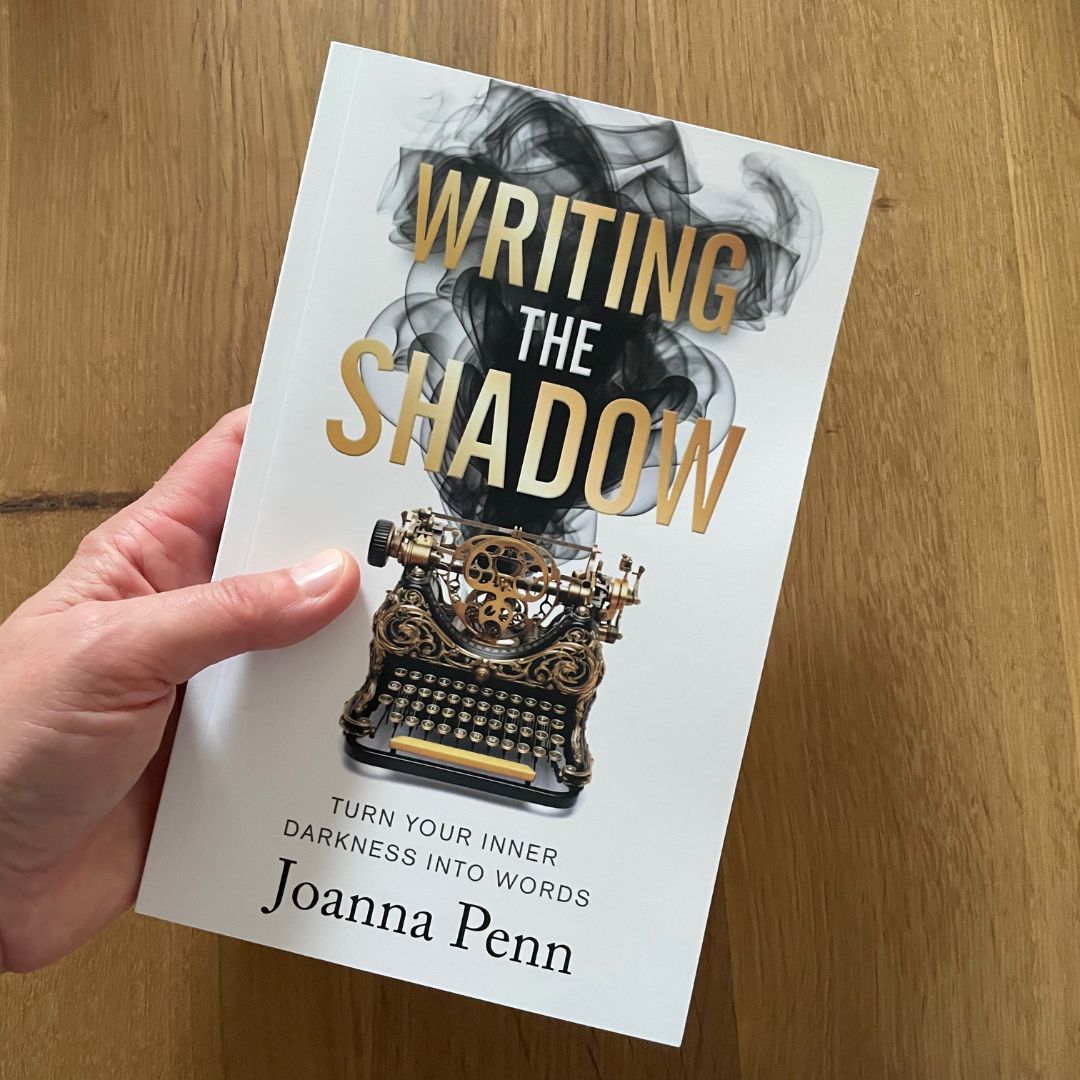
Writing the Shadow: Be curious
“Let your curiosity be greater than your fear.”
—Pema Chödrön
Curiosity is your “desire to know,” according to the Merriam-Webster definition, and that “interest leads to inquiry.”
It’s a hunger to learn, discover, and explore. It’s the feeling of wonder and intrigue that compels us to investigate further when we encounter something new, unknown, or unexpected.
You know when you’re curious about something because your focus fixes on whatever you’re interested in. You want to know more, and your mind tunes out other things while you satisfy your curiosity, however long it takes.
Curiosity is also driven by intrinsic motivation. You don’t need to be paid or bribed into being interested. There’s just something about whatever it is that draws you in.
As a writer, whatever kindles your curiosity may also spark a lot of ideas for your next creative project.
What if you don’t know what you’re curious about?
Back in 2006, I was working in Brisbane, Australia, as an IT consultant. After almost a decade in my professional career, I was desperately miserable.
I escaped into thriller novels on my train journey to work every day, but I never even considered that I might write fiction. After all, I didn’t have any imagination, and I didn’t have any ideas that might be the seed of a story.
I was writing a self-help book (which later became Career Change). It was based on how I deconstructed processes as part of my day job, so it didn’t seem too far from what I could already do.
But writing fiction? That was never going to happen.
I literally could not imagine it back then, because I had lost touch with my curiosity and that was where my ideas were hiding. I had to turn off the social conditioning that had shrouded it for decades and actively work to tap into what I was interested in.
The mainstream education system mostly rewards children for obedience and passing exams based on rigid answers, rather than for curiosity and creativity. Curiosity can be disruptive in a classroom, so it’s discouraged.
Sometimes we’re shamed for asking dumb questions, or ridiculed for not knowing something, so we stop asking because we fear looking stupid or being embarrassed.
We’re trained to value careers and pursuits that have more obvious outcomes, because clearly curiosity won’t pay the bills. It’s also potentially dangerous. We all know that ‘curiosity killed the cat,’ so we’re discouraged from wandering off the well-worn paths that others tread.
We also don’t have time in our busy lives. Curiosity more easily blooms when we leave unscheduled time for investigating different things, and in our over-scheduled lives, it can be too easy to stick to the routine. But as authors, we need to make the time.
Why you need to tap into curiosity
As an author, it’s easy to get caught up in trends and try to produce what you think readers want rather than following your true inspiration. You may feel pressured to write about certain popular topics or in styles or genres that are (currently) commercially successful, to sublimate your curiosity into what others want you to focus on.
But when you suppress your authentic interests, your work may feel shallow, derivative, or lack a distinctive author voice. Given the expansion of AI tools, if you write generic work, it may also be unrecognisable from that generated by a Large Language Model.
Once again, I have no objection to the use of AI tools in the creative process, but the spark of curiosity must come from you.
The most impactful and enduring works come from authors who nurture their genuine curiosity and turn it into a body of work that stands out from the masses because it taps into a distinct set of interests that intersect in unique ways.
So how can we tap into our curiosity and maybe glimpse the Shadow there?
Schedule an Artist’s Date
In her book The Artist’s Way, Julia Cameron encourages the practice of a regular Artist’s Date, a solo expedition where you explore something that might interest you.
Set aside time without expectations and try something new. Go to an art gallery or museum, take a creative class, or schedule an unusual experience, and just see how it goes.
Go alone, so no one else can tell you what to think or how to react. Watch for that spark of interest.
Back in 2006, this is how I broke out of my corporate limitations, the self-imposed boundaries I had put on my mind. I went on lots of Artist’s Dates — excursions to a farmer’s market by the sea, exhibitions at the modern art gallery, and a drawing class, amongst other things.
Slowly, I re-learned how to tap into the feeling of being curious and I rediscovered interests that were suppressed long ago because they were unacceptable in some way, or made others feel uncomfortable, or that I had discarded as useless for my corporate career path.
I started writing fiction in 2009 and published Stone of Fire in 2011, when we still lived in Brisbane, and it marked the beginning of a completely different career. I still go on regular Artist’s Dates as part of refilling my creative well and my stories are often based on these experiences, which I include in my Author’s Note at the back of my books.
Pay attention to how you feel in specific places
I travel a lot for book research these days, but I’ve always enjoyed discovering new places. Tapping into my curiosity around sense of place is also a key element of my creative process.
My fifth novel, Desecration, was a break-through book for me, and the first time I consciously let my dark horse run.
The spark of the idea came from visiting the Hunterian Museum at the Royal College of Surgeons in London. It’s an anatomy museum with body parts in jars and gruesome medical equipment used by early surgeons in the time before anaesthetic.
As I walked around the exhibition, I had a visceral response to a wooden dissection board covered with plasticised human veins. My stomach turned in a combination of disgust and revulsion — but I also couldn’t look away.
My mind teemed with questions about the person who had lain on this board generations ago: How did they die? Were they still alive as the surgeon cut into them? Who did the other body parts in jars belong to? How did modern science benefit from such brutality — and what is still brutal about medical practice today?
My curiosity about the dark history of anatomy felt taboo for a ‘nice girl’ like me, especially as I was not following a medical career. But I wanted to learn more.
I visited the Von Hagens Body Worlds exhibition filled with plastinated, exploded corpses in various poses, as well as the Mütter Museum in Philadelphia. I collected books on anatomy and corpse art, and read the Morbid Anatomy blog, as well as delving into how some people use body modification to express themselves. I investigated teratology, the study of developmental abnormalities, and researched Mengele’s Nazi experiments.
I let my dark horse run in writing Desecration. It’s not for everyone, but for those who are curious about such things, it’s far more than a murder mystery novel.
What do you like to watch, read, or listen to?
We live in a golden era of content with unlimited options for consumption. Whether you prefer film or TV, gaming, music, books, or social media feeds, there is something for everyone.
When I was growing up in the 1980s and 1990s, we were limited in what we could consume. There were gatekeepers, arbiters of taste, who controlled what was produced and released. Some argue those were better times, but it’s clear that those gatekeepers only represented a tiny segment of humanity and what people wanted.
Now there is unlimited choice and many niches where we can tap into curiosity. We may glimpse the Shadow in what we choose to consume — particularly when we’re alone, when others cannot judge us.
We may also glimpse a Collective Shadow in what becomes a mainstream hit, or what resonates with us as a family, a couple, or among friends.
I rarely watch TV shows more than once, so when I do watch them again, it indicates there’s something that resonates more deeply.
One show I’ve watched several times is The Split, a British TV series written by Abi Morgan, featuring divorce lawyer Hannah Stern, along with her two sisters and her mother.
The show tackles every angle of divorce and the complications of family relationships, love between sisters, and between daughters and mothers, as well as single parenthood. The characters are flawed and broken and yet, it’s a joyful, poignant series that has left me in tears more than once.
In terms of how it might reflect elements of Shadow, my parents divorced when I and my brother were little. My dad later remarried and had three more children. I am the eldest — I have two sisters and two brothers — and my relationships with my siblings are precious to me.
Divorce brings pain, but it also brings a chance for a second life. I’m grateful for my parents’ divorce because it gave me my siblings, as well as two nieces at the time of writing. I can’t imagine my life without them, although, of course, there will always be the wonderful complications of family relationships to navigate.
I’m happily married for the second time, but my divorce from my first husband was difficult, as it is for anyone whose serious relationship ends.
Divorce for me is bittersweet. The wounds from my own experience as a child, and as an adult, are the foundation of my present happiness with Jonathan, and my blended family. So, perhaps it’s not surprising that many of my novels feature sacrifice for family as a theme, as well as elements of second chance romance — nor is it surprising I enjoy The Split.
Buy paper books for the glimmer of an idea
In these days of digital consumption, it’s easy to forget the serendipity of a physical bookstore, but sometimes we can find the seed of an idea in someone else’s curiosity. I find the most interesting stores are the more curated book collections associated with art galleries or museums or hyper-local stores in specific places of interest.
I collect paper books that pique my interest even if I don’t know how they might fit into a project. It may be years until whatever it is emerges into a work in progress, but if I have the book, then I know it will be useful somehow.
Some of the books I used to research this one have been on my shelf for years, but sometimes a book can be an immediate spark for an idea, like one I found at the Ets Haim Library, which is housed in the Portuguese Synagogue in Amsterdam.
We walked through the synagogue and library and then, as is my habit, I visited the small bookstore. There was a tiny selection of English-language books, but one title immediately leaped out at me: Jewish Pirates of the Caribbean: How a Generation of Swashbuckling Jews Carved Out an Empire in the New World in Their Quest for Treasure, Religious Freedom, and Revenge by Edward Kritzler. What a title!
That book and the synagogue itself contained the seed for what became my thriller Tree of Life, a race against time in the hunt for the Garden of Eden before a radical eco-terrorist group unleashes extinction on the entire planet.
Lean into your curiosity, trust your intuition, and you never know what could emerge.
Notice the Shadow in other people’s art
If you’re struggling to find elements of your Shadow, try noticing aspects in other creative works.
In Shakespeare’s Romeo and Juliet, the young lovers have to hide their relationship, keeping it a forbidden secret. You can always catch a glimpse of Shadow in what is kept secret from others.
Their warring families are engaged in a blood feud that divides Verona, and each family demonises the other. There is no way this romance will ever be allowed.
The star-crossed lovers become enmeshed in even more problems with the deaths of Romeo’s friend Mercutio and Juliet’s cousin Tybalt, eventually driving the lovers to desperate action. As Romeo and Juliet try to keep their secret and escape their family feud, the story ends in tragedy and suicide. The Shadow side of love and family duty, indeed.
You can also include elements of other people’s Shadow work in your own. In Stone of Fire, a key part of the plot was inspired by The Red Book, psychologist Carl Jung’s journal, written during a breakdown and considered an exploration of his Shadow. It’s an oversized red leather-bound book he filled with calligraphy of his thoughts and paintings of his inner life, visions, and dreams.
He wrote it between 1913 and 1929 and it was only published in 2009, which is when I bought an oversized full-colour edition, paying the most I had ever paid for a book.
The paintings inside include images of intricate mandalas, as well as mythological creatures. There’s also a particular image of a grey stone with a pillar of fire rising from it, filling the room with billowing sparks and smoke as a man kneels in worship before it. Many of the ideas and symbols from The Red Book made it into Stone of Fire, including that very chamber.
If you’re drawn to someone else’s art — or if it triggers you or makes you uncomfortable — consider why and whether it might help you identify elements of the Shadow in yourself.
Questions:
• What sparks your curiosity?
• How do you know when you’re curious about something? How can you lean into that even more?
• How could you make an Artist’s Date a more regular part of your life to refill your creative well?
• How else can you fuel your curiosity?
• What do you like to watch, read, or listen to when you are alone?
• How might those things relate to your Shadow?
• In what ways can you glimpse the Shadow in other people’s art?
Resources:
• Desecration — J.F. Penn
• Hunterian Museum at the Royal College of Surgeons, London — www.hunterianmuseum.org
• Jewish Pirates of the Caribbean: How a Generation of Swashbuckling Jews Carved Out an Empire in the New World in Their Quest for Treasure, Religious Freedom, and Revenge — Edward Kritzler
• Morbid Anatomy: Surveying the Interstices of Art and Medicine, Death and Culture — www.morbidanatomy.org
• Romeo and Juliet — William Shakespeare
• The Artist’s Way: A Spiritual Path to Higher Creativity — Julia Cameron
• The Red Book — C.G. Jung. I have the beautiful oversized hardcover Liber Novus (Philemon) edition, translated by Sony Shamdasani, which you can find here: www.TheCreativePenn.com/redbook
• Tree of Life — J.F. Penn
• When Things Fall Apart: Heart Advice for Difficult Times — Pema Chödrön