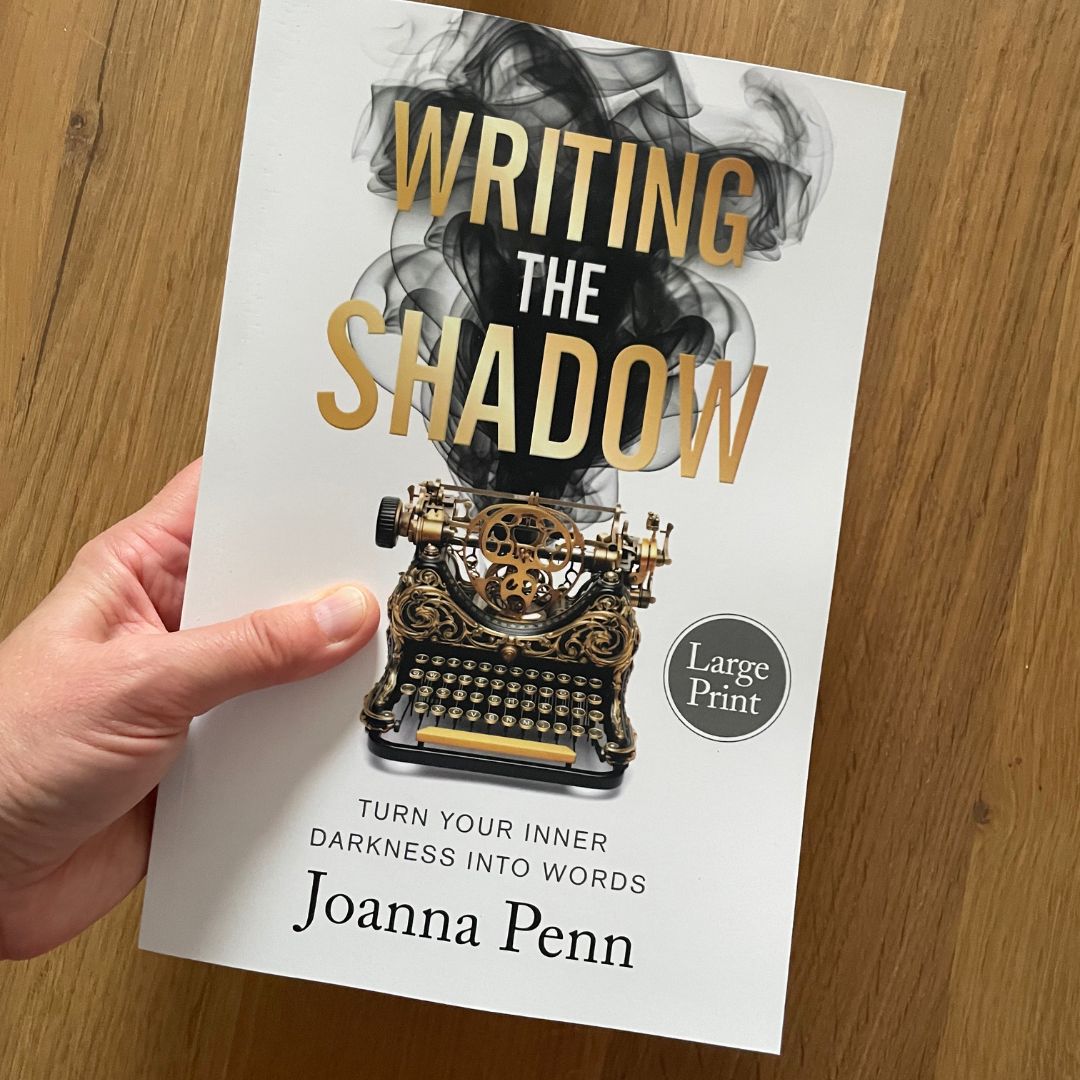

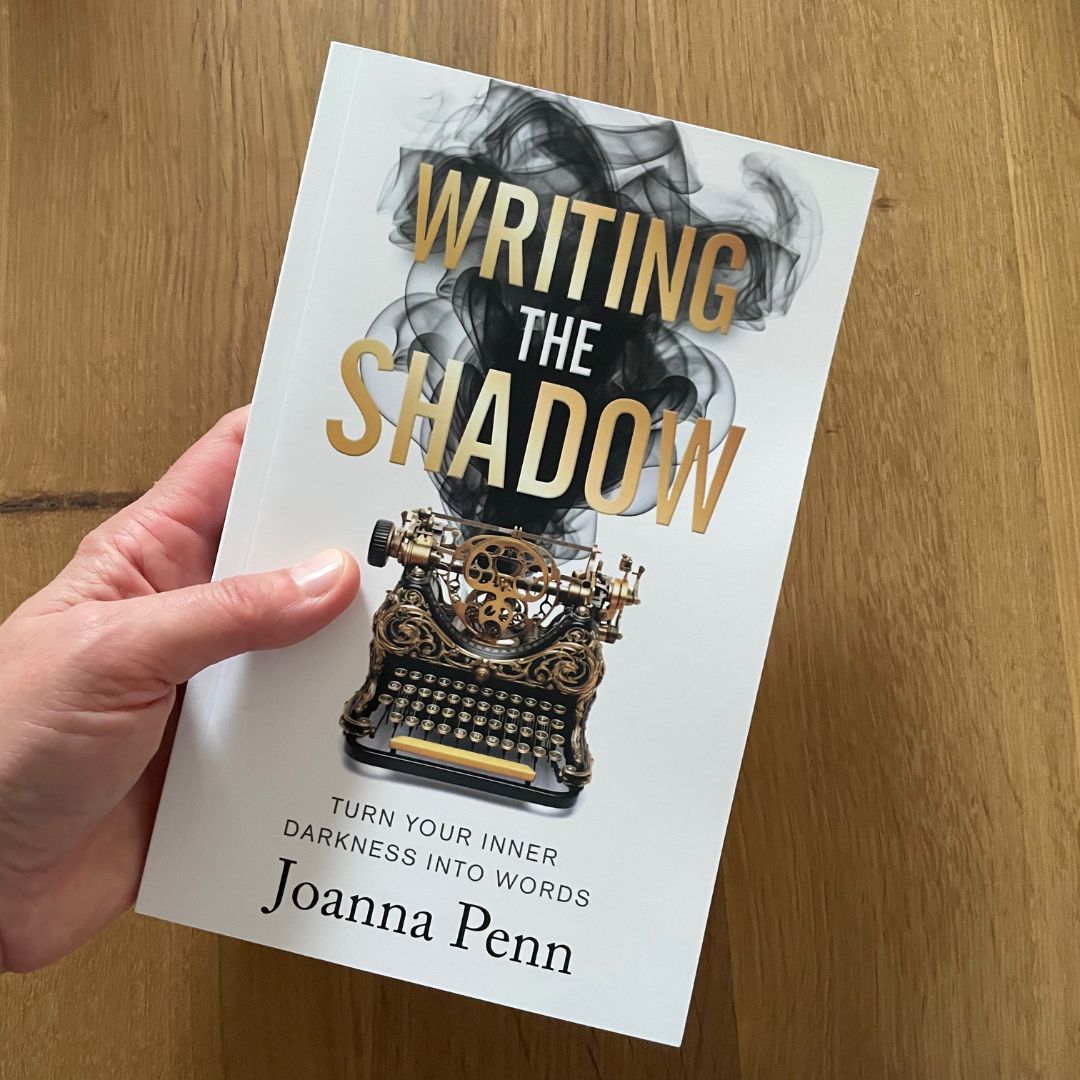
Writing the Shadow: Mine your writing for aspects of Shadow
We are writers. Our words are powerful.
We turn thoughts into reality through our books.
We figure out what the hell is going on with the world through our stories.
We learn what we need to by writing about it and sharing with others.
We heal ourselves one sentence at a time.
It makes sense that we can glimpse our Shadow side in the words we write.
You might catch sight of it in a draft of a poem, or a snatch of emotional writing in an old journal. You might discern an element from a character that you suddenly recognise yourself in, or a theme or symbolic motif that reappears again and again in your work.
You may find it in the writing you do in a deep flow state — the kind you read later and wonder who wrote those words.
Here are some ways to investigate further.
Read your existing writing with new eyes
You need some distance from your work in order to do this, and you need to feel emotionally separate from a book to read it with new eyes, but it’s possible to see elements of Shadow there.
Examine your books of the heart, books written because you were inspired to write them or felt intuitively they were what you needed to write. It may not be so true with a product written to market, although, of course, there are traces of the writer in any book.
In early 2022, I rewrote my first novel, Stone of Fire, and re-published it, as well as sharing my lessons learned on my podcast and in my book How to Write a Novel. It was a useful exercise for understanding the development of my craft, but it was also eye-opening in terms of glimpsing my Shadow.
The story includes these elements:
• Sacrificing everything for family
• Love between sisters
• Travel to religious and historical locations, with musings on what religion and faith really mean
• Questions about good versus evil, and what happens after death
• A glimmer of second-chance romance
As I went through the rewriting process, it was fascinating to see how much of the story reflected things I didn’t realise were so personal over a decade earlier when I wrote the first draft. My other books contain different aspects of Shadow that show the passage of time and my changing situation and thoughts.
Insights into your own work may not be obvious when you are still close to the book. Try reading your older work, perhaps even earlier drafts, and see what you can find.
Use journaling, free-writing, poetry, or other forms of instinctive, more emotional writing
Try writing specifically to access your Shadow.
Journaling involves scheduling time and writing your thoughts as they come up. It doesn’t have to be in complete sentences, or paragraphs, or anything structured, although it can be. You can write based on prompts, you can use the questions in this book, or you can just write whatever comes into your head when you sit down for a journaling session.
You can free-write, which is a timed writing session where you keep your hand moving on the page. Don’t stop writing, even if it’s garbage or repetition, until the timer stops. That little bit of extra force means you might tap into a deeper side.
Poetry can be far more symbolic and metaphorical, so you may tap into something deeper if you write it — and of course, this is all first draft writing, so you don’t need to show it to anyone. Try a poetry class to get started. I’ve done several over the years and have always found them useful.
As you go through this book, use ideas and phrases that trigger you to write on and see what comes up.
“If I don’t write to empty my mind, I go mad.”
—Lord Byron
Use AI tools to analyse your writing
If you’re triggered by the idea of using artificial intelligence (AI) tools, that might reveal something in your Shadow around technology. Use free-writing or journaling to delve into that further and try to glimpse why you react so strongly.
If you’re happy to try AI tools, I like the Claude 100K model at the time of writing, which you can access through Poe.com.
Given how fast the tools change, there will be other models able to analyse your writing, so research what might work for you.
Importantly, read the terms of service for a tool and decide whether you are happy before continuing to upload your work.
Personally, I’m not worried about working with these tools, but you must make your own decision (and I won’t be doing tech support!).
I used the following prompt to analyse my thriller Crypt of Bone.
“Can you please act as a story analyst with a specialty in Jungian psychology around the Shadow. What elements of the Shadow are in the attached book, Crypt of Bone?”
I uploaded the PDF print file of the book (around 65,000 words) for the model to analyse.
Here are a few of the notes it returned:
• The themes of fanaticism and people doing terrible things in the name of religion/God may connect to personal experiences with rigid belief systems or guilt over past actions.
• Morgan Sierra’s self-destructive tendencies and attraction to danger could signify an unconscious wish for punishment or penance. Her struggles to trust others may stem from betrayal or abandonment wounds.
• The secret organisation Thanatos appears to be tapping into ancient, primal impulses related to violence, destruction and the fulfilment of prophecy. This aligns with ideas of the Shadow containing repressed drives that go against civilised norms.
• References to occult knowledge, curses and demonic forces hint at engaging with darker, more taboo aspects of human nature and spirituality that exist in the Shadow.
There were many more insights I found fascinating, and while I was aware of some of these things during the writing process, it’s interesting to read an analysis of my work from an external source that imposes no judgment.
I then asked,
“If you were a Jungian analyst with story expertise, what questions would you ask this author to try to understand their Shadow side? Please list at least fifteen questions.”
Here are a few of them:
• Which characters do you most identify with and why? Which do you feel most different from?
• Do you see any of your own unaccepted qualities reflected in the villains? If so, in what ways?
• What inner forces or situations in your life have you felt a lack of control over?
• What inspired you to write about occult and taboo topics like curses and prophecies?
• Have you ever felt especially worthless, inferior, or like a failure in any aspects of life?
AI tools can often help by prompting us with questions to consider further in free-writing or journaling. Just ask them to ask you about a particular subject.
I mainly use ChatGPT Pro and Claude2 models at the time of writing as collaborative brainstorming partners for my work and in other aspects of my life.
If you want more ideas around AI for writing, then join the Facebook group www.facebook.com/groups/aiwritingforauthors
Questions:
• How can you mine your writing for elements of Shadow? Which of these methods resonate?
• If you experience resistance towards any method, why might that be?
Resources:
• Writing Tips: Lessons Learned From Rewriting My First Novel Over a Decade Later with Joanna Penn — www.TheCreativePenn.com/rewritefirstnovel
• You can access Claude2 100K model through Poe.com as a paid subscription. You can also use ChatGPT Pro using the Advanced Data Analysis setting. These models change all the time, so please do your own investigation into what’s current and make sure you’re happy with the Terms of Service before use.
• I have interviews and resources on futurist topics, AI, and specific tools for writers if you want to explore further: www.TheCreativePenn.com/future
• If you want more ideas around AI for writing, join the Facebook group www.facebook.com/groups/aiwritingforauthors