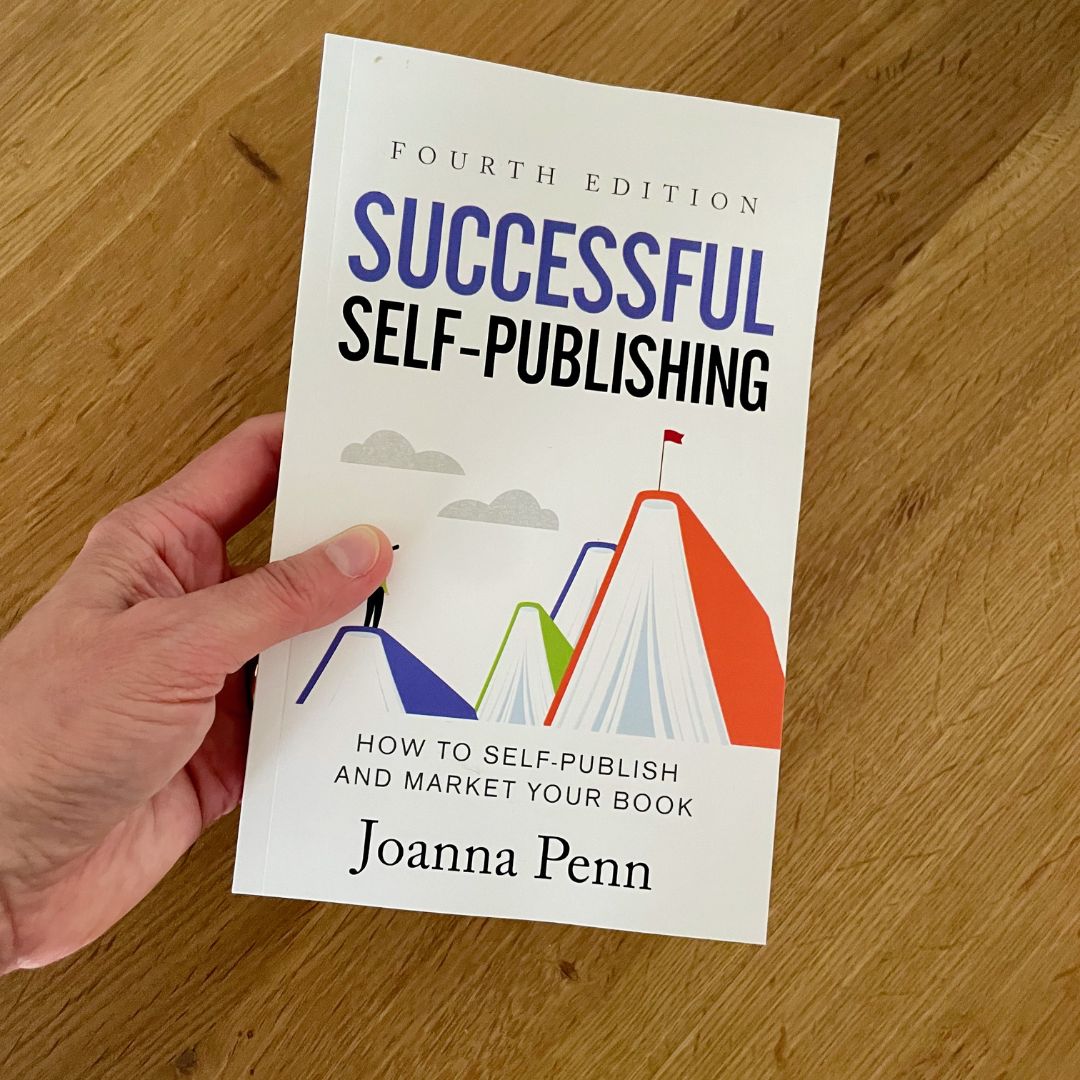
Successful Self-Publishing: Different ways to market your book
I’m often asked, “What’s the one thing I should do to market my book?”
Annoyingly, the answer is: “It depends.”
It depends on you and your personality, your book, your budget, your goals and definition of success, as well as market conditions.
There is no silver bullet, no magic formula that works for every book and every author at any time.
Here are some ideas you could use to get started. You can find books and courses on every one of these, so if you’re drawn to a particular method, dive deeper, learn more, experiment, and see what works for you.
(1) Write more books
If you look at lists of the best-known, best-loved, and richest authors, they generally have a lot of books and have been publishing for many years.
We are writers. We write. So it makes sense that the best marketing starts by writing more books.
One book is not enough to establish an author career, if that’s what you want. Even if a single book breaks out and becomes the ‘must read’ of a particular year, it doesn’t mean that readers will buy the next book from that author. They may not even remember the author’s name. But if you have three or four books that offer the same type of experience and if a reader reads them all, you’re likely to have won a fan who will actively look for your next book.
Every time you launch something new, more people have a chance to find out about your work. Every time you write in a new genre or publish in a new format, different kinds of people discover you. Some of them will go on to buy or read or listen to more of your work, join your email list, or support you in other ways.
For example, perhaps you found me through my show, The Creative Penn Podcast, then you downloaded my Author Blueprint, then you listened to my craft audiobook, How to Write a Novel, and now you’ve bought this book.
Or perhaps you found my first thriller, Stone of Fire, as a free promotion through BookBub and then read all the others in the ARKANE thriller series, before supporting my Kickstarter for book 13, Spear of Destiny.
I have a lot of books across many genres written over almost twenty years, so there are many different paths into my body of work, which grows over time as I continue to create. This is definitely my favorite way to market!
By producing new work, you will develop an audience over time, as well as finding your voice and increasing your creative self-confidence. You will become a better writer with every book, so the chances of readers loving your work will also increase.
You can also experiment with different forms. Try short stories, short non-fiction or novellas, as well as novels and full-length non-fiction or memoir. Once you have enough material, consider putting multiple books together in a boxset or bundle. There are so many possibilities!
(2) Write multiple books in a series and link them together
Existing customers will buy more books from an author if the new book promises the same experience delivered in previous books, whether they are fiction or non-fiction. This is why series are so powerful.
As a reader, there are some authors I pre-order from because I love a particular series, even though I might not read the other books they have. I’m loyal to the series characters, even more so than the author, because I want to know what happens next and I get an (almost) guaranteed experience.
For non-fiction, there are authors who I trust and whose books I buy because I know they will be interesting, informative, and inspiring.
If a reader discovers and loves your series when you release book five, they are likely to go back and buy the rest of them, which means more income for you and more satisfaction for the reader.
A novel in a series is also faster to write than a stand-alone title, as you don’t have to reinvent the characters and the world, you just need to find your plot and start writing.
If you write literary fiction or enjoy writing stand-alone books, consider the themes that tie your books together and think of ways to encourage people to move between them. You can create interconnected stand-alones — for example, books set in the same universe or linked by theme — so recommendation engines connect the dots.
Your options expand the more books you write. I have several fiction series, with the main being my ARKANE thrillers, but I also have stand-alone stories like Catacomb and Death Valley. For non-fiction, I have books for authors in a series, but I also have a memoir, Pilgrimage, which is a stand-alone.
While it’s easier to market books in a series, I certainly understand the creative urge to write all kinds of different things!
(3) Optimize your metadata
Metadata is the information about your book, rather than the book itself. It includes your title, subtitle, series title, sales description, keywords, categories, and your author bio. Some platforms also include data points like reviews and sales history so their recommendation engines understand where your book fits into the ecosystem.
We went through this in chapter 2.3, but metadata is a key aspect of marketing. If you find your marketing efforts aren’t getting the results you want, make sure you’ve made the right metadata choices for your book, and change things over time to keep it fresh.
(4) Use different price points, strategic discounting, and value bundles
The more books you publish, the more flexibility you have with pricing. You also won’t be so emotionally attached to any individual book, which makes it easier to play with pricing.
If you’re in Kindle Unlimited for your ebooks, you get five free days for promotion every ninety days. If you’re wide, you can set the price to free on all other stores, and Amazon will price match. My first ARKANE thriller, Stone of Fire, is free on all ebook stores, which brings people into the thirteen-book series.
You can also use limited-time discounts — for example, drop the price to 99 cents and promote the sale, introducing your books to new readers who might be hesitant to try a new author at full price.
You can also use fan pricing and launch pricing interspersed with full-priced books, rewarding your most loyal readers while still capitalizing on launch momentum and algorithms.
If you have books in a series, you can sell bundles at a great price, giving the reader value and putting more money in your pocket, especially if you sell direct.
(5) Build an email list by offering a reader magnet, then stay in touch
Make sure you have a link at the back of your book to a free reader magnet, something that the reader wants, if they give you their email address.
For my non-fiction, I offer my free Author Blueprint ebook at:
www.TheCreativePenn.com/blueprint
For fiction, I offer a free thriller at:
The call to action for both is in the back of every book, and also on my websites, podcasts, and social media, and people sign up for these lists every day.
Once people are on your email list, stay in touch. Let them know about new releases and giveaways, and draw them closer to you by sharing personal photos, book recommendations, or behind-the-scenes research. If you’re unsure what to email about, join a few successful author lists and see what they’re doing.
There are lots of email services. I use and recommend Kit (previously ConvertKit) at:
(6) Build a ‘street’ team or ARC team
This group is a subset of your main email list, and is made up of readers who want advance reader copies (ARCs) and who are happy to promote, write reviews, and share on social media.
Some authors have incredibly active ARC teams with extra swag and giveaways as well as events. But you can keep it simple. I have an automated email inviting people to my Pennfriends list that goes out after six months on my fiction email list. They get early access to some new books and also free backlist books and many of them write reviews.
You can give away ebooks with watermarks through BookFunnel if you want to protect the files.
(7) Ask for reviews to build social proof
You don’t need an ARC team to get reviews. You can just ask readers by including a call to action at the back of your books — for example, “If you enjoyed the book, please leave a review on the store where you bought it. Thank you.”
Many authors obsess about getting reviewed in traditional media, but it’s more important to build up social proof on the online stores or on Goodreads (owned by Amazon). This evidence of reader approval will help you get promotions. For example, BookBub requires a certain number of reviews and a high average review rating before accepting a book for promotion.
Free books are the easiest to get reviews on, so if you’re struggling to get started, put your book on a free promotion and do some advertising to get downloads.
(8) Use social media
There are lots of different social media platforms, and each has its own rules and tactics, as well as its own demographic. You cannot be successful on all of them, so focus on one or two, learn the right skills for that platform, test out different content, and lean into what works.
The rise in beautiful print editions, particularly for fiction, has benefitted from the trend in social media video, with TikTok videos driving many up the bestseller lists.
While social media marketing can be ‘free’ in terms of money, you will certainly pay with your time. All the platforms reward regular content and engagement, which works for some authors, but not for others.
There are authors who use social media effectively to drive massive sales and success online, but they put a lot of work in, or they hire people to help. Find successful authors in your niche to follow and model what they do if this is an area you want to focus on.
Personally, I’m not a huge fan of social media and use it more to prove I’m a human, sharing photos of my life and book research on Instagram @jfpennauthor. I also use X @thecreativepenn as a news platform where I learn about new technology and find content to share on my podcast. I also have Facebook pages, Pinterest boards, and a LinkedIn profile, but I’m not particularly active on any site.
(9) Use content marketing
Content marketing is my favorite form of marketing, and I’ve built my business around it. It’s essentially offering free content in your preferred format that educates, inspires, or entertains, and attracts people who might also be interested in buying your books, products, and services.
For non-fiction, I’ve been blogging and podcasting at www.TheCreativePenn.com since 2008. I also have a YouTube channel @thecreativepenn. For fiction, I have free short stories, audio and video on YouTube @jfpennauthor, and I also have my Books and Travel Podcast and blog.
This content can also be a stream of income. For example, YouTube videos can be monetized with ads, podcasts can include sponsorships, and Substack newsletters can offer a paid tier alongside free information.
Providing quality content over time builds up your site and you personally as an authority and trusted source in a niche. The content remains on your site and you can build up a body of work that continues to attract people over the long term.
Content marketing often requires longer form pieces than social media. I create podcast interviews and episodes of thirty minutes to an hour weekly, instead of multiple thirty second videos on social media every day. No one has time for both things, so choose what suits you and your personality.
To help you decide, ask yourself this question: What do you currently consume?
I walk a lot and listen to podcasts, and I rarely scroll social media, so it makes sense for me to focus on audio-first content marketing. I also travel and take a lot of photos for book research, which I enjoy sharing on my blog and podcast at BooksAndTravel.page.
If you watch a lot of TikTok videos, or you love scrolling on Pinterest or reading articles on LinkedIn, then your own daily preferences should give you a hint as to what would suit you as a creator.
(10) Pitch for podcast or YouTube interviews
If you don’t want to build up your own content marketing site, you can pitch podcasters, YouTubers, or bloggers with your book, and appear on their platforms.
Do your research to find shows that will be a great fit for your work, then send an effective pitch to a few specifically targeted creators.
These interviews are never about selling your book. They are all about giving incredible value to the audience, which will make them want to find out more and naturally lead to book sales. Include five bullet points in your pitch about what exactly the audience will find useful, and make it easy for the host to understand why you’re a good fit.
This targeted approach will lead to much greater success than sending hundreds of pitches with a basic press release about your book.
(11) Pitch other media for interviews
Traditional media still has significant reach and authority, although it’s usually more for brand-building than direct sales.
Start by pitching local newspapers, TV, and radio, as they are often looking for local success stories and are easier to access than national media.
Research which journalists cover your topic or genre at each outlet, and look for those who have written similar stories.
As with podcast pitches above, you need a hook beyond ‘I wrote a book.’ Connect your pitch to current events, trends, or a unique personal journey. Make sure you have a professional headshot, book cover image, short and long bio, and sample interview questions ready to send.
(12) Try paid advertising: pay per click
A lot of marketing takes time rather than money, but you can get traffic — and sales — more quickly if you use paid ads.
The most popular and effective pay-per-click ads for authors are Amazon Advertising, Meta Ads for Facebook and Instagram, as well as BookBub Ads.
Choose which audience to market to, either with keywords or target audiences, set a budget, design the images, and let the ads run, paying per click or per impression. You’ll need a period of testing and time to monitor and adjust ads, and you may find you need to refresh the images or ad copy over time.
Most successful indie authors use paid advertising of some kind to drive traffic to their books, but it’s certainly not necessary. You need patience to learn the specific platform, test, monitor, analyze, and adjust ads. Or you can outsource your advertising, paying someone to run them as well as paying advertising platform costs.
This approach is most effective when you have multiple books in a series, as cost per click can be expensive if you only have one or two books.
I use Amazon Ads for some non-fiction books and rely on auto-ads using Amazon’s own algorithm to manage them. I also use Meta and BookBub Ads as part of short-term campaigns at launch or for promotional spikes.
(13) Try paid advertising: email newsletters
The most popular email marketing newsletter services are BookBub Featured Deals, and Freebooksy, Bargain Booksy, and other options run by Written Word Media.
With these services, you pay to submit your book for a genre promotion, and they email their targeted list of readers with a link to your book, along with many others. Hopefully, you get enough sales to justify the cost.
To be clear, you are buying a place on an email blast to readers. You are not buying a list of email addresses. Never do that as it violates anti-spam regulations.
(14) Try local, in-person marketing
While online marketing can be effective for reaching readers all over the world, in-person marketing can be rewarding for connections with readers and other authors, and can result in significant sales.
In-person marketing might include speaking at a local networking event or school assembly, literary festival, book club, or library, as well as having a book stall at conventions, conferences, local fairs, and markets.
Investigate options in your area and balance the costs of setting up a stall and ordering physical stock with the potential for income and local marketing reach.
(15) Collaborate with other authors on joint promotions or events
Even the most prolific authors can’t satisfy their readers alone, so it’s good to develop a network of authors in your genre, or those with a crossover audience. You can help promote each other’s books and do joint events and promotions together to keep readers reading in your niche. You’ll also make author friends, and this support is critical for long-term success.
There are lots of options for collaboration, from co-writing books, cross-promotion in email newsletters, to multi-author bundles, joint online launch parties, and social media sharing. If you’re new or want to expand your network, BookFunnel offers different kinds of group promos.
I collaborate with authors in lots of ways and often build relationships and attract opportunities through my podcast interviews. I’ve co-written fiction and non-fiction books, appeared on other shows, promoted authors to my email lists and on social media, and also collaborated on joint author in-person events.
I’ve also done bigger paid ad campaigns. In 2014, I was part of the Deadly Dozen, where twelve mystery and thriller authors hit the New York Times and USA Today bestseller lists with our multi-author ebook boxset. We all ran different promotions as well as jointly paying for advertising, and we sold over 100,000 ebook bundles and attracted many readers to our email lists.
If you want to collaborate with other authors, be generous and helpful and you will attract opportunities. Volunteering at author conferences can also be a great way to build your network.
Marketing is an ecosystem
It takes time to build out a sustainable marketing approach that keeps your books selling every month over many years.
You can pay for advertising right now and you will drive traffic to your books and hopefully sell some, but as soon as you stop paying, the sales will drop off.
The best approach is to think of marketing as an ecosystem made up of multiple aspects around you and your creative work.
What do you enjoy doing and what kinds of marketing can you sustain over time?
The most successful authors build marketing into their regular routine rather than treating it as a separate, painful task to check off as required for each book launch.
Marketing is about connecting people with your books. When you genuinely help people find stories they’ll love or solutions to their challenges, marketing becomes less about self-promotion and more about valuable service. It’s an important part of being a successful self-published author.
Resources:
• A Book in Hand: Strategies for Optimizing Print Book Sales via Signings and Other In Person Events — Mark Leslie Lefebvre
• Amazon Ads for Authors: Unlock Your Full Advertising Potential — Ricardo Fayet
• How to Market a Book — Joanna Penn
• How to Write a Series: A Guide to Series Types and Structure plus Troubleshooting Tips and Marketing Tactics — Sara Rosett
• Networking for Authors: How to Make Friends, Sell More Books and Grow a Publishing Network from Scratch — Dan Parsons
• Newsletter Ninja: How to Become an Author Mailing List Expert — Tammi L. Labrecque
• The Podcast Guest Playbook: Turning Conversations into Connections and Community — Matty Dalrymple & Mark Leslie Lefebvre
• BookBub for email list promotions and pay per click ads — www.BookBub.com
• BookFunnel for delivering free books, Group Author Promotions, and more — www.TheCreativePenn.com/bookfunnel
• Kit email list management (previously ConvertKit) — www.TheCreativePenn.com/kit
• Written Word Media for email newsletter blasts in different genres — www.writtenwordmedia.com
• Deadly Dozen hits the New York Times and USA Today lists — www.thecreativepenn.com/2014/03/17/deadly-dozen-nytimes/