Successful Self-Publishing: Ways to use AI tools
There are lots of AI tools you can use, and the possibilities expand every week. The main principle is to keep the aspects of creativity and business that you love, and use AI tools to help with the rest.
Check the terms and conditions for any service you use, and if you pay for a subscription, I recommend only paying for monthly access. The tools change fast and as new, better options arise, you want to be able to switch.
The thinking and reasoning models like ChatGPT o3 or similar are significantly better than some of the earlier models, so if you tried something a month ago, and it didn’t work, try it again.
Or try a new tool. Or pay for the next level of access if you want the best models.
Remember, working with these AI tools is about having a conversation that goes sequentially deeper into the topic. A prompt is only ever the first step, so ask further questions, or expand into new areas.
The more you bring to the prompt, the more personalized the output, so if you get a generic answer, try to go into more detail in your initial question.
Here are some ways you could use AI tools, and if you want more examples, I offer tutorials and video demos in my Community at Patreon.com/thecreativepenn.
Research, idea generation, and collaborative writing
I’m a discovery writer and I also love book research, both through traveling to new places and reading books on a topic to learn more about it. I’m curious about lots of things, and as I research, I’m always noting down things I call ‘story seeds.’ It might be an idea about a character, or a ‘what if’ question, or a news article that catches my attention. Whenever my curiosity spikes, I write it down.
Now I use ChatGPT Deep Research to go further, researching topics and ideas in depth which I then use to explore in other ways.
As one example, I’m considering a short story based on The Hardy Tree in London, which came down in a storm. Thomas Hardy’s Jude the Obscure and Tess of the d’Urbervilles are important books for me, and passages from them echo in my memory from years of teenage angst, so I want to somehow bring all of that into a short story. I prompted ChatGPT Deep Research:
“Please research The Hardy Tree in St Pancras London and other places in London associated with Thomas Hardy, and list all the themes and unique elements of Thomas Hardy’s writing.”
The result was a twenty-page report I can use to take the story idea further, as well as a list of references to investigate.
I do a lot of these Deep Research reports, and you can use them for book marketing and business advice, along with book research topics, and anything else you’re interested in.
The report lists sources so you can double check things, and you can output as a PDF if you want to download the result.
You can also use ChatGPT to help with story ideas. Here’s a sample prompt:
“You are a commercial fiction market analyst. List twenty high-concept thriller premises that combine archaeology with near-future biotech. Provide a clear hook and main character for each.”
Read through the ideas, and choose one to expand on, or combine several. Use a prompt like this one to get an outline:
“Please expand this idea into a 30 chapter outline using the Three Act Structure, each with a few sentences on what happens. Note the main character shifts, conflicts, and end every chapter with a cliffhanger.”
You can then expand the outline yourself or keep iterating with the AI tool. For example, once you have the outline, you might ask the AI tool, “Expand this chapter outline into 20 story beats.”
You can also experiment based on your target market, for fiction or non-fiction. Here’s a sample prompt:
“I’m writing a book about pilgrimage, but I’m not sure what the angle is. Please give me 20 different book titles that target different market segments, with explanations for each.”
You can, of course, go further and draft entire chapters, articles, or stories with the tools and even train specific models to output in your voice. If you do that, make sure to prompt in detail, and edit thoroughly, so the finished writing is truly yours.
You can also use more structured writing tools like Sudowrite — which you can explore at www.TheCreativePenn.com/sudowrite — or check out courses by the Future Fiction Academy.
Plan new editions and update older material
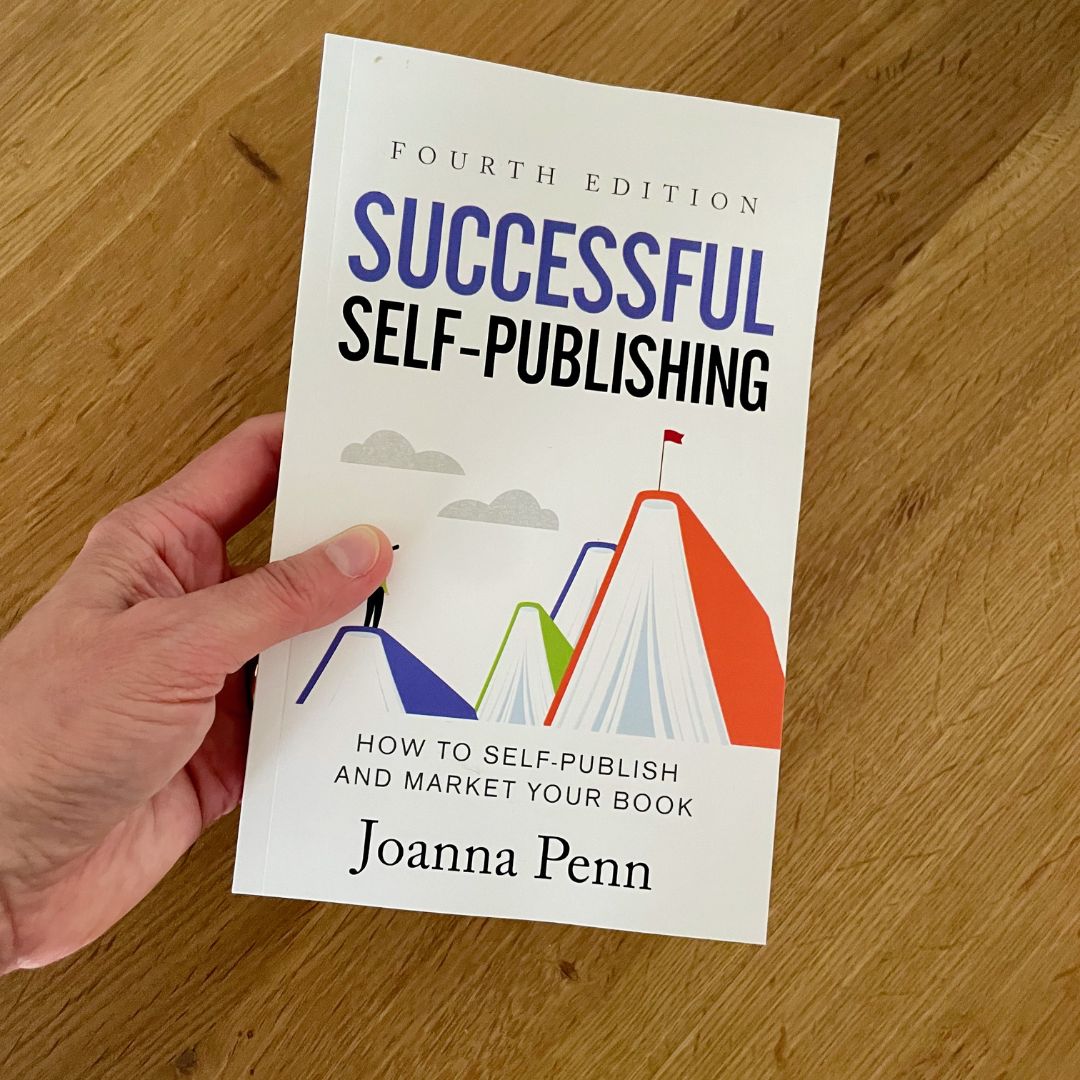
I’ve put off doing this new edition of Successful Self-Publishing for several years since things change so much and I didn’t even know where to start. I was lost in the material and couldn’t get my head around it all, so you can credit ChatGPT with helping me finally tackle this new edition!
I uploaded the old edition to ChatGPT (o3 model) and asked,
“Please assess this previous edition of my book. I want to update it and rewrite it in a new edition. Please can you do a gap analysis of what I need to update and change and give me a plan by chapter so I can work through it?”
That plan became the basis of this rewrite, although every line is human-written and/or human-edited. I’m going to use a similar prompt for new editions of my other books for authors, as it helped so much to have such a comprehensive, planned approach.
The o3 model from ChatGPT is a ‘thinking’ or ‘reasoning’ model, and other services like Claude, Google Gemini, and Grok have similar options. As ever, things change over time, so if you don’t get what you need, try a different tool, or wait a week and try again.
Importantly, respect other people’s copyright. Do not upload other people’s books or material to the AI tools, or use other author names or brands in your writing prompts.
Managing series and keeping a world or series ‘bible’
The more books you write, the more out of control your backlist can become! It’s impossible to retain all the information about characters, plot, and world development for fiction, so many authors make a story or world bible to keep track of everything.
For non-fiction, you might revisit a book you wrote years ago for a media interview, or write an article or create a new keynote talk based on the material.
Google NotebookLM is a fantastically useful AI tool for these use cases.
Upload the source material — for example, your book or books in a series (which it doesn’t retain for training purposes) — and then query it. You could ask, “Make me a list of all the characters across these books.” Or, “Give me a character bio for Morgan Sierra and how her character develops across the books. Please include her relationships and injuries as well as personal beliefs.”
For non-fiction, you could use a prompt like this one:
“Please give me 10 article ideas I could write based on this book that would target female solo hikers who want to walk long distance.”
You can also create FAQs, study guides, mind maps, and briefing documents with one click within a Notebook, as well as generate an AI audio discussion of the material in multiple languages.
Find it at: notebooklm.google.com.
Editing and rewriting
Check the terms and conditions for any tool, and if you’re happy uploading your writing, they can give you valuable personalized feedback.
ProWritingAid is useful for line edits, and it also has reports for developmental editing and beta reading, powered by AI.
You can find it at:
www.TheCreativePenn.com/prowritingaid
I use ProWritingAid before sending my manuscript to my human editor. The software can help pick up lots of issues upfront, so my editor can work on the things that only a human reader would pick up.
You can also upload your work to Chat, Claude, or Gemini, and ask for feedback. Here’s a sample prompt:
“Please act as an expert editor for fast-paced thrillers. Please give me feedback on the attached, and specifics for how I can improve pacing, character development, and plot elements.”
You can ask it to go deeper into each of the topics it comes back with. Another example:
“Please review the text for derogatory stereotypes or cultural insensitivity and suggest alternatives.”
You can also rewrite and expand sections. For example, you could ask,
“Please rewrite the following section from third-person POV to first-person POV.”
This is a great way to get a sense for how a change like this will affect a book before committing to it. Or,
“Please expand the description of the haunted house, using deep character and sensory detail from Meg’s POV.”
Writing sales descriptions and marketing copy
Authors love writing long form, but we mostly struggle when it comes to writing sales copy, especially the dreaded book sales description, which is the text that goes on the back of a print book or on your book sales page online. It’s difficult to write a catchy description when you’ve just written tens of thousands of words!
If you’re happy with the terms and conditions, you can upload the whole book, and use the prompt:
“You are an expert in writing book sales descriptions for Amazon that make readers want to buy. Please write three different book sales descriptions for the attached book and also give me 10 one line hooks.”
Then try variations — for example, “Please rewrite and emphasize the horror tropes.” Or, “Please rewrite and make it more emotional.” Or, “Please give me 10 taglines that hook the reader quickly.”
If you don’t want to upload your book, then describe it in detail, or give the AI tool a draft sales description and a prompt like this one:
“Please rewrite this book sales description to make it more like a bestselling thriller book description so readers want to buy.”
Once the AI has an idea about your book, and especially if they have the whole text, you can go further for marketing ideas. “Please give me 10 Facebook ad copy variations based on this book.”
Or, “Please give me 10 email subject lines I can use to pitch journalists for this book.” Or, “Please identify the key themes and target market for this book and find me 20 active podcasts I could pitch around them.”
You can also analyze comparable titles, for example: “Please give me 20 books that are similar to mine and insights into the readers who love these kinds of books.”
These tools have access to the internet, so you can ask them to analyze your reviews or author platform. Use a prompt like this one:
“Please analyze the reviews on Desecration by J.F. Penn on Amazon and Goodreads and tell me what readers love best and what could be improved about the book. Please also give me ideas for new books in the series.”
You can ask for branding tips or help expanding your author platform.
“Please analyze author J.F. Penn’s website and books and her reviews and give me an overview of her author brand, reader expectations, and how her platform could be improved.”
You can go on to ask: “Please give me 20 specific ideas about how I can market my books.” Or, “How can I make more money as an author?”
Ask for more specific details on each of the ideas.
You can also ask it to assess various aspects of your platform — for example, “Review my YouTube channel and give me tips for improvement.” Or, “Go through my Instagram profile,” or whatever is most useful for you.
Even if you don’t have a book or an author platform online right now, just give it as much detail as you can, and the tool will come up with lots of ideas.
There really is no limit to how much the tools can help you. For many authors, marketing is the most common way to use AI tools.
Images for social media, advertising, and book covers
AI image generation has improved rapidly over the last few years and is now incorporated into mainstream design tools like Adobe Firefly and Canva.
I use AI tools to create images I give to my designer to use in my book covers, as well as making my own for short stories. I also make images for social media ads, posts, and for use in book trailers.
As an example, you can see my book trailer for my thriller Death Valley at www.jfpenn.com/deathvalleytrailer.
I used Midjourney.com to make the images, and RunwayML.com to turn the still images into videos. I edited the videos together and added royalty free music with Canva.com.
You can use the search bar on Midjourney to find other images you like and get ideas for prompts. Importantly, don’t use brand names, artist names, or other words in your prompt that might mean you inadvertently breach someone else’s copyright.
You can also use ChatGPT to generate full book cover images with text. This technique works best when you give it reference images like your previous books in a series.
I still work with my long-term cover designer, Jane Dixon-Smith, on most of my book covers. I’ll send images I’ve generated as concepts and Jane will mock them up with various iterations, so it remains a human-AI collaborative process.
Remember to check the terms and conditions of any service to make sure you have commercial usage rights.
Data analysis
While there are tools for data analysis on some platforms, they mostly will just give you numerical data and trends over time, whereas you can now use the AI tools to help interrogate the data and find useful insights.
Download data files or ad reports or any kind of data and use a prompt like this one: “This is my book sales data for the last 2 years from Amazon KDP [or whatever the data is]. What can you tell me that would be useful for my author business going forward?”
This is best used with a thinking/reasoning model like ChatGPT o3 or similar, and then you can dive deeper into the results and suggestions.
Help make decisions and plan your author career
It can be really useful to discuss your thoughts and ideas with ChatGPT or another AI tool. It’s not going to judge you, or tell anyone what you think, so you can be honest. Consider a prompt like this one:
“I’m writing my first sci-fi novel, and I want to nail down my definition of success so I know what to aim for in my author career. Can you please interview me and ask me questions to help nail this down?”
Or if you have some ideas already, try something like this:
“I’m writing my first sci-fi novel and I want to get a book deal with a publisher, and also make lots of money, and win a literary prize. What are the steps I need to do to get there, and how long will each take?”
Or, “I want to successfully self-publish my midlife memoir and get it into my local bookstore. Can you list the steps I need to get there?”
Audiobook narration
Chapter 2.8 goes into more detail on your options for AI audiobook narration.
I am personally using ElevenLabs for audiobooks narrated by my voice clone and other wide audiobooks, and I’m considering Audible Virtual Voice (AVV) for Amazon and Audible.
Translation
While many authors, including me, have used DeepL.com for many years as a first draft AI-translator for books, new options have emerged.
ChatGPT and Claude can translate passages and even assist with cultural adaptation. For example, you could try a prompt like this one: “Please translate this book description — or chapter — into French, keeping the emotional tone, and suggest any adaptations to make it more relevant for the market.”
ScribeShadow AI offers a specialized service for authors, focusing on fiction, translating the entire manuscript while attempting to maintain your voice and style.
You can also pay extra for proofreading, or for human-assisted editing and proofreading through WordCount.ink.
Check out the service at:
www.TheCreativePenn.com/translate
You can also find editors and proofreaders for translated works at Reedsy or other freelance marketplaces. Translation is not just word-for-word replication, but also involves adjustment to local markets. Having a human first reader in the specific language is an important step in the process of creating a quality product.
Stay up to date with AI changes and opportunities
Use cases for AI change fast, and new tools emerge all the time, so it’s hard to stay up to date.
I share curated publishing-related AI updates on The Creative Penn Podcast every Monday, and I also share demos and tutorials in my Community at Patreon.com/thecreativepenn.
If you want more in-depth analysis, check out the AI-related podcasts Hard Fork, The Artificial Intelligence Show, and Brave New Bookshelf.
There are also AI-positive and AI-curious author Facebook groups and online communities associated with courses like the Future Fiction Academy.
If you want an in-person conference that is open to AI, check out Author Nation, the biggest indie author business conference in the world.
* * *
These ideas are just to get you started, but if you get stuck, just ask the AI tool how it can help. Here’s a sample prompt:
“I want to do [whatever it is]. How can you help me do that?”
You get to choose how you use the tools, and even if you don’t want to use them anywhere near the creative side of your business, you will probably find them useful for marketing. Stay curious, ask questions, and have fun!
Resources:
• ChatGPT — www.chatgpt.com
• ChatGPT Deep Research — openai.com/index/introducing-deep-research
• Claude — www.claude.ai
• Sudowrite — www.TheCreativePenn.com/sudowrite
• Google NotebookLM — notebooklm.google.com
• If you don’t have access to certain models or you want to switch them up more regularly, use a front end like Poe — www.Poe.com
• ProWritingAid for developmental editing and/or beta reader report as well as line editing — www.TheCreativePenn.com/prowritingaid
• Book trailer for Death Valley — www.jfpenn.com/deathvalleytrailer
• Midjourney for image generation — www.midjourney.com
• Runway ML for video generation — www.runwayml.com
• Canva for image creation, design, book covers, social media, videos and more — www.canva.com
• DeepL for translation — www.deepl.com
• ScribeShadow AI for translation — www.scribeshadow.com
• WordCount.Ink, Service for translating and editing or proofreading AI-translated books, powered by ScribeShadow AI — www.TheCreativePenn.com/translate
• The Creative Penn Podcast — www.TheCreativePenn.com/podcast
• My Community around writing craft, author business, and AI for authors — www.Patreon.com/thecreativepenn
• Hard Fork Podcast — www.kevinroose.com/hard-fork-1
• The Artificial Intelligence Show Podcast — www.marketingaiinstitute.com/podcast-showcase
• Brave New Bookshelf Podcast — bravenewbookshelf.com
• Future Fiction Academy, for authors who want to use AI to write — www.futurefictionacademy.com
• Author Nation conference — www.authornation.live