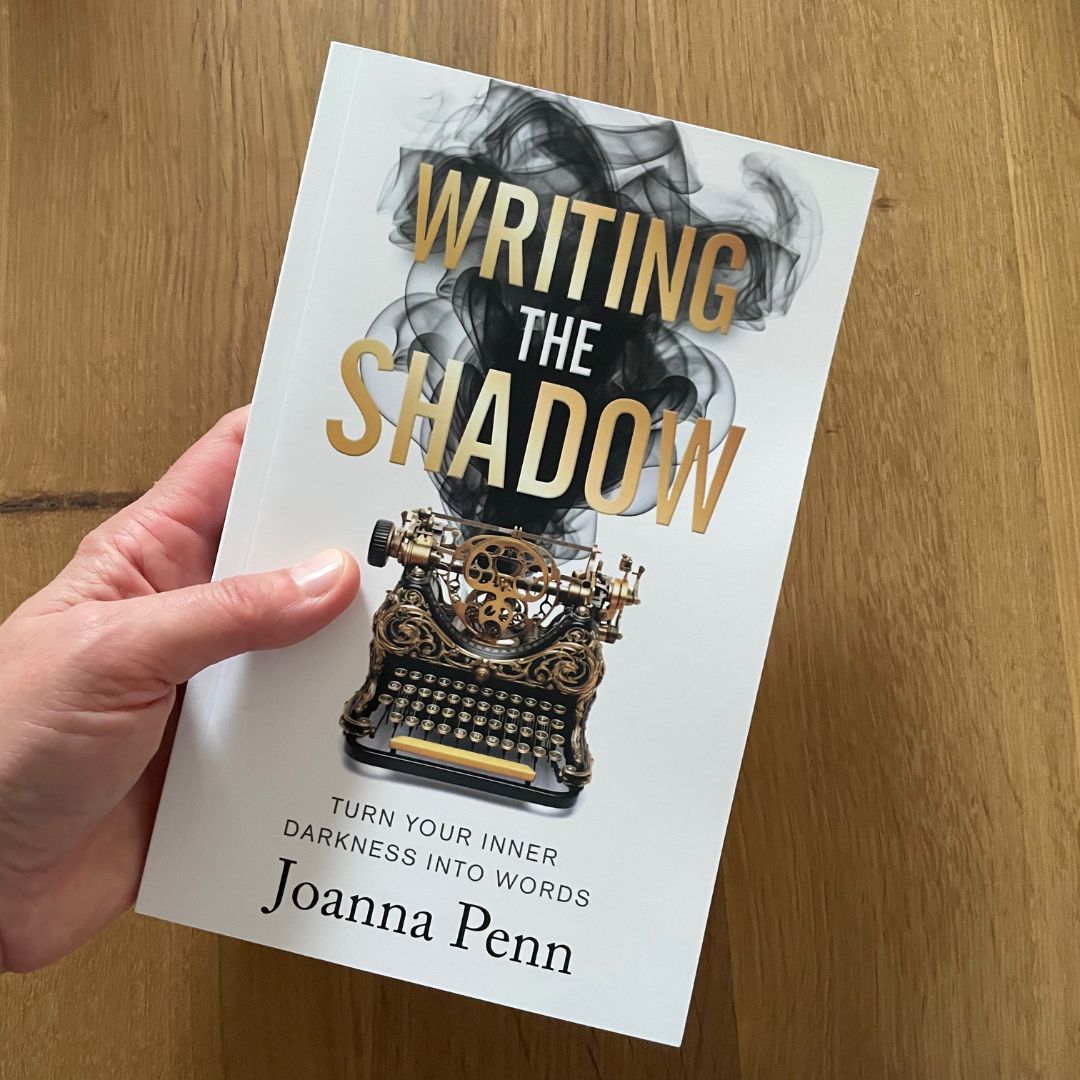
Writing the Shadow: Other ways to access Shadow
There are many other ways you can experiment with to try and catch a glimpse of your Shadow. I find writing works for me, so that’s what I focus on in this book, but there are more ideas below that may help.
Some may trigger you, so consider why you react strongly to any of the ideas.
Go through Shadow Work or other forms of analysis with a therapist
There are many forms of therapy, and some therapists specialise in Jungian analytical psychology and can incorporate aspects of the Shadow in sessions. Exploring these difficult topics with an empathetic person can be the most supportive way forward, if you’re able to talk about it aloud.
A therapist can provide a safe space to discuss issues without judgment. They’re trained to address underlying causes, and can also unearth triggers and challenge denial or rationalisation in a compassionate way.
They can suggest other ways to help — for example, through dream analysis or reflective journaling — and also monitor development over time. They’ll also know if you need additional support and make referrals if trauma or specific disorders require extra care.
Search for local therapists and practitioners and even if you don’t find someone specifically for ‘Shadow work,’ you will find people who can help in different ways.
Meditation, breath work, body work
“In order to change, people need to become aware of their sensations and the way that their bodies interact with the world around them. Physical self-awareness is the first step in releasing the tyranny of the past.”
—Bessel A. van der Kolk, The Body Keeps the Score
Writers tend to favour thinking and practices involving the mind, but there are ways to access the Shadow through more physical methods.
Even if you’re not a regular practitioner of meditation, just sitting quietly without distractions can allow thoughts and images to bubble up freely from the unconscious. You might also notice sensations or emotions related to the material in this book.
There are specific breathing patterns you can do to induce states conducive to insight, and you can do these in meditation or yoga classes, or on your own. There are plenty of mobile apps to help if you prefer. I used the Headspace app while writing this book.
Different forms of bodywork can also help access elements of Shadow. Massage, energy field work, tapping, and techniques like EMDR can uncover issues in the unconscious.
Lean into your curiosity and try different things. You might be surprised by what you discover.
Psychedelic drugs and experiences with other forms of consciousness
I generally choose to alter my state of consciousness with coffee in the morning, and sometimes a gin and tonic or a few glasses of wine in the evening. But I’m fascinated by hallucinogenic drugs and how humans have always used them in sacred ceremonies to access different parts of consciousness.
There are many studies currently underway that demonstrate the positive and transformational use of psychedelics as part of therapy for trauma, PTSD, depression, and more.
The legality of such things differs by country and jurisdiction, so be sure to check if you want to investigate further.
You can read more detail in How to Change Your Mind: What the New Science of Psychedelics Teaches Us About Consciousness, Dying, Addiction, Depression, and Transcendence by Michael Pollan. It’s also available as a documentary series on Netflix.
Tarot card reading
“Turn a card over and it can transport you to the past, illuminate the present, or ask questions of the future. It can help you listen to the whispers of your subconscious mind, or hold up a lens through which to look again, closer this time, at the experiences that have made you who you are. Every card in the tarot is a wildcard, a portal to the unexpected.”
—Jen Cownie and Fiona Lensvelt, Wild Card: Let the Tarot Tell Your Story
The mysterious imagery and symbolic nature of tarot cards can provide insights into the Shadow by sparking thoughts and ideas from the unconscious.
Cards represent archetypes and universal symbols, so reflection on their possible meaning may offer you insights. Each card has both positive and negative elements, so they can be used as a tool for analysis, or a prompt for writing.
When I went traveling in my mid-twenties, I spent several months exploring the outback in Australia as a solo traveler. I had a pack of Rider–Waite tarot cards with me as well as a book about how to interpret them. I read the cards for myself along the way, using them to spark my journaling.
Two cards came up for me again and again: The Moon and The Fool.
The Moon is depicted in the sky with a dog and a wolf howling up at it. I felt like it represented a time of change, waxing and waning every day, as well as contemplation, and also a certain wildness — howling at the moon — that I certainly enjoyed during that time.
The Fool shows a young man with a pack over his shoulder, a joyful dog at his side as he sets off on a lone journey over the mountains. It represents hope for adventure, and recklessness in pursuit of a goal that remains out of sight.
Both cards resonated with me then and although I no longer read for myself, I still have that pack here in my office.
Tarot can also assist in your writing process. If you’re interested in reading more, try Story Arcana: Tarot for Writers by Caroline Donahue. I’ve also interviewed Caroline on The Creative Penn Podcast if you’d like to listen to a conversation about it.
Practice Existential Kink
“Just let failure and humiliation (and all the ‘bad stuff’—anxiety and scarcity and fat and wrinkles and pain and ultimately death itself) be the cherished beloveds that they already are to you.”
—Carolyn Elliott, Existential Kink
Carolyn Elliott describes various ways of accessing Shadow in her book Existential Kink: Unmask Your Shadow and Embrace Your Power.
Her basic premise is that “we human beings have a major habit of taking unconscious pleasure in the ‘bad stuff’ in our lives.” Her process helps people “to acknowledge and ‘own’ this kind of weird underlying desire for and pleasure in stuff that they ostensibly hate and feel very frustrated by.”
There is much more to the book, of course, and it contains meditations and practices for different situations with an emphasis on physical sensation and sexuality. Several people recommended the book to me, and while it didn’t resonate with my ideas around the Shadow, I wanted to include it as an approach that may interest you.
Questions:
• Do any of these practices attract you or make you curious? How could you explore them?
• Do any make you uncomfortable or trigger certain associations, feelings, memories, or words?
• How might those give you an insight into elements of Shadow?
Resources:
• Creativity, Symbolism, and Writing With the Tarot with Caroline Donahue — www.TheCreativePenn.com/donahue
• Existential Kink: Unmask Your Shadow and Embrace Your Power — Carolyn Elliott
• Headspace app — www.headspace.com
• How to Change Your Mind: What the New Science of Psychedelics Teaches Us About Consciousness, Dying, Addiction, Depression, and Transcendence — Michael Pollan
• Romancing the Shadow: A Guide to Soul Work for a Vital, Authentic Life — Connie Zweig
• Story Arcana: Tarot for Writers — Caroline Donahue
• The Body Keeps the Score: Brain, Mind, and Body in the Healing of Trauma — Bessel van der Kolk
• Wild Card: Let the Tarot Tell Your Story — Jen Cownie and Fiona Lensvelt