
Writing the Shadow: Why explore your Shadow side?
It’s not an easy or comfortable process to delve into Shadow, so why do it?
You will learn more about yourself and other people
“This thing of darkness I acknowledge mine.”
—William Shakespeare, The Tempest
Self-development is the journey of a lifetime, a never-ending search for what it means to be human, a curiosity that drives us to learn and grow and change, to become more.
But self-development doesn’t have to be all positive thinking and upbeat affirmations. It can also include an exploration of your darker side, and what you find there may accelerate your growth far more than bullish optimism.
Aspects of the Shadow can drive our lives without us even realising, but if we take the time to delve deeper and understand our hidden motivations, we can liberate ourselves and move into a new place in life.
If you have negative patterns in your life, this process may help disrupt them. If you can recognise your Shadow, you can express it in healthier ways than in self-destructive behaviour.
The gifts of the Shadow may help you overcome creative blocks that have held you back for years, and greater self-awareness may help you with confidence and self-acceptance. The gold in your Shadow may even become the source of your most powerful creative work.
Understanding these darker aspects of personality can also give you more empathy for others and give you an insight into why people behave in certain ways.
You will help yourself and other people
Humans love story in every form. We crave it.
But we don’t want perfect people in perfect worlds experiencing nothing but a joyful, easy life. If a story starts that way, then we know it won’t end well.
Story is how we learn to deal with life, how we vicariously experience the world. We all face challenges, and story in all its forms helps us navigate them.
Even the sweetest sweet romance has conflict, a storm that the characters must weather to achieve their happy-ever-after. The most inspirational memoirs feature people who go through hell to find their transformation. The children’s books that resonate deeply are about overcoming adversity. Even most non-fiction books are written to help a reader tackle the obstacles of life.
Readers want darkness, even if they don’t consciously know it, and so much of what we look for in art is the Shadow side. If you don’t examine it, then how can you portray the true depths of human experience?
Of course, I don’t want to fight to the death in the zombie apocalypse. I don’t want to face dragons or demons or catch serial killers or blow up the Vatican. But I read books to experience those things vicariously, and somehow what the characters learn along the way helps me in real life.
If I’m scared about losing my family, then writing that threat into story allows me to experience that emotion and practice saving them over and over again. It releases the tension that builds up when I dwell on how powerless I am to help them in reality.
It’s cathartic to witness characters overcome difficulties, face fears, and carry on even when they’re wounded and broken. If we write these darker things, we can help others who need the same comfort.
David W. Wright describes his experience of bullying and being a victim of crime in his book Into The Darkness, and he talks about how reading comics and books helped him survive: “They showed me that no matter how much of a freak or an outcast I felt like, I wasn’t alone… Without comics, books, and their promise of escape, I’m not sure I could have gone on.”
He explains, “Writing has helped me channel some of that fear, hate and helplessness I felt. It’s helped me find a place to put some of the residual pain I’m still working through. And it’s helped me see outside myself, which has helped me connect to others I might not otherwise have connected with.”
Writing is like telepathy. Two brains connecting over time and space, a way to touch another mind through words. If you can write your own pain, you can help heal someone else’s, and perhaps even change the course of their life.
You will improve your mental health
“Write whatever you need to survive.”
—Charlie Jane Anders, Never Say You Can’t Survive
I’ve been journaling on and off since I was fifteen and while many of my notebooks are filled with inspirational quotes, happy memories, and love, many other pages contain words of anger, misery, fear, and self-doubt.
I often don’t recognise the person I was when I wrote those things, even though it’s clearly my handwriting. Who knows who I might be today had I kept those words inside and let them fester and rot?
But, because I wrote my dark thoughts down, they dissolved into the paper, captured between the threads. They felt real in the moment and then they were gone.
Writing your Shadow can help you process grief or anger or pain or anything you need, for however long it takes.
The blank page can become a counsellor without you ever having to speak a word aloud. It can be your secret therapist, and your words need never be published, unless you choose to share them.
You will deepen your author voice
Your author voice is what makes your writing your writing.
In many ways, it’s indefinable, but over a number of books, over a number of years, you will discover it and your readers will learn to recognise it and return for more.
You can also deepen your author voice with elements of Shadow.
For me, it was about letting go of self-censorship and fear of judgment and allowing myself to write what I truly wanted to without letting my inner critic shut me down.
The first book where I really found my voice was Desecration, my fifth novel. That book means so much because I let myself be me. I needed time to discover this Shadow side, and I only uncovered it through writing.
“Your writing voice is the deepest possible reflection of who you are. The job of your voice is not to seduce or flatter or make well-shaped sentences. In your voice, your readers should be able to hear the contents of your mind, your heart, your soul.”
—Meg Rosoff
You will write more authentically and be able to double down on being human
Since 2016, I’ve been writing and podcasting about the impact of artificial intelligence (AI) on authors and the publishing industry. This impact has only become more significant as the years have passed.
To be clear, I’m a techno-optimist. I use various AI tools as part of my creative process, and most of the services and websites I use as part of publishing and book marketing are powered by AI. I’m certainly not against using them, but they are tools to help us achieve our human creative goals and should be used as such.
While it’s (almost) possible to generate an entire book with a few clicks, what is the point in doing so?
If a book doesn’t come from a human creative spark, a call to write what we’re curious about, what keeps us awake at night, or what is on our hearts, it’s just another cookie-cutter product — and there are far too many of those already.
Life is short. We must write the books that only we can. The books that matter to us.
My recommendation has always been to double down on being human, to tap into our unique experience of the world, and to express what we consider important through our creative body of work.
We will never beat the machines at productivity and perfection, and I have no doubt that at some point an AI will write a technically ‘better’ book than me.
But that’s okay.
Our flaws make us human. Our Shadow side makes us human. And that’s the part other humans connect with in our writing.
If we accept that we are flawed, and so is everyone else, then why are we so scared to show it? Why do we resist putting our whole selves into what we create?
After all, we appreciate the depth of humanity in the paintings of Vincent van Gogh, visiting The Starry Night and marvelling at his vision while accepting that his mental health issues and family trauma made him the artist he became.
We read confessional poetry by Anne Sexton or Sylvia Plath because they shared their pain and flaws through their words.
We listen to songs by Eminem because he expresses his rage about the Shadow sides of family and fame and how this world breaks us apart.
In fact, we criticise art that is shallow or fake, and we ridicule wooden or one-dimensional characters in books or movies or TV shows. We demand depth in the art we love, so let us make art in the same way. If we can be even more human in our books, our words will resonate and readers will seek them out because they crave authentic experience.
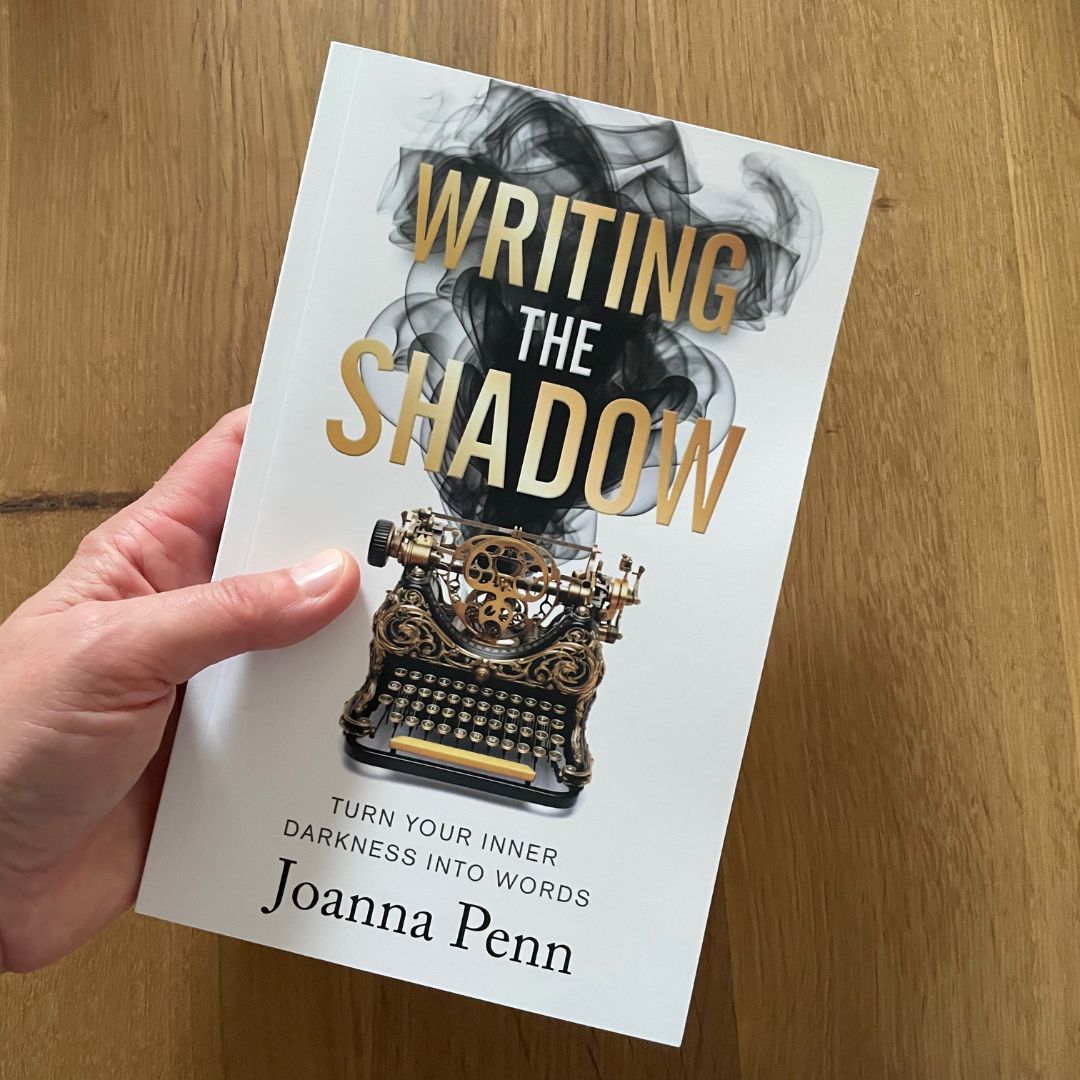
In this book, I want you to see my quirks and imperfections — and yes, my Shadow side. That which makes me, me. I want to double down on being human and I hope it will help you do the same.
Kevin Roose explains this idea in Futureproof: 9 Rules for Humans in the Age of Automation. He gives the example of fingerprints left on the surface of a handmade ceramic mug, and how that piece is worth much more than one mass-made in a factory.
Roose explains his own approach: “For me, leaving handprints means that I start every reporting assignment by figuring out how I can put my unique stamp on it, and not have it feel like a generic story that any other reporter (or any piece of AI software) could have written.”
We must find ways to instil the essence of our individual human experience and perspective into our books. Delving into the Shadow can help you do that in a deeper way.
Questions:
• Why did you buy this book? Why are you drawn to exploring your Shadow side?
• How do you think this process might help you?
• How might it help others?
Resources:
• Futureproof: 9 Rules for Humans in the Age of Automation — Kevin Roose
• “How to Write Fiction: Meg Rosoff on Finding Your Voice,” The Guardian, 18 October 2011 — www.theguardian.com/books/2011/oct/18/how-to-write-fiction-meg-rosoff
• Into The Darkness: Hook Your Readers (Without Getting Lost in the Dark) — David W. Wright
• Never Say You Can’t Survive: How to Get Through Hard Times By Making Up Stories — Charlie Jane Anders
• The Art of Memoir — Mary Karr