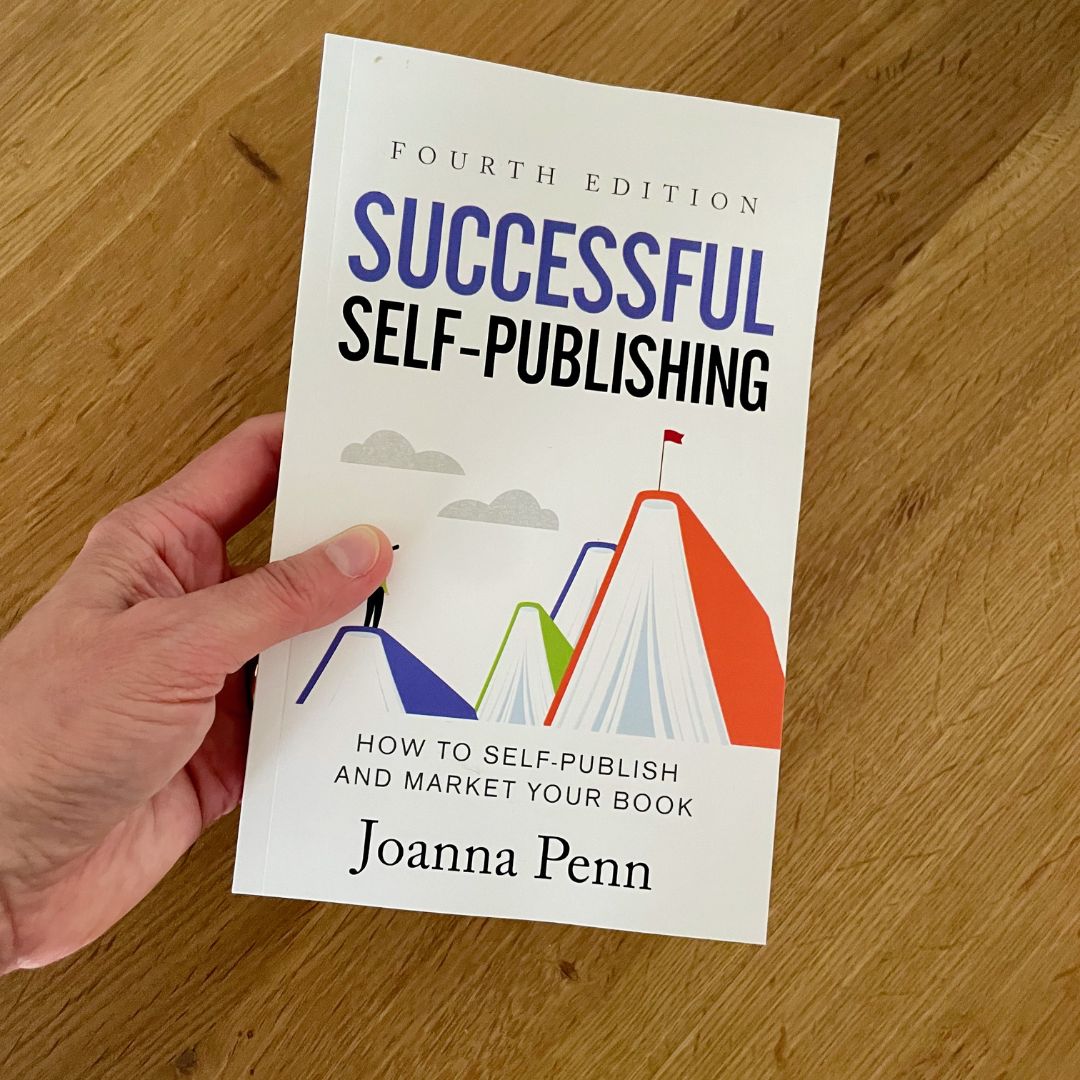
Successful Self-Publishing: Which formats will you publish in and why?
Each format attracts different readers, produces different revenue streams, and requires different production tasks. This chapter gives an overview of the options, and I’ll give more specifics on how to tackle each major format in later chapters.
Keep it simple at first. Start with an ebook and print-on-demand paperback, then add more as time and budget allow. Choose a mix that aligns with your definition of success.
If you work with a traditional publisher, your contract will specify the formats you’re licensing by territory and language as well as per book. Keep in mind that you can license some formats, while continuing to self-publish others. For example, if you license the English language paperback, ebook, and audiobook to a publisher in North America, you can still self-publish those formats in other territories and languages, and also other formats, like special editions, in the same territory.
Ebook
An ebook is a digital file that readers download instantly to an e-reader, tablet, phone, or computer. It’s usually an ePUB file, but can also be a PDF. The mobi format, once used by Amazon and others, is being phased out.
Readers love ebooks because they can click and start reading within seconds, regardless of where they are in the world. The reading experience is customizable with adjustable fonts, dark mode, and dictionary look-ups, plus built-in accessibility features. And of course, there’s the portability. Thousands of books in your pocket or bag, ready whenever you have a spare moment.
As an avid reader, I read ebooks every day, both fiction and non-fiction. I download samples; I borrow ebooks; I buy them direct from authors and also from Amazon. I read on my iPhone and my Kindle Paperwhite, and I highlight lines, export them to email for later reference, and often buy the same book in other formats.
As an indie author, ebooks are a significant part of my publishing business, and since 2007, they have been the primary way for indie authors to make money and reach readers.
They offer the highest margin with 35 to 70 percent royalties when sold through the distributors, and up to 95 percent if you sell direct. While you still need professional editing and cover design, there is no printing cost and only a tiny digital delivery charge compared to physical shipping.
Selling ebooks is also fast. You can upload a finished book and have it on the market within hours.
It’s also global. I’ve now sold ebooks in 180 countries, primarily in English, something that would have been impossible in the traditional print-only world.
You can sell on the retailers, through distributors, on your own store or crowdfunding campaign, as well as make your ebooks eligible for borrowing through subscription programs and libraries.
Even if you don’t read ebooks yourself, it’s definitely worth producing one.
Paperback
A paperback is a printed book available in different sizes, depending on your preference. I use five by eight inches for most of my paperbacks. Many readers still prefer the tactile experience of paper, and as an author, nothing beats holding your book in your hand and saying, ‘I made this!’
Printed books give you credibility, and media outlets and libraries often require them. You can use them for signings and giveaways, and beautifully designed books are more easily shareable on visual social media.
My non-fiction books do especially well in print, and as a reader, I often buy non-fiction books in print.
While some indie authors pay for printing books in advance, and then manage fulfilment, most now use print-on-demand. When someone places an order for a book, it is printed and sent to the reader directly, and you get paid the profit.
You don’t need to store boxes of books in your house. You don’t need to do any shipping. It’s more environmentally friendly too, as books are only printed when they’re ordered, reducing waste, instead of the practice of ‘pulping’ books used by traditional publishers.
Large print
A large-print edition can be paperback or hardback in a physically larger format with a larger font, designed for visually impaired or older readers.
I produce large-print paperback editions at 6.14 by 9.21 inches with a sixteen-point font. With print-on-demand, the set-up is minimal and I’ve found that many readers like the format, as do libraries ordering for their audience. While audiobooks serve many readers with accessibility needs, large print fills an important gap for those who prefer reading on paper but require a more readable font size.
Hardback
A hardback is a case-bound or jacketed print edition with rigid boards, offering durability and a premium feel.
Readers love hardbacks for their collectability and impressive shelf presence. They’re more durable for library lending, and they make ideal gifts. There’s something special about the weight and substance of a hardback that signals quality and permanence, and they can really set you apart, since even many traditionally published authors don’t get hardback books these days.
The higher perceived value also justifies a higher price point, and you can even make more profit with a beautiful hardback than with an ebook, especially if you sell direct through your store or crowdfunding campaign.
Special-edition hardback
Many indie authors are now taking hardbacks to the next level, producing special editions with premium elements like foil stamping, sprayed edges, interior artwork, photos, author signatures, and bonus material not available elsewhere.
Readers cherish these collectors’ editions and there is real exclusivity in owning a limited-run book. The extra unique material makes fans feel like insiders, strengthening their connection to you and your work. Plus, it’s good for marketing; social media is now filled with readers showing off their gorgeous hardback editions.
I’ve produced special-edition hardbacks with foil, sprayed edges, custom end-papers, ribbons, and more through Bookvault, and crowdfunded the sales on Kickstarter. Readers pay upfront, effectively funding the production, and then the books are printed, signed, and shipped.
The first time I held one of my special hardback editions, I felt a level of pride that surprised me. Even after years of publishing, there’s something really special about seeing your work in such a beautiful format.
Audiobook
An audiobook is a spoken word, narrated edition, with one or many voices, mostly available digitally through audiobook sales and subscription services, as well as libraries.
Audiobooks have been the fastest growing format year on year for more than a decade, with readers listening while they commute, exercise, or do chores, as well as using them for relaxation and getting to sleep.
I love audiobooks, mostly non-fiction, and listen to chapters almost every day, alongside podcasts, which is how I discover my next listen. My husband, Jonathan, loves really long epic fantasy audiobooks and listens at night to relax. We are two very different audiobook customers, so whatever you write, you will probably find a listener!
As an indie author, I narrate my own non-fiction and short stories, and I’ve hired professional human narrators for my fiction as well. I’ve used my own AI voice clone for my thriller Death Valley, and I’m experimenting with other AI audiobook narration options. I’ve also licensed audiobooks for human narration and AI narration to traditional publishers. There are lots of options for audio these days!
Workbooks and companion journals
Workbooks and companion journals can be print or digital formats with questions and exercises, as well as lined pages, checklists, and diagrams designed to help readers apply lessons from the main version of the book. They can be stand-alone products or sold as companions to your core title.
Readers find these useful because writing by hand — on paper or a tablet — can increase retention and many readers prefer more active learning.
As an indie author, these formats offer additional revenue opportunities. You already have the content. It just needs adjusting and reformatting.
I have workbooks for most of my non-fiction books, and I offer a spiral-bound edition which I print through Bookvault, as well as a PDF edition that can be used on a tablet.
In recent years, some distributors have cracked down on workbooks and companion journals, since they are easy to produce and they have flooded the stores. But that doesn’t stop you from selling them direct or printing them for your own workshops and events.
Bundling options
Bundling means putting different versions of your books together, so readers can order once and get multiple products. For example, I offer a bundle of my entire ARKANE action adventure thriller series, and I also offer bundle deals for non-fiction with hardback and workbook editions, or different ebooks and audiobooks. Bundling books together in any format can offer great value to the reader as well as providing more profit for the author.
Ebook box sets, sometimes called omnibuses, are multiple ebooks in one file, so readers get a trilogy or whole series for one purchase or borrow. This can also be a print book, although you obviously have to keep in mind how big the physical copy will be.
Boxed sets are a set of individual print books encased in a physical box. You can now produce these through Bookvault, and they can be perfect for a crowdfunding campaign or special event.
* * *
You can find all my books in most of these formats at my stores, CreativePennBooks.com for non-fiction books for authors, and JFPennBooks.com for fiction and memoir, including box sets and bundle deals.
Remember, you don’t need to produce all of these formats at the same time. Start with ebook and print-on-demand paperback and expand as you go. Each new format becomes another way for readers to discover and enjoy your work, building a more sustainable author business for the long term.