
How to Write a Novel: Lessons learned from editing my first novel after more than a decade
In the first quarter of 2022, I re-edited my first three novels, Stone of Fire, Crypt of Bone, and Ark of Blood, written over a decade ago from 2009 to 2012.
The process of rewriting was the catalyst for me to finally finish this book after many years of resistance. Although there is always more to learn, the experience solidified my knowledge of the craft.
I shared a version of this chapter as a podcast episode, and many authors found my experience useful and reassuring. Others questioned my decision, so I’ve included this edited version to outline the process and also my lessons learned as they may help with your edits, regardless of where you are in the author journey.
Surely when a book is published, it’s done — you can never go back
Writers and publishers have always re-issued books in new editions, with rewrites, corrections, updates, and other changes.
If you publish independently, it is a simple matter of uploading new files, but if you publish traditionally, you will need to go through your publisher. Most of these changes are minor, fixing typos or issues that have emerged over time, but they can also be more substantial.
In March 2022, Booker Prize–winning author Ben Okri announced a new version of his 2008 novel Starbook in the Guardian. He spent five years rewriting it “to give more emphasis to transatlantic slavery,” and retitled it as The Last Gift of the Master Artists.
The article noted other fiction authors who rewrote their novels, including Charles Dickens, who heavily edited Oliver Twist in a later edition after a complaint from a Jewish woman about antisemitism.
Okri acknowledged, “There is perhaps nothing to gain for me from this but a good artistic night’s sleep.” But if a book nudges at you for long enough, eventually, you have to listen.
Why I decided to rewrite when so much advice says ‘never go back’
There was nothing particularly wrong with my first three novels. Between them, they had several thousand reviews across the various online stores with over a four-star average.
But I knew I could improve them.
Stone of Fire was my first novel, but it’s also the first in my ARKANE action-adventure thriller series of a dozen books.
It’s my permanently free first-in-series ebook, the one I repeatedly advertise to bring new readers into my writing. So, it’s important for my fiction marketing efforts and, as the first in series, it’s the primary way readers enter my ARKANE world.
Morgan Sierra, my protagonist, is also my alter ego. Sure, she’s an ex-Israeli military psychologist, Oxford University professor, and Krav Maga expert — but her thoughts are often my own, or at least represent some facet of my personality.
Like me, Morgan is fascinated with religion and travels the world. I visit interesting locations for research, while she investigates supernatural mysteries alongside Jake Timber and the rest of the ARKANE team.
The advice from many writing coaches and experts is to leave your old series behind, and write a new one. In this way, you can improve your craft and reach readers without rewriting old books.
But I can’t leave Morgan behind. And neither can my hardcore readers, who love the ARKANE series and demand a new one as soon as I deliver the latest story.
I’ve written other series — my Mapwalker fantasy trilogy and my Brooke and Daniel crime thrillers — and various stand-alone stories. But in terms of action-adventure, I’m invested in Morgan and the ARKANE team.
The ARKANE thrillers appeal to fans of other long-running series like James Rollins’s Sigma series, Steve Berry’s Cotton Malone series, Lincoln and Child’s Pendergast series, and thrillers by Greig Beck, J. Robert Kennedy, and R.D. Brady. They are action-adventure conspiracy thrillers with aspects of the supernatural.
I love this kind of long-running thriller series and always set out to write books for the ‘old me’ who read on the commuter train on the way to a job I hated.
But the Jo who wrote those first three novels in 2009 to 2012 had a lot to learn. She tried her best, and she worked with professional editors — but I am not that writer anymore.
My craft has improved over many years and many books published, as well as through classes, books, and reading thousands more thrillers for pleasure. I’ve also worked with various different professional editors and proofreaders, and now augment my craft with tools like ProWritingAid, which didn’t exist when I started out.
I didn’t want to “just start another series” in order to demonstrate improvement in my craft, so I rewrote the first three books to bring them up to my current standard.
How Stone of Fire developed from 2009 to 2022
In order to look forward, it’s important to look back.
I started the story during NaNoWriMo, National Novel Writing Month, in 2009. I knew I needed more help, so I joined The Year of the Novel at Queensland Library in Brisbane, Australia, where I lived back then.
After finishing the first draft in 2010, I worked with several professional editors and then independently published Pentecost (as it was originally called) in April 2011. I documented the entire process with blog posts and videos, so if you want to step back in time and have a laugh at a younger me, check them out at www.TheCreativePenn.com/firstnovel
I wrote two more ARKANE novels, Prophecy and Exodus, in the subsequent years, and my early reviews proved a couple of things.
Readers enjoyed the books, and they have always had good reviews. But the cover branding and book titles positioned them more as Christian fiction. The stories feature historical and biblical locations, artifacts, and questions of faith, but I am not a Christian and it was never my intention to position the stories that way.
The ARKANE thrillers are more like Dan Brown’s The Da Vinci Code. They skirt the edge of religious myth and history, but are essentially global action-adventure thrillers with deeper questions at their heart.
I needed to figure out how to reposition them.
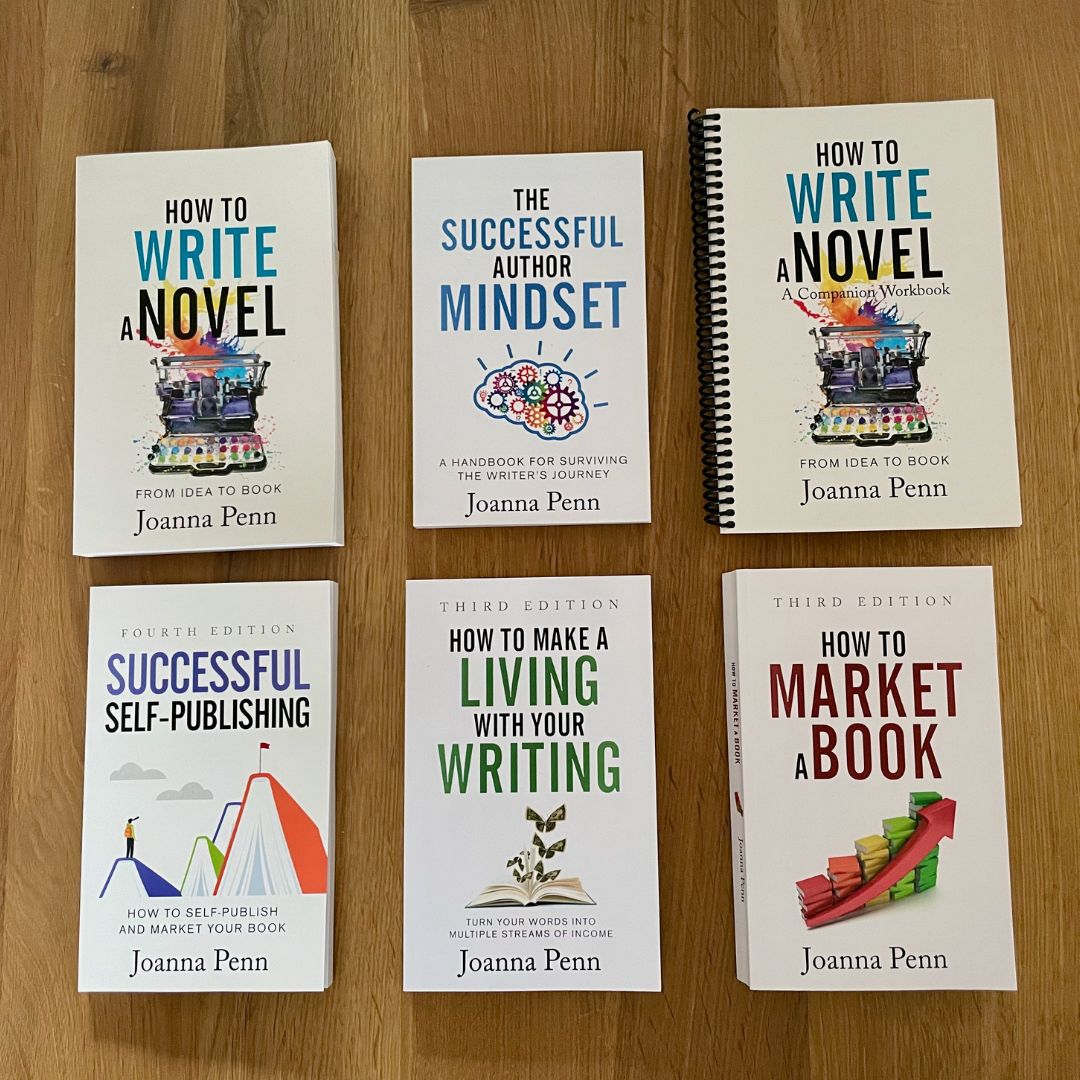
Many authors grapple with this question of genre and market fit, and I struggled just as much as anyone. I go into more detail in How to Market a Book, if you are interested in the more commercial side of the author life.
During those early years, I met with a few agents who were interested in working together, one in the USA and one in the UK. Ultimately, they didn’t work out, but they helped me with repositioning and we parted on good terms. (Note: It is not uncommon for authors and agents to part ways. It’s a business relationship, and it has to serve both parties to be successful.)
In 2015, I rebranded the first three books as Stone of Fire, Crypt of Bone, and Ark of Blood. I commissioned new covers and also did a light edit of Stone of Fire to add more emotional beats than the original version.
Over the years since, I’ve updated back matter and fixed typos, but there hasn’t been a substantial re-edit.
My re-writing process
I started with the existing version as a new first draft. As I format my ebooks using Vellum, I exported the ebook from Vellum as a rich text format (RTF) file and saved as an MS Word document.
If you go through this process, you might have the master file in other formats, but make sure you re-edit the correct version.
I imported this MS Word document into a new Scrivener project, which became my new first draft.
I used ProWritingAid in a first pass edit to fix certain issues, as detailed in the craft section below, and improved the overall chapter score from 65 percent to over 90 percent, an invaluable first step.
Every day I worked on the manuscript, I exported and backed it up as detailed in chapter 4.6.
Once all the chapters were finished, I exported from Scrivener back to MS Word and printed out the full draft.
I followed my usual editing process: editing by hand on paper, then updating the master Scrivener project, printing and editing again, then running it through ProWritingAid, exporting to MS Word, and submitting to my editor.
When the edits came back, I went through the MS Word document with Track Changes, accepted or rejected them and fixed issues, then the manuscript had a proofreading check before re-publication.
Craft notes on rewriting after more than a decade
There is an anecdotal saying amongst writers that after a million words published, you know what you’re doing. Or at least, you have a better idea of what to improve next!
I’ve published several million words now, most of those since I wrote Stone of Fire, and I’ve also spent time improving my craft through training and deliberate practice.
Here are some improvements I made in the rewrite which might help you, whether you’re editing your first or twenty-first novel.
Increased depth of character, emotion, and character point of view
Depth of character is all about point of view (POV). Although I understood each chapter needed a POV in the beginning, I had not sunk deep enough into each person.
For example, “Morgan saw that the door was open,” became “The door was open.” I am in Morgan’s POV, so I can write from her frame of reference. To take another example: “Morgan thought that perhaps Jake might need help,” becomes “Jake needed help.”
The use of ‘[character name] thought’ or including thoughts in italics isn’t usually necessary because the chapter should be in the POV of the characters. However, this is a stylistic choice and many authors use it.
I also increased depth and emotion by including more detail about the character’s response to a situation and their internal feelings, rather than just their external actions.
We read fiction to gain insight into someone else’s life, to experience vicariously, and understanding the character’s point of view is part of the joy of reading. In my early drafts, Morgan reacted with external action and physical movement, but the reader didn’t necessarily know why. This time around, I could write more emotionally because, after a dozen ARKANE thrillers, I know my characters so well.
My recurring series characters, Morgan and Jake, and others like Father Ben and Martin, are more real to me now. I found myself saying, ‘Morgan wouldn’t do that’ or ‘Jake wouldn’t say that’ as I went through the process. I couldn’t have known those things a decade ago because I hadn’t written all the other books and I’m a discovery writer.
Leaned into my author voice
When I started writing, I was afraid to let people see what was inside my mind. I’ve always struggled with fear of judgment, and I’m a people-pleaser at heart. I want people to like me, to think I’m useful and a ‘good girl’ and an upstanding member of the community.
But, actually, that’s Joanna Penn, the nonfiction, self-help side of me you’re reading right now.
My fiction self, J.F. Penn, is darker, an old soul, with deeper currents under the surface. I needed time to discover that side of me and the confidence to stop self-censoring, to write what I truly wanted to.
J.F. Penn is my rebellious side, my inner Goth, who loves crypts and ossuaries, as well as cathedrals and galleries. She writes about good and evil, right and wrong, angels and demons — and she loves a fast-paced book (or movie) with a high body count and plenty of explosions.
At points in this re-edit of Stone of Fire, I glimpsed my future author voice, but I sensed my early writer self backing away for fear of being judged.
But now I embrace my voice, and in the rewrite, I doubled down on the intensity.
Improved pacing
The first edition of Stone of Fire was written more like a literary novel, with long, complicated sentences, overly long paragraphs, and slower pacing than a typical thriller. After reading many thousands of thrillers in the last decade, and studying pace in particular, I made a few specific changes.
I used more line breaks, more paragraph breaks, shorter sentences where appropriate, sentence fragments, and faster dialogue. These increase white space on a page, which means it’s faster for the reader’s eye to scan, and they have to turn the page to get to the rest of the story.
This time around, I split scenes across the end of chapters so the reader would have to start a new one to find out more.
I changed the order of some scenes to vary pacing, so there were slower-paced chapters in between the action to give the reader a respite.
I overused dates and timestamps in the early editions, as well as other overly obvious timeline details, but I found I could remove those without affecting the story, which made it smoother for the reader.
They were important for me as a writer to make sure each character was where they needed to be at the right time, but they weren’t needed in the final text. I could show morning by early sunlight or the passing of time with a mention of ‘next day,’ or other phrases instead of time stamps.
Reduced info-dumps
I love, love, love my research!
One of the main reasons I write fiction is so I can go deep into the research process and spin real-world events, places, artifacts, and people into story. But including too much research in the text can slow pacing and may cause the reader to skip parts of the story.
Equally, one of my hallmarks as J.F. Penn is sparking curiosity in the reader. Many of my readers email to say they google things to find out what’s true and they love my Author’s Note at the back of the books, in which I discuss my inspirations and research for each novel. So it’s a fine line in terms of what to leave in, what to edit down, and what to remove completely.
In some cases, I had repeated the same information several times by telling different characters the same thing. But not every character needed to know all that information, and it was the reader I really needed to think about.
Changed verbs to make them more active (where appropriate)
Passive writing is a common issue for new writers, and especially those of us who come from the world of legal or business writing, where hedging your bets rather than making strong statements is more common.
You can often spot passive writing by noting whether the word ‘was’ is necessary.
“The statue of St James was surrounded by pilgrims” becomes “Pilgrims surrounded the statue of St. James.”
In another example, “Morgan was running” becomes “Morgan ran.”
Of course, you don’t want to change everything. Just be aware of your options. As ever, it’s a fine line that you learn with experience, and writing tools like ProWritingAid can help immensely. I wish I’d had it when I started out!
Resolved dialogue issues and improved for audio
I wrote Stone of Fire before the rise of audiobooks so I overused ‘said,’ and needed to fix many of the issues covered in chapter 3.5 in terms of too many names, on-the-nose dialogue, repeated sounds, and more.
Rephrased ‘started to’ and ‘began to’
I rephrased lots of these standard phrases. Sometimes they are necessary, but I overused them.
For example, I changed “He began to pray” to “He prayed.”
“She started to walk” to “She walked.”
“She said with a whisper” to “She whispered.”
I also checked my use of adverbs like ‘actually,’ ‘really,’ ‘very,’ and ‘suddenly,’ and changed obvious clichés to something more original.
Rephrased disembodied body part action
This is a surprisingly common issue and, once you’re aware of it, you will see it everywhere!
For example, “Her hands held him down” becomes “She held him down.”
“Morgan’s eyebrows raised in surprise” becomes “Morgan raised an eyebrow.”
“Her mouth whispered a prayer” becomes “She whispered a prayer.”
“His eyes were fixed on the screen” becomes “He gazed at the screen.”
Rephrased for inclusivity and checked diversity
I’m English, so I have a keen sense of hierarchy. It is part of our national identity, and if you watch The Crown on Netflix, you’ll understand why.
When I wrote Stone of Fire back in 2009 to 2011, I worked in a hierarchical office world and I found phrasing in this edit that I wouldn’t use now, and that has changed in the cultural shifts of more than a decade.
For example, one character addressed another as ‘sir’ when they were not in the military, which read as completely out of place this time around.
I changed some gendered language to gender-neutral, where appropriate. ‘Mankind’ became ‘humanity.’ ‘Policeman’ became ‘police officer.’
ProWritingAid has an inclusive language filter that helps identify phrasing that might need revisiting, although, of course, it is up to you to fix what you think is appropriate.
Updated technology
Technology inevitably moves on, and it was quite funny to read some of my old phrasing.
I changed ‘smart phone’ to ‘phone’ and ‘mini-copter’ to ‘drone,’ and removed some dates which were in the future when I wrote the book, but are now meaningless.
I also updated my description of the prototype virtual reality (VR) library the ARKANE investigators use in their research to make it reflect a world where VR is more common.
Reduced word count
These changes reduced the word count in Stone of Fire from around 72,000 to nearer 55,000, which is the usual length for my ARKANE thrillers. The other two books had less of a dramatic change, as my craft improved even over the first three books.
Back when I started out, when the digital revolution was in its early days, I was told that a book had to be over 70,000 words to be published, so I padded the manuscript out with extra scenes that I removed in this edit.
Don’t readers complain about new editions?
Importantly, I did not change the story.
The plot and characters are the same, and if you read my first three novels in the previous editions, you don’t need to re-read them. The changes are more for readability and style, pacing, character depth, and author voice.
New readers won’t notice as they will read the latest version. If you republish, make sure to update the copyright page to the new edition, and if it’s a new title, include the phrase “previously published as…” on your sales description and within the book.
Was it worth rewriting?
It took three and a half months of my time, as well as the costs of re-editing and republishing, but it was well worth it for me.
As with Ben Okri, it gives me “a good artistic night’s sleep” to know that the books represent my current writing style, and that readers can enter my ARKANE world in the best way possible.
The process also solidified my thoughts on the writing craft and gave me the confidence to write this book, as it helped me see how far I’ve come.
Only you can decide whether such a rewrite is useful for your situation. It’s certainly not for everyone. If you are considering it, then make sure enough time has passed before you rewrite.
Questions:
• Why are you considering a rewrite? What benefits do you expect to gain from the process? What will make it worth it for you?
• How long has it been since the original release? Is this long enough to make a rewrite worthwhile?
• If you’re editing for the first time, what aspects might you need to look out for in your manuscript?
Resources:
• “Booker winner Ben Okri rewrites published novel to drive home message on slavery,” The Guardian, 19 March 2022 — www.theguardian.com/books/2022/mar/19/booker-winner-ben-okri-rewrites-published-novel-to-drive-home-message-on-slavery
• Blog posts and videos about my first novel process — www.TheCreativePenn.com/firstnovel
• “Writing tips: Lessons learned from rewriting my first novel over a decade later” The Creative Penn Podcast, Feb 25, 2022 — www.TheCreativePenn.com/2022/02/25/writing-tips-rewriting-my-first-novel
• ProWritingAid — www.TheCreativePenn.com/prowritingaid
• ProWritingAid tutorial — www.TheCreativePenn.com/prowritingaidtutorial
• Vellum — www.TheCreativePenn.com/vellum
• Vellum tutorial — www.TheCreativePenn.com/vellum-tutorial