
How to Write a Novel: Self-editing
I love this part of the process! My self-edit is where I wrangle the chaos of the first draft into something worth reading. I have my block of marble and now I can shape it into my sculpture.
The mindset shift from writer to editor, from author to reader
In the idea, planning, discovery, and first-draft writing phase, it’s all about you, the writer.
You turn the ideas in your head into words that you understand, characters that come alive for you, and a plot that you’re engaged with. In that first rush of creativity, you can banish critical voice and ignore any nagging doubts.
But now you need to switch heads.
That’s how I prefer to think about it, but you might consider it as changing hats or changing jobs. Anything to help you move from the creative, anything goes, first-draft writer to the more critical editor.
There is one overriding consideration in this shift. As Jeffery Deaver says, “The reader is god.”
With the editing process, you need to turn your story from something you understand into something a reader will enjoy.
Writing is telepathy. It connects minds across time and space.
You are reading these words and the meaning flows from my brain into your brain — but only if I craft the book well enough. The same is true of your novel.
Yes, of course, you want to double down on your creative choices and make sure you achieve everything you want to with your story. But you also need to keep the reader in mind as you edit because the book is ultimately for them.
Will your story have the desired effect on the reader?
What might help improve their experience?
How can you make sure that they are not bored or confused or jolted out of the story?
What will make them read on and, at the end, close the novel with a sigh of satisfaction?
My self-editing process
At the end of the first draft, I print out my manuscript with two pages to each A4 page, so it looks more like a book. I put it in a folder and leave it to rest. You need fresh eyes for your edit and this ‘resting’ gives you some emotional distance.
In On Writing, Stephen King suggests leaving a manuscript to rest for at least six weeks. While that is a great idea if you have the time, most authors work to deadline, whether externally set or their own timetable.
Many authors — including me — are also impatient! I love this first self-edit, and as I’m still crafting the story as a discovery writer, I usually rest the manuscript for a week or two.
I schedule blocks of time for editing in my Google calendar and (when not in pandemic times) I go to a café when it opens first thing in the morning. I put on my BOSE noise-cancelling headphones and edit by hand with a black ballpoint pen from page one to the end.
I usually manage ten to twenty pages per editing session of a couple of hours each, but it will depend on the amount of restructuring I need to do.
I scribble notes in the margins, draw arrows to move paragraphs around, write extra material on the back of pages, or add where I need to write more later. I change words, rewrite and delete lines, and pick up any issues around lack of sensory detail, character problems, and more.
You can see an example of a page at www.TheCreativePenn.com/handedit
Some pages end up a mass of black; others are relatively clean. But in this first hand edit, no page goes untouched as I hone my manuscript into something closer to my creative goal.
You can edit on a computer or a tablet, or whatever else works for you, but at least change the font or the spacing, or something to make it a different experience to reading the first draft.
Most writers have a tendency to either overwrite or underwrite, and so will either need to cut words or add words at this stage. I’m in the latter camp so I usually have to add scenes or deepen characters or theme at this point.
Once I have hand-edited the whole manuscript end-to-end, I make the changes in my Scrivener project. I change the color of the flags along the way and, as ever, I back up the session.
When all the changes have been made, I print the complete manuscript again, and read end-to-end and edit as before. This time, it’s usually a lot cleaner and there may only be a few things to fix in each chapter.
Once I’m finished, I’ll update the Scrivener project once more and then decide whether it needs a third pass. Mostly, two full end-to-end hand edits are enough for me these days, but sometimes I’ll do a third or go through specific chapters one more time.
This messy editing process is fun for me and it’s hugely satisfying to see my story come to life.
What to focus on in the self-edit
Some authors will go through the manuscript multiple times, focusing on different elements with each pass using the aspects covered in Part 3 and Part 4. For example, they’ll do an edit based on character and dialogue, followed by another pass for plot, then theme, and so on.
Personally, I try to keep the reader in mind and focus on the story as a coherent whole. That’s just how my mind works.
I jump from fixing a plot issue to deepening a character to adding foreshadowing and so on as I read and edit. I’m confident that my editor will find a lot of the smaller things that I might miss, so I concentrate on trying to achieve my creative vision with the story.
You will find your own way of figuring out your process. It’s much better to jump in and have a go at editing rather than trying to work out the best way before you have something to work through.
Lost the plot? Try reverse outlining
If you’re a discovery writer like me and you’re struggling with the edit and you feel you have lost the plot (which definitely happens sometimes!) then consider a reverse outline as part of your editorial process.
Go through the manuscript and write a few lines per scene. Include character, plot points, conflict, setting, open questions and hooks, and any other notes.
This will help you step back and hopefully see the entire story from a high level. Then you can dive back into rewriting each chapter.
Read the book out loud or use a text-to-speech reader to do it for you
Many authors read their book aloud end-to-end, which is a helpful step once you’ve been through any major rewrites.
There are also plenty of text-to-speech tools that can help, for example, Natural Reader or Speechify, and some are built into devices or applications. MS Word includes a Read Aloud tool in the Review tab. This will also help you edit for audio as you’ll hear issues you can’t see on the page.
Editing for audio
Audiobooks are a huge growth market and many readers will listen to your book rather than read it, so it’s a good idea to consider editing with audio in mind at this stage. Here are some tips.
Watch out for repeated sounds.
The editorial process will usually catch repeated written words, but similar sounding words can hit the same audio note in narration. You might not notice them in the text, as they are spelled differently. The words ‘you,’ ‘blue,’ ‘tattoo,’ and ‘interview’ all start and end with different letters. They look different on the page, but they strike the same audio note when read aloud.
In the same way, repetition can work if you have a point to make, but sometimes it jars the listener if it is overused.
A classic recommendation for writing dialogue is to use ‘said’ with a character name rather than other words like ‘uttered’ or ‘pronounced.’ This is because ‘said’ disappears for the reader on the written page. But with audio, the repetition of a word is highly noticeable, and repeated sounds can dominate a passage.
Rewrite with synonyms for ‘said,’ or use action to make it clear who the speaker is without resorting to dialogue tags, as described in chapter 3.5.
Contractions — or the lack of them — can also become more obvious in audio.
“I am not going to the park,” might be spoken as “I’m not going to the park.” When we type dialogue, it is often more formal than the way someone speaks, so check if you can contract it in your edit.
Accents can be an issue with fiction narration.
There are plenty of narrators who do a ‘straight read,’ but if there are accents within dialogue, make it clear where the character comes from. Make sure the narrator knows about the accent choice upfront, otherwise you might not like it in the finished audio. Remember my friend whose novel had an Irish character narrated like a comedy leprechaun instead of the soft lilt she had in mind?
Don’t confuse the reader.
If you have a lot of characters appearing in a chapter and no clear character tags, you might lose the listener in the detail.
When reading on paper or a screen, your reader can quickly flick back and see that George was the butler and Angus was the dog, but that’s harder to do when listening to an audiobook. Make sure it’s clear who is who. You may have to remind listeners occasionally by adding character tags. For example, ‘Angus ran alongside the canal’ could become ‘Angus, the golden cocker spaniel, ran alongside the canal.’
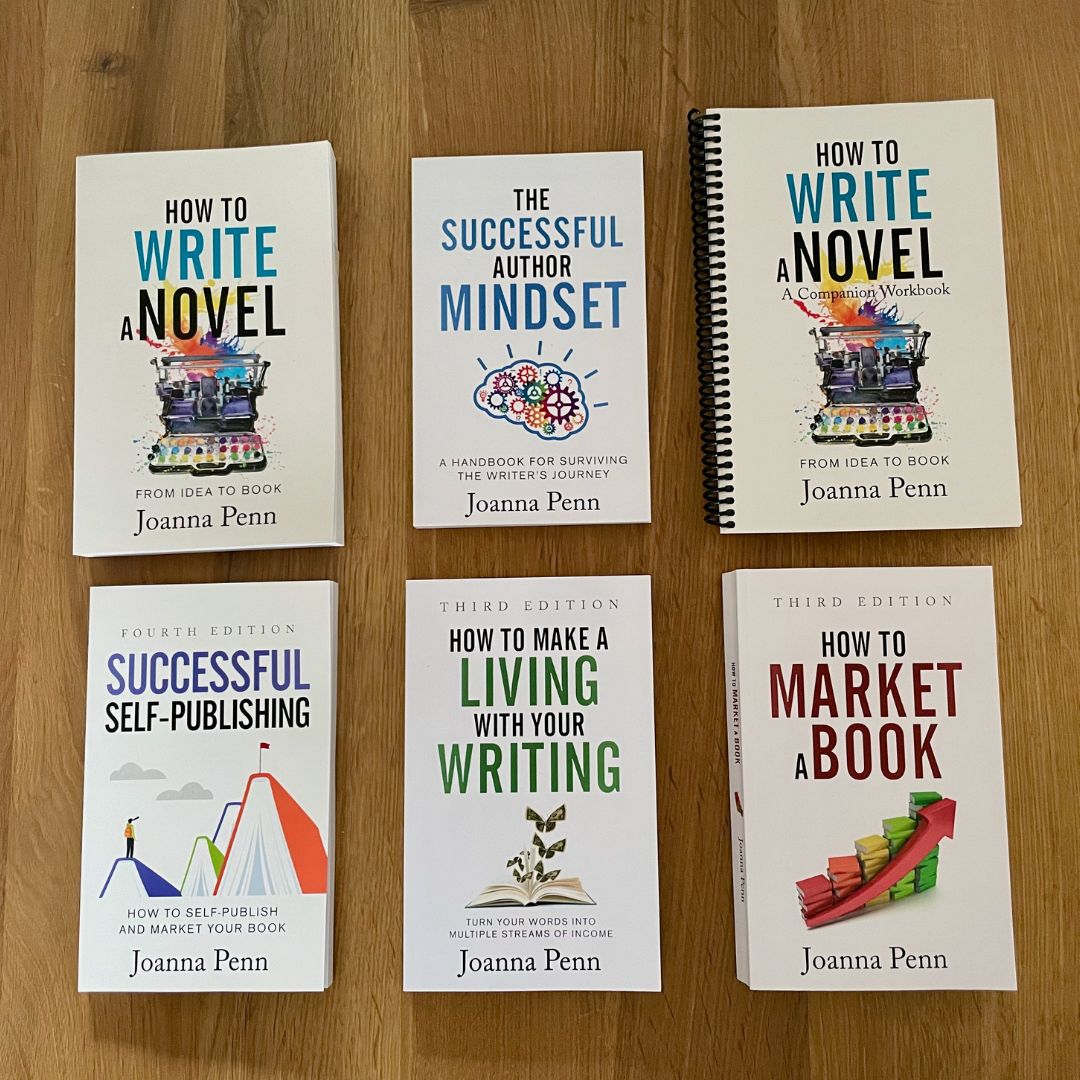
For more on audiobooks, check out my book, Audio for Authors: Audiobooks, Podcasting and Voice Technologies.
How many drafts do you need?
The word ‘draft’ means different things to different authors. Some only apply this term to a complete rewrite end-to-end, while others will shift paragraphs around, change some lines, add a new scene, and call that a new draft.
Nora Roberts said in a blog post on her writing craft,
“I work on a three-draft method. This works for me. It’s not the right way/wrong way. There is no right or wrong for a process that works for any individual writer. Anyone who claims there is only one way, or that’s the wrong way, is a stupid, arrogant bullshitter. That’s my considered opinion.”
I love Nora’s no-nonsense approach and she is right that there is no single correct process. You have to find your own. But beware of comparing what you call a draft to what another writer calls a draft. It may be something completely different.
Use editing software
Once I’ve finished my hand edits and updated the Scrivener project, I use ProWritingAid on the manuscript. It integrates with Scrivener, so I open my project and go through each chapter.
ProWritingAid picks up passive voice, repetitive words, commas and typos, suggests rephrasing, and even picks up culturally problematic language.
Yes, these are the type of things that an editor will pick up, but I want to hand over a manuscript that is as clean as possible so my editor can focus on other issues. I don’t make all the suggested changes, but it certainly helps improve my writing, and I learn as I go through. You can even create your own style guide so you spell things the same way throughout.
This is also a good chance to check typos according to the version of English you want to use (or any other language). I’m English and based in the UK, but when I published my first novel, I received complaints about typos from my readers, who were mainly in the USA. These were not typos, they were just British spelling!
I decided to use US English in my books because US readers complain about UK spelling, but non-US readers will rarely complain about US spelling because they are used to it. You can set ProWritingAid to the type of English you want to use, and if you specify this later, your editor can pick up on word usage rather than typos, for example, using the term ‘flashlight’ instead of ‘torch.’
You can find ProWritingAid at www.TheCreativePenn.com/prowritingaid
You can find my tutorial on how to use ProWritingAid at www.TheCreativePenn.com/prowritingaidtutorial
When is your self-edit finished?
You will be utterly sick of your manuscript by the end of the self-editing process.
You have read your words so many times you can’t see them clearly anymore. You are so over the whole thing that you want to forget the book altogether. If you don’t feel this way, you probably haven’t self-edited enough!
When you really feel you can’t do any more, it’s time to work with a professional editor.
If you are putting off the end of self-editing, then remember that nothing is ever perfect. You can edit forever if you keep obsessing over changes and going over and over the same material. If your self-edit goes on too long, consider whether perfectionism is holding you back. Set a completion date and hold yourself to it.
Questions:
• Have you set aside time for your self-editing process? Have you printed out the manuscript or created a new version with a different font so it looks different to the original?
• Have you shifted your mindset from writer to editor? Do you know what you want the reader’s experience to be? How will you keep them in mind as you edit?
• How does your self-editing process work? What tools can you use?
• Is the reader’s journey through the book as clear and easy as possible?
• Have you achieved your creative goal for the story? (Or at least made it as far as you can at this point?)
• How will you know when the self-edit is finished? How can you balance doing the best you can with avoiding perfectionism?
• Have you taken this self-editing process as far as you can? Are you ready to work with a professional editor?
Resources:
• “Here’s how I work,” Nora Roberts’s blog — fallintothestory.com/heres-how-i-work/
• Audio for Authors: Audiobooks, Podcasting and Voice Technologies — Joanna Penn
• ProWritingAid — www.TheCreativePenn.com/prowritingaid
• Tutorial on how to use ProWritingAid — www.TheCreativePenn.com/prowritingaidtutorial
• Self-Editing for Fiction Writers: How to Edit Yourself into Print — Renni Browne and Dave King
• Intuitive Editing: A Creative and Practical Guide to Revising Your Manuscript — Tiffany Yates Martin
• The Novel Editing Workbook: 105 Tricks and Tips for Revising Your Manuscript — Kris Spisak