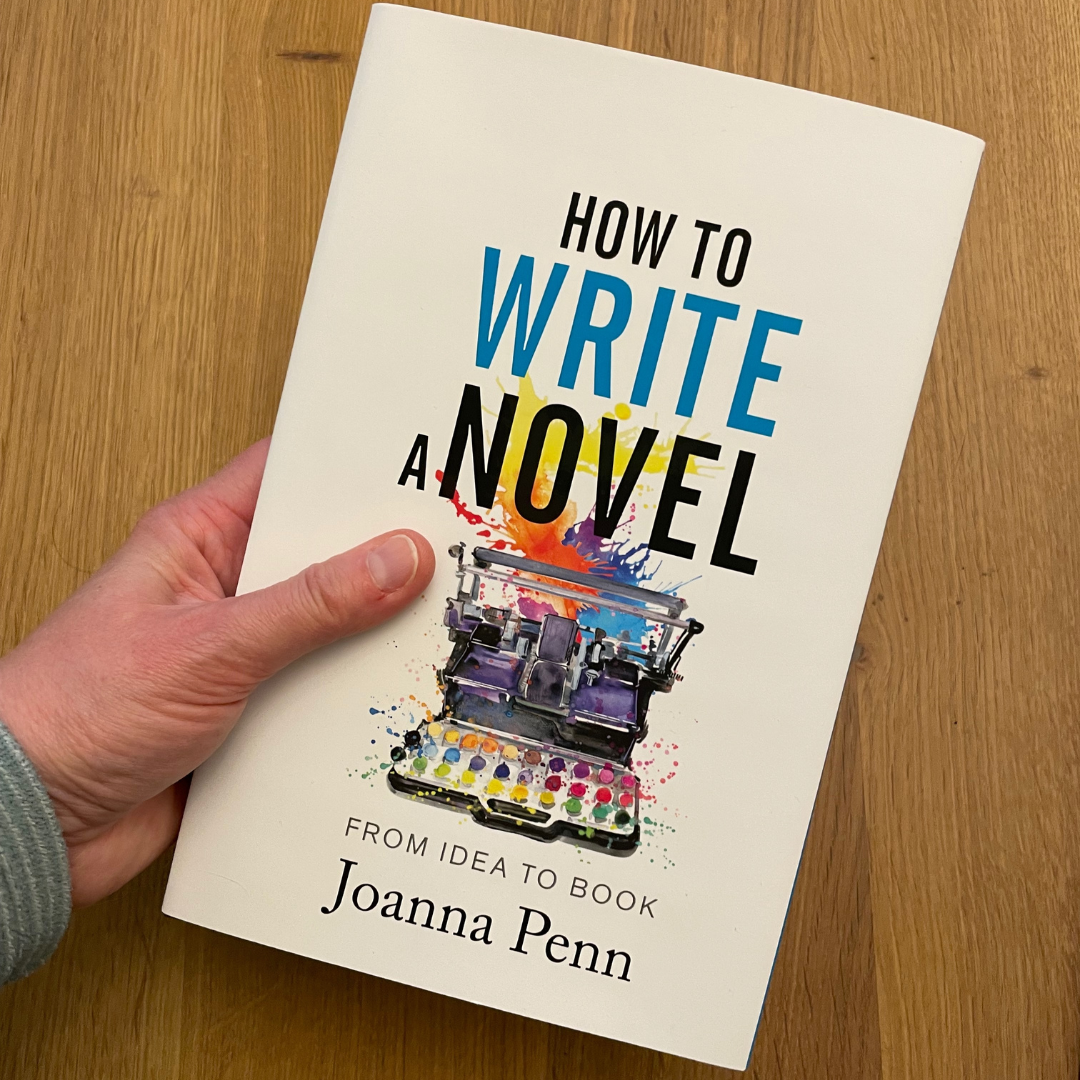
How to Write a Novel: How to find and capture ideas
When authors are interviewed, one question comes up over and over again: “Where do you get your ideas?”
Once you have trained the idea muscle, ideas are abundant — you will have thousands of them. The problem is deciding which to pay attention to since you don’t have the time to turn all of them into stories.
But I still remember when I started out as a writer and this question was one I fixated on, too.
At the time, I wrote technical specifications for programmers in my IT consulting day job. I didn’t feel creative at all. I couldn’t understand where story ideas came from. It seemed as if they happened by magic to other people, but remained out of my reach.
It took time to retrain my mind and open myself up to creativity and ideas. But eventually, they started to flow.
Here are some tips if this is something you struggle with, too.
Recognize your curiosity and lean into it
What catches your attention?
If you’re in a bookstore, which area do you visit? What covers catch your eye? What do you like to read about?
If you’re in a new city, how do you spend your time? If you’re sitting in a cafe, why do you notice some people more than others?
What films or TV shows or documentaries do you watch? What do you take photos of?
What catches your eye and stops you scrolling on social media?
What do you listen to on podcasts or the radio?
We’re surrounded by an overwhelming amount of stimuli — sights and sounds and smells and things happening around us all the time. We can’t take it all in. We have to tune in to specific aspects of the world. We experience life with a filter based on our interests. The trick is to pay more attention to that filter, widening it, leaning into it, or shifting it to find ideas.
I love visiting historical places with religious significance. I love art and architecture with deep cultural meaning; as I explore, I tune into my curiosity and notice questions and ideas as they come, jotting them down in a journal or in my phone.
As an example, we visited Amsterdam for a long weekend one spring. Along with a canal boat trip and a walk in the tulip fields, we also visited the Portuguese Synagogue. It’s a beautiful building with the oldest functioning Jewish library in the world, but it also sparked my curiosity.
Why is there a Portuguese Synagogue in the heart of Amsterdam (which is in the Netherlands, not Portugal)?
What manuscripts might be within the mysterious library?
While browsing the synagogue shop, I picked up a curious nonfiction book, Jewish Pirates of the Caribbean: How a Generation of Swashbuckling Jews Carved Out an Empire in the New World in Their Quest for Treasure, Religious Freedom—and Revenge by Edward Kritzler. I had to buy it! The ideas sparked by that one visit turned into Tree of Life, a modern-day thriller based on the history of the Portuguese empire.
If you can’t identify what you’re curious about right away, don’t worry. It takes practice to recognize it and allow it to emerge, especially if you’ve spent years as an adult pursuing more ‘appropriate’ interests.
We learn to repress our curiosity as we grow up, so think back before real life stopped you doing things for the fun of it.
What were you curious about when you were younger?
What do you like helping your kids or grandkids or other children in your life with?
What are the standout memories of your life?
What topics won’t let you go?
Idea generation is like a muscle. When you visit a gym for the first time, you have to start with tiny weights. Over time, you work up to heavier ones.
Start small by noticing what you’re interested in and lean into those preferences. You will find the practice compounds until, one day, you’ll be struggling with the number of ideas you have!
Go on an Artist’s Date
If you try to create from an empty mind, you will find yourself blocked pretty fast because there’s nothing for your imagination to work with. You need to fill your creative well in order to write.
The idea of the Artist’s Date comes from Julia Cameron’s The Artist’s Way and it’s a staple of my creative practice. I need to consume in order to produce.
Book time out for your creative self and go somewhere that will open your mind and challenge you in a new way. An art gallery, a museum, a seminar, or just time away from the usual routine to read a book or watch a film or whatever your inner artist wants to do.
Go alone so you can tune into your thoughts and preferences rather than what others think. Notice how you feel and consider questions that arise.
I will never forget the visceral feeling in my gut when I walked into the Hunterian Museum at the Royal College of Surgeons in London for the first time. The walls of specimen jars filled with grotesque body parts sparked the idea for my crime thriller Desecration, and now I love visiting anatomy museums when I travel.
Take a notebook on your Artist’s Date and spend time writing. Little notes and impressions, thoughts, and feelings are fine at this stage. You don’t need to produce anything coherent. You’re just filling the well and seeing how it goes. Resist the urge to check email or social media or take yourself out of the experience while you are in it.
When you’re finished, schedule the next one.
“The most creative people I know fill their brains, their idea factories, with as much raw material as they can… The more we increase our inputs, the more we increase possibilities.”
—David duChemin, A Beautiful Anarchy
Notice what fascinates you about people
You need characters for your stories, so start to consider what fascinates you about people.
What job do they have? Why do they do it? What choices have they made? What are their interesting hobbies? How do they speak? What’s their family like? How does their experience impact their life now?
Sometimes a character alone will inspire an idea. My short story, Blood, Sweat, and Flame, was inspired by the Netflix series Blown Away. It’s set in a glassblowing hotshop and explores how far a glass artist might go to win critical acclaim for their work.
But sometimes, it’s just about a vague idea that something might be interesting. I’m reading about war photographers and journalists at the moment, those professionals who choose to put themselves in physical danger for a story. What drives them to go back even after a near death experience? I’ve read novels, memoirs, and nonfiction about war photographers, but as I write this, I don’t have a story for the emerging character. I’m just filling the creative well and I trust that the story will arrive at some point. Maybe even by the time you read this.
Notice interesting objects and artifacts
In thrillers, action adventure, and some mysteries, there is often a particular object that the characters search for — nicknamed the MacGuffin — and it’s intriguing enough to become the center of the story. The Holy Grail and the Ark of the Covenant are two MacGuffins that endure in stories through countless re-tellings.
I use MacGuffins in my ARKANE thrillers and they often inspire a story. On a trip to Budapest, we visited the Basilica to see the thousand-year-old mummified hand of Saint István. Not many countries have a mummified hand at the heart of their most famous cathedral! As I stood there gazing at it, I wondered what would happen if someone stole this important religious and national symbol? Who would do such a thing and why?
When we visited Dohány Street Synagogue later that weekend, and learned what happened to the Jews of the area, I considered how history might repeat itself and that became the seed of One Day in Budapest.
Use real events and places to spark ideas
Best friends Ben and Lucy are sailing on the ocean beyond Christchurch, New Zealand. They look to the horizon and see a huge tidal wave bearing down on them…
This scene opens Risen Gods, my dark fantasy novel co-written with J. Thorn, inspired by the real events of the 2011 Christchurch earthquake.
New Zealand is on the Pacific Rim of Fire and has a lot of volcanic activity. I lived there for several years and I’m a New Zealand citizen, so I know the country well.
I wondered what would happen if you lived through one of these natural disasters, then considered a dark fantasy spin on the idea. What if the gods of New Zealand decided to take their land back from the humans who abused it so much?
Don’t worry if a historical event has been used before as new research emerges all the time, and your story will always have your take on the topic.
There are countless novels based on Nazi Germany. All have the same underlying aspect of the horrors of the Holocaust, but the books end up completely different. Compare Schindler’s Ark, Sophie’s Choice, and The Man in the High Castle.
Consider ‘What if?’ ideas
“What if” questions are often the basis for books.
The Martian by Andy Weir: What if you were stuck alone on Mars?
Fifty Shades of Grey by E.L. James: What if you met a sexy billionaire who offered you everything you ever wanted in exchange for something unexpected in the bedroom?
The Stand by Stephen King: What if a plague wiped out 99 percent of the population and you were one of the few left?
Consider the ‘what if’ questions behind the books you love; you could answer the same question in a different way in your own story.
Use quotes to spark ideas
The title of my thriller Destroyer of Worlds comes from the quote, “I am become death, destroyer of worlds.”
It’s originally from the Bhagavad Gita, but was also quoted by Oppenheimer after the test of the first atomic bomb. It simultaneously encapsulates ideas about Hindu gods and nuclear weapons and sparked a question in my mind. How could a Hindu artifact destroy the world?
I cover research in more detail in the next chapter, but if you write down a quote to use later, put it in quotation marks and attribute it in case you want to use it later.
Tap into themes and issues you care about — but don’t preach
Many authors base their stories on important societal issues and themes that they have a personal connection to.
The Handmaid’s Tale by Margaret Atwood was published in 1985, and I studied it as part of my English literature course in the early ’90s. Its theme of feminism and women’s rights was important back then, but the book was given a new lease of life during the #MeToo era and adapted for a popular TV series. In 2022, the Roe versus Wade ruling on abortion in the USA became a flash point for controversy fifty years after it was first passed. The theme of women’s rights made headlines once more, and of course, has sparked additional important stories.
Different societal issues drive authors to write, depending on their worldview. Is there an issue or cause you feel passionately about? You must decide what’s important enough for you to write a story about, or if you want to keep your stories for entertainment or escape.
Whatever cause you are passionate about, you’re writing a story, not a nonfiction book on the topic or an essay preaching your point of view. Don’t bash the reader over the head with your stance. Tell a story and use your theme to underpin the characters and the plot.
But remember, you do not have to write an important story. You can just write for fun. Readers need that, too. Perhaps now more than ever.
“You are not required to save the world with your creativity. Your art not only doesn’t need to be original… it also doesn’t have to be important.”
—Elizabeth Gilbert, Big Magic
Use ideas from other books, stories, and myths
My short story collection, A Thousand Fiendish Angels, is based on Dante’s Inferno. The digital retailer Kobo commissioned the stories for the launch of Dan Brown’s thriller Inferno in 2014.
Dante’s Inferno is out of copyright, so you can do whatever you like with it. I made notes on the book and copied out lines I liked, words that resonated, and character ideas. For example, in my story, the Minotaur becomes a depraved ruler of the post-apocalyptic city of Dis.
Many writers use the classics for inspiration. For example, Madeline Miller has written fictional accounts of Circe, Achilles, and other characters from Greek myth. The Hunger Games by Suzanne Collins was inspired by the myth of Theseus and the Minotaur, in which tributes were offered to the monster every year.
If you take notes from other books, don’t copy out entire passages word-for-word because you may end up accidentally plagiarizing. But certainly you can get ideas from other books, then spin off and write your own version.
Mine your own depths
Joseph Campbell said, “It is by going down into the abyss that we recover the treasures of life.” Oprah Winfrey said, “Turn your wounds into wisdom.”
Your experience and life history, your relationships, your fears and joys can all find their way into your stories.
Your questions can, too.
My ARKANE thrillers are underpinned by the question of whether God exists and what lies beyond this physical realm. I’m not religious, but I am a seeker and I have had spiritual experiences at different places and at different times that I weave into my stories.
You will find gold in your own deeper side that you can excavate for your creative journey.
* * *
So now you have a myriad of ideas, what do you do with them?
Capture your ideas somehow
Whether you outline or you’re a discovery writer, you will end up with all kinds of notes and ideas and photos and scraps of paper and computer files, as well as website links, books, and other inspirational odds and ends. You need a way to keep track of everything, as you cannot keep it all in your head.
Some authors don’t write their ideas down, trusting they will re-emerge if they are important enough. But most find a method of recording them somehow.
I use the Things app on my phone to capture ideas on the go. I use journals for research trips and taking notes on books. (Leuchtturm or Moleskine, A5, plain paper, with covers in teal, turquoise, or scarlet, if you’re a journal geek like me!)
I use Scrivener to gather notes together once I’m further into a project. Others use programs such as Evernote or Notion. Some use index cards or physical boxes and folders.
There are no rules. Do whatever works for you.
I find myself browsing through these idea archives sometimes, digging out old ideas and combining them with new ones for stories. It’s always interesting to revisit my past self and wonder what I was thinking at the time.
What if someone steals my idea?
This is a common worry for new authors, but the truth is that ideas are so abundant as to be worthless. When you fix an idea into words, it transforms into something separate from the idea itself. The same idea will turn into different stories when written by a different author. Execution is everything.
You might have an amazing idea, but it will float away into the ether unless you turn it into a book readers might love. That said, there will always be more ideas, so don’t obsess about a particular one. Keep filling the creative well, keep writing, and more will come.
What if my idea has been written before?
There will always be universal story elements and emotions that resonate with readers. Consider Romeo and Juliet and Titanic. No one would say these two are the same, and yet, at heart, they are classic love stories featuring characters from different worlds with a tragic ending.
Originality and creativity come from combining multiple influences into something new, and adding your experience into the expression of an idea so it becomes something fresh.
How do I choose which idea to work on?
Once you tune into your curiosity, you will come up against the ‘problem’ of having too many ideas.
I have hundreds of notes in my ideas folder, but some keep coming back. Those that nudge at my mind are the ones I investigate further. Some are scraps that might turn into a short story, and others are seed ideas that could span a whole series.
Usually something happens to push me in a specific direction. I do a research trip that helps me settle on one idea over another, or I just have an intuitive sense of the next story.
“Good ideas are those with which you most deeply connect. In deciding which story to write about, follow your intuitive feelings.”
—Jewell Parker Rhodes, Free Within Ourselves
Questions:
• Are you brimming with story ideas already? Where do they come from? (If you aren’t, don’t worry!)
• How can you recognize your curiosity and lean into it?
• What could you do for an Artist’s Date? Book one into your schedule soon.
• What fascinates you about people? How might those things turn into facets of character?
• What objects and artifacts interest you?
• What real events and places spark your curiosity?
• Consider the ‘what if’ questions behind the books you love, or other well-known books. How could you spin those in a new direction for your story?
• What quotes resonate with you?
• What themes and societal issues do you care about?
• What other books or myths or stories spark ideas for you?
• What aspects of your life could you mine for ideas?
• How will you capture your ideas?
• Are you worried about whether your ideas are unoriginal, or that someone will steal your ideas? If yes, how can you ease those fears?
• How will you choose which idea to work on?
Resources:
• The Artist’s Way: A Spiritual Path to Higher Creativity — Julia Cameron
• A Beautiful Anarchy: When the Life Creative Becomes the Life Created — David duChemin
• Big Magic: Creative Living Beyond Fear — Elizabeth Gilbert
• Free Within Ourselves: Fiction Lessons for Black Authors — Jewell Parker Rhodes
“Do you have the courage to bring forth the treasures that are in you?”
—Elizabeth Gilbert, Big Magic