
How to Make a Living With Your Writing: The transition to making a living with your writing
“We discover the possibilities by doing, by trying new activities, building new networks, finding new role models. We learn who we are in practice, not in theory.”
David Epstein, Range: Why Generalists Triumph in a Specialized World
This book has given you lots of options on how to make a living from your writing, and I hope you’re inspired by the possibilities. But I don’t recommend that you quit your job right away, because these options take time to build.
Here are some manageable steps for how you can transition to making a living from your writing, or build up more income streams on the side while maintaining your day job, as I did for the first five years of my writing career.
(1) Decide on your focus
Don’t try to do everything at once!
Before you jump into the practical steps, spend some time considering your definition of success, what you want to create and how you want to make a living with your writing, as well as what might fit into your lifestyle.
The questions in each chapter might help you to figure out which direction to take. You can find a consolidated list in Appendix 3 and you can download them at TheCreativePenn.com/makealivingdownload
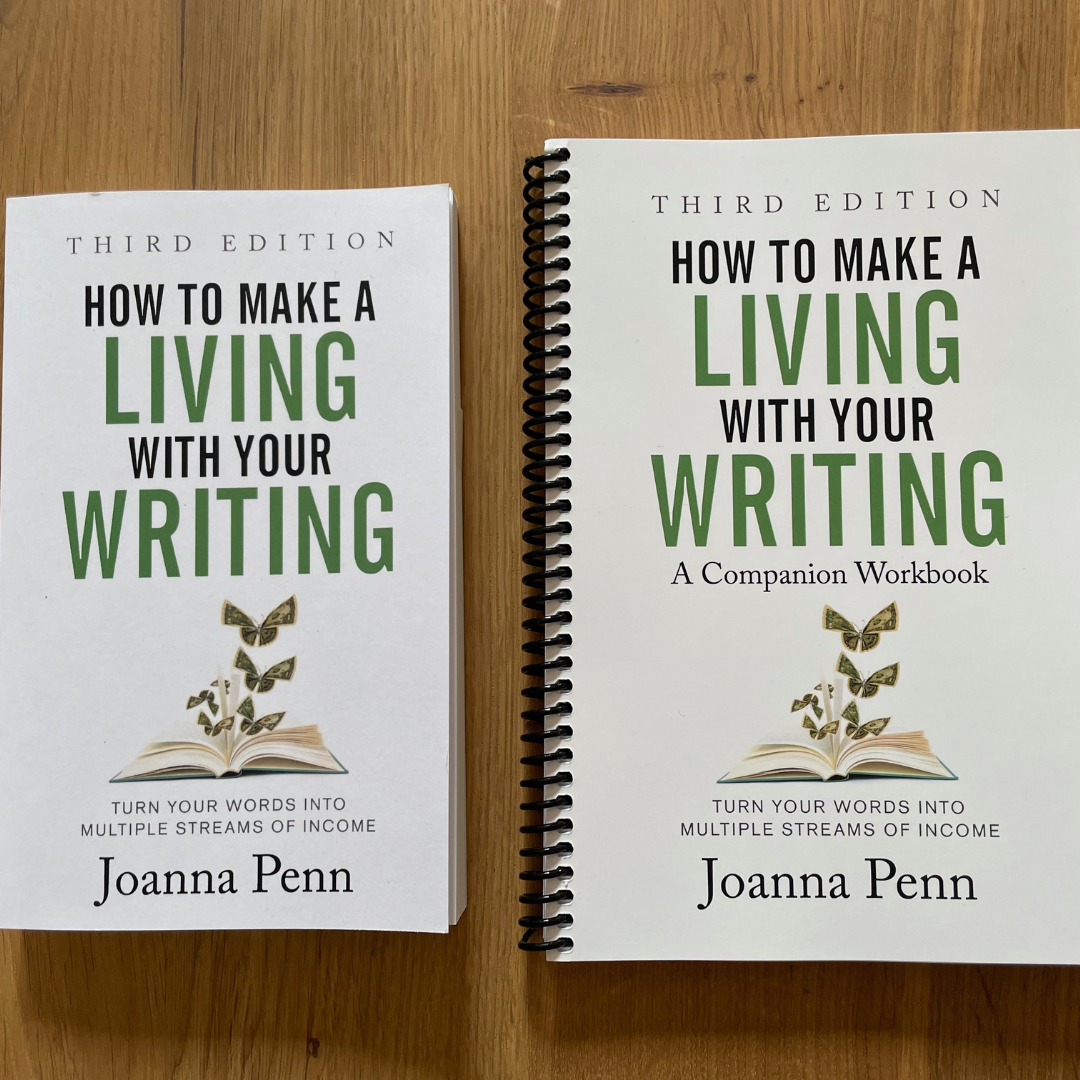
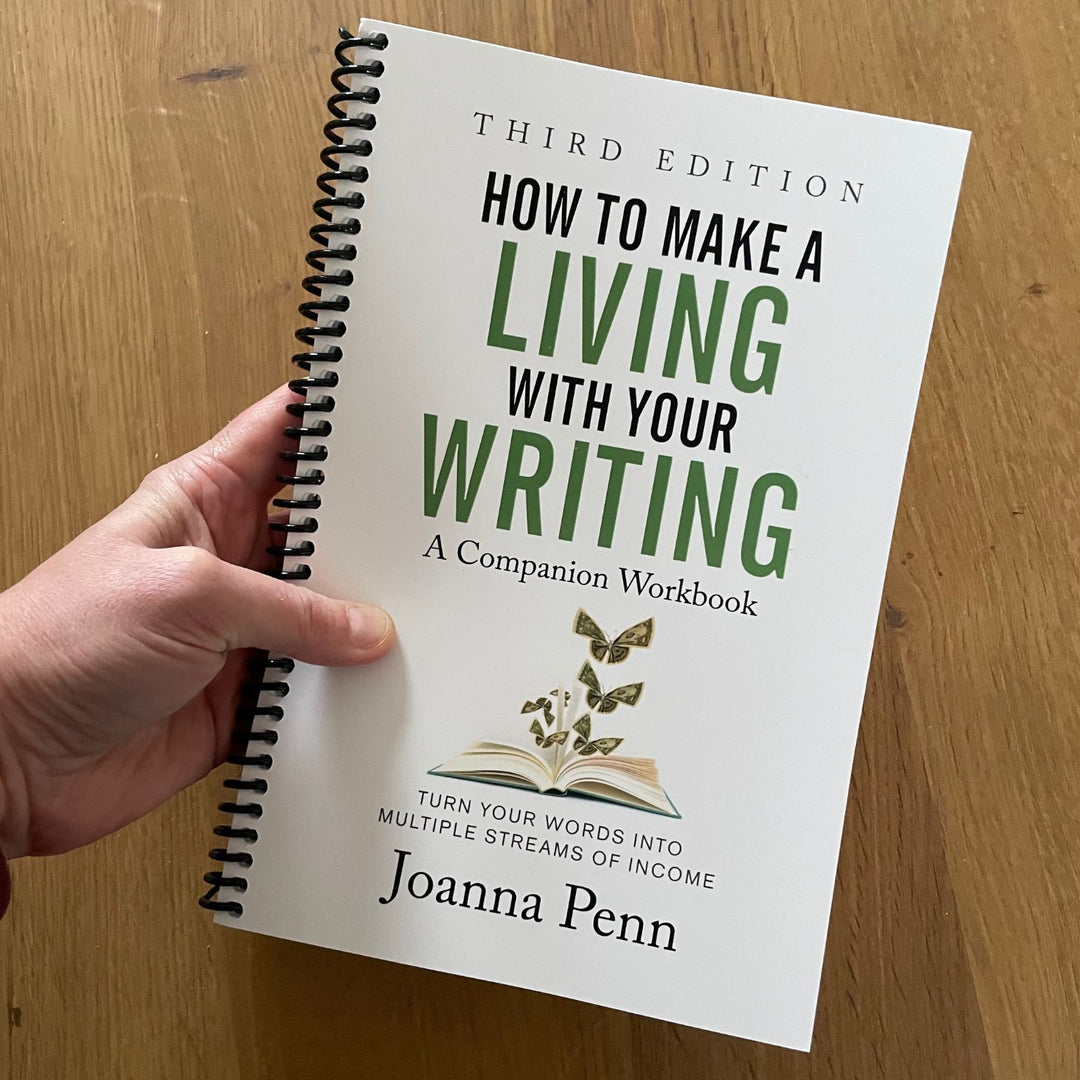
There’s also a Companion Workbook available in print with all the questions so you can write in that if you prefer.
Follow your curiosity and enthusiasm. Which areas spark the most ideas?
Ignore the rest for now.
You also need to find what suits you as a creative personality. Some authors find great success focusing on only one thing, for example, writing and publishing in the same genre. If that satisfies you, it’s a fantastic way to make a living with your writing — but it’s not for everyone.
I’m a multi-passionate creator. My fiction is cross-genre and I love podcasting and audio as a way to express another aspect of my creativity. I enjoy helping writers with my non-fiction, and I love having multiple streams of income. It enables me to be independent and financially secure in a fast-changing world.
You need to choose your focus based on what you want to write and how you want to make a living.
Romance author Sally Rose says, “Decide what YOU love and really want to do, then stay focused and avoid shiny object syndrome.
It’s so easy to get distracted by ‘all the things’ when reading what other authors are doing, especially when they’re posting big success stories. It’s caused me to second guess my plans (repeatedly) and skip around on lots of different ideas when I should have stayed focused on building momentum.
Lesson learned.
Now I keep my eyes on my own paper and I’m working toward my own goal which makes me much happier.”
(2) Find people to model
When I decided to leave my job and become an author entrepreneur over a decade ago, I knew it was possible because I could see others who were living the way I wanted to. Those role models made it possible to believe that I could do it too, and I still have people I follow for that reason.
Find people who make an income doing what you want to do. Read their books and their blogs. Buy their courses. You might even be able to pay for consulting. You could also email them, but respect their time and only ask intelligent questions after you’ve been through all of their publicly available material.
You might find your role models across different parts of the industry, as I have. For example, writing craft from one author, blogging and podcasting from another, and book sales from someone else again. This is a great way to put together a creative business that really works for your situation.
Curate the voices you listen to with care along the way. Is their advice relevant for the direction you want to go?
For example, a traditionally published author who started out twenty years ago will have a different view of the publishing industry to an indie author making money online right now. An editor in a publishing house on a fixed salary can tell you what their imprint wants to publish, but they can’t tell you how to make multiple streams of income from your intellectual property assets.
Your role models will change over time as you grow in experience and confidence, and perhaps you will even be a role model for others in the future.
(3) Stop overthinking. Take the first step.
If you want to make a living with your writing, then you need to put your words into the world. Whatever direction you choose, you can take the first step with something small, but you need to take it.
Think about skiing down a steep hill.
You don’t go in a straight line from top to bottom — you would quickly crash and burn!
You zigzag down, and sometimes you won’t feel like you’re making any progress at all. But you’ll speed up as you gain experience, and you’ll soon be having fun on the advanced slopes. It just takes time and practice.
You also need to be moving in order to change direction, and that’s a key principle for your writing too. Reading books and taking courses are worthwhile, but you will progress more quickly if you write words, work with professional editors, and play with the available tools.
One day of practical experience can propel you forward far more quickly than trying to learn without doing. Like skiing, you need to get out there and try it. Fall down, get up again, and improve with experience.
If you don’t already make some income from your writing, then get started. Prepare something for sale and actually sell it. Making that first ten dollars is magical, because if you can make ten, you can make a hundred, or a thousand, and you can do that every month, or even every day.
Start with an ebook or a course or sell your services — anything to prove that you can make some income based on your writing. You will learn by doing and your confidence will grow.
Poker Strategy author Barry Carter advises, “Just start. Put something out there to begin with, learn from it, then make it better. I think the biggest barrier to success is people waiting for permission to publish something.”
Award-winning writer, artist and creativity coach Kaecey McCormick says, “There is an old Chinese proverb: ‘The best time to plant a tree was twenty years ago. The second best time is now.’ Don’t let fear of it being too late to the writing world stop you from starting!
I was afraid I was too old, too late to the game when I started writing professionally, but I did it anyway. I now make more money as a writer than most of my friends who work at traditional jobs.
My next goal is to shift the bulk of my income from freelance writing to income from my books. Sometimes the feeling that I’m too old or that it’s too late comes creeping in, but then I remember the proverb and my previous successes and get back to writing!”
If you’re struggling to get started, set a deadline for yourself and stick it somewhere you will see it every day. Only you can make this happen. How much do you want it?
(4) Expand your streams of income
If you’re already making some money from your writing, then start expanding your possibilities.
Are you leaving money on the table?
For example, if you’re traditionally published in UK/Commonwealth, you could self-publish in the US and other territories. Or, if you have non-fiction books, have you created paperback editions and workbooks? Or could you turn the material into an online course?
What other ideas spark your curiosity? How can you expand into those areas?
You can also increase your income by building your audience. More readers mean more book sales. More traffic to your website means more affiliate income and sales of books and courses. More engaged subscribers to your email list can result in more sales and an ability to sell direct and make higher profits. How could you improve your marketing to make the most of these opportunities?
Focus on one area, learn the tools and technology, then apply them to your creative business, one step at a time.
Rachael Herron, author of thrillers, romance, memoir and non-fiction, says, “Say yes to trying everything. You might be surprised at what you really love doing. Then, when you can afford to, say no to everything except what you love.”
Fantasy and non-fiction author Travis Senzaki says, “Diversifying your income streams is great, but just like advertising, don’t try to do everything at once. Get one income stream going first and when you’re comfortable that you can maintain that, grow another.
For my non-fiction, I started with an advice blog with ads, then added ebooks, print books, then coaching in response to my audience’s needs. My next steps to consider are workbooks, a podcast, and online courses, but I’m not going to take them on all at once! For my fiction, each book, format, and retailer is an income stream. I focus on getting the ebook done first, as the core format, then expand from there.”
As you take each step on the journey, keep focusing on your definition of success.
Fantasy and romance author Clare Sager says, “Don’t compare yourself to others. Only look at how you’re performing now compared to your past self. You might not be making the same as that six-figure author who just posted in a Facebook group, but are your average monthly sales this year higher than they were last year? It might not be sexy, but it is progress.”
(5) Find your tribe
I still remember how lonely I was in the early years of my writing journey. I was living in Brisbane, Australia, working as an IT consultant. I didn’t know any other writers at first and when I eventually found some groups, people looked down on me for self-publishing.
I started podcasting to connect with authors, and then I found virtual friends on Twitter, many of whom are now my friends in real life. It took time, but now I’m part of a thriving community who understand the challenges of writing and creative business.
You need a community of writers who understand the challenges you will face. As much as your family and friends love you, they are not your ideal readers, and they won’t understand the inevitable creative and marketing hurdles we all have to tackle.
You need help and support in the difficult times, and you will also be able to lend a hand to those coming after you. You need people who will support your choices and your definition of success.
There are many organizations for authors and writers, so research the ones that might work for you. I’m a Member of ITW (International Thriller Writers) as well as the Horror Writers Association as my genre-specific groups.
I’m an Advisor and active member of the Alliance of Independent Authors, an international organization for indie-minded creatives, and also a member of the Society of Authors in the UK. I’m part of the Wide for the Win Facebook group, and I follow blogs and podcasts that focus on the empowerment of the creator and a positive growth mindset, which I share on Twitter @thecreativepenn.
Choose the groups that work for the direction you want to take, and curate the voices you hear.
If you’re in a group where people are negative and tear you down, then find another one. There are plenty of wonderful, supportive groups full of empowered creatives with an abundance mindset making money with their writing. You will find your tribe, it just might take a little time.
(6) Plan the transition to writing full time — if you want to make that shift
You certainly don’t need to be a full-time writer to make money from your words, and in fact, many people enjoy their jobs and write as a side hustle. This takes the pressure off making an income with your art.
But if you want to go full time, as I did over a decade ago, then it can be done. But remember, it’s more of a slow growth curve than an immediate shift.
I started writing in 2006 and it took me five years of building my author business on the side before I could leave my day job in 2011. We also sold our house, downsized and paid off all our debts as well as saving six months’ income in case I didn’t make any money at all. It took another four years before my writing business income exceeded my old day job.
If you want to follow the same path, start by planning to replace 10% of your monthly income with writing. Write down what that is for you.
Now do some sums.
If you can make $3 profit from the sale of a self-published book, how many books do you need to sell in a month to meet your target?
It will be difficult if you only have one book, but what if you have five books? What if you add some of the other streams of income covered in this book?
Once you’re making 10%, then you can decide on your next step. You can find more detail on taking your author career to the next level in Your Author Business Plan.
Over the years since I went full time, I have repeated the same pattern: I write and edit my words, I continue to learn about the craft and creative business — and importantly; I put that knowledge into action. I’ve made a lot of mistakes, but I keep moving forward. I love my creative career and if you want to take this path, it’s definitely possible.
As historical fiction author Kristin Gleeson says, “Approach it like a business but with joy.”
Questions:
• Do you want to make a living with your writing? Or make some money on the side of your day job? What are your reasons for this?
• Which areas spark the most ideas? What are you curious and/or enthusiastic about trying?
• What will you focus on first?
• What suits you as a creative personality?
• Who are your role models? What specifically do you want to model from them? Or how will you find a role model, if you don’t have one yet?
• Why is skiing a good metaphor for making a living with your writing?
• If you’re not already making any money from your writing, how will you make that first ten dollars?
• Have you set a deadline and written it down so you can see it every day?
• How much do you want this?
• If you’ve started to make some money, how can you expand your streams of income even further?
• Do you have a supportive community of writers who you learn from and can encourage and help you along the way? If not, how can you find them?
• What is 10% of your monthly income? How could you make that from your writing?
• How could you take the next step in the transition to making a living with your writing?
Resources:
• Your Author Business Plan: Take Your Author Career to the Next Level — Joanna Penn
• Range: Why Generalists Triumph in a Specialized World — David Epstein
• Consolidated question list in Appendix 3 and download — TheCreativePenn.com/makealivingdownload
• Companion print workbook with all the questions — www.TheCreativePenn.com/makealivingworkbook