
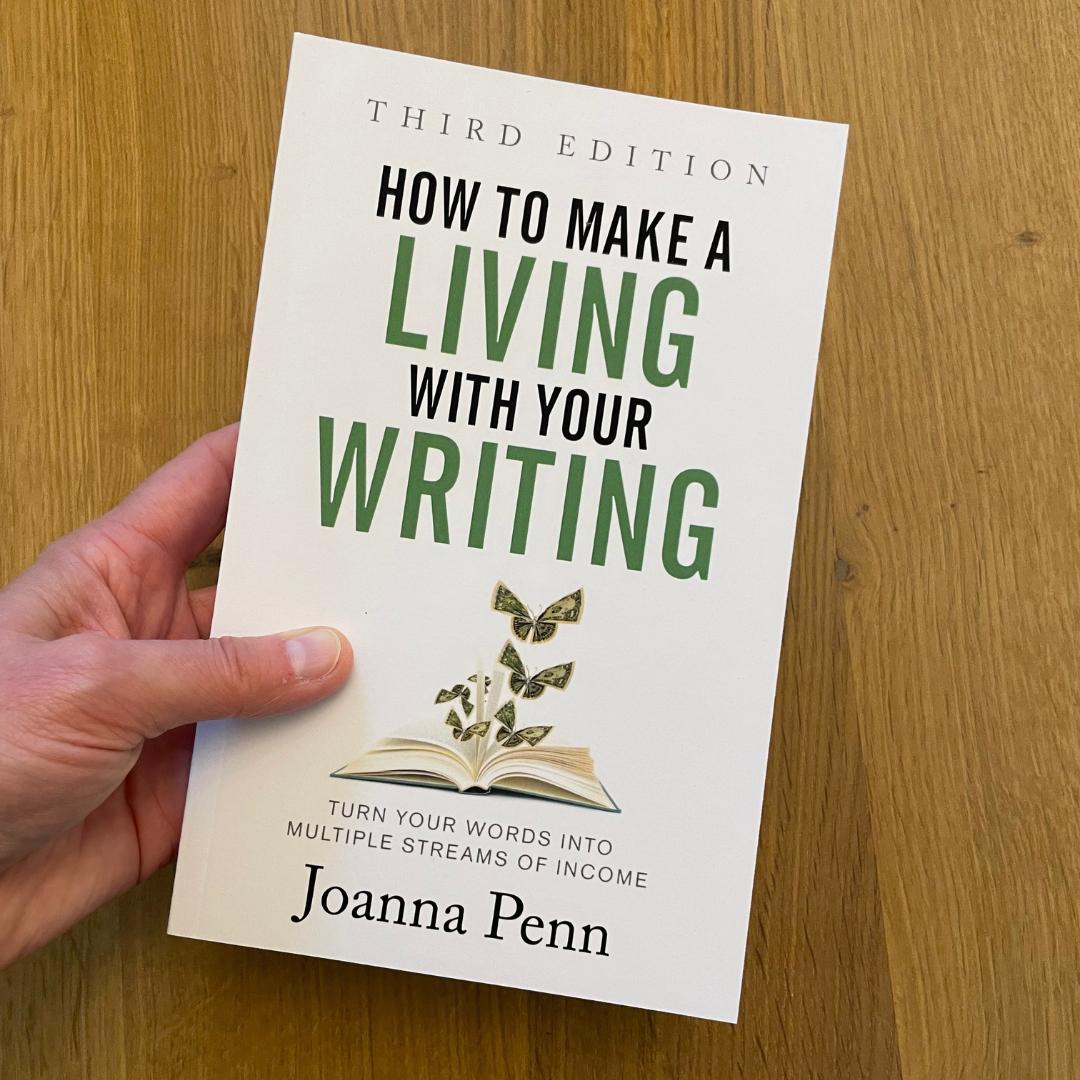
How to Make a Living With Your Writing: Physical products and merchandise
“If someone likes the story you’re telling, likes it enough to become a fan of it, that person doesn’t just want another book, they also want related products like t-shirts and mugs and stuffed animals, and pretty much anything you can think of.”
Kristine Kathryn Rusch, Rethinking The Writing Business
If you want to run a global, scalable business from a laptop (as I do), it’s much easier to focus on digital products and online services. Physical products are more expensive to create and they require design, manufacturing, storage and shipping. They are difficult to update if there are problems, and it’s much harder to manage refunds.
But people love physical products, and we all buy a lot of them!
They also offer the potential to accelerate brand recognition, bring in other streams of income, and can also be used for marketing.
Of course, we’re not all going to have our characters on everything from lunchboxes to games and theme park rides like Harry Potter, but if you consider that many independent musicians make more from merchandise than they do from music sales and streaming, it’s worth investigating as another stream of income, especially if you enjoy the more visual aspect of the publishing industry.
While product sales and merchandising could expand your reach, they should also make you money. If you attend conventions or conferences, you’ll find tables full of ‘swag,’ bookmarks, notebooks, pens, branded sweets, and postcards. These are for marketing purposes only and they are an expense, not an income stream, so are not considered here.
Options for products and merchandise
The kind of products and/or merchandise you create will depend on your audience, your books, your brand, your business goals — and your imagination!
For non-fiction, you could use your logo, tagline or quotes. For example, I have mugs, bags, stickers and stationery at Society6.com/creativepenn with the word ‘creative’ and the affirmation “I am creative. I am an author,” which I had in my wallet for years before I published my first book.
Author and illustrator, Randall Munroe at XKCD.com offers t-shirts and posters of his art, as well as stickers, mugs, and buttons.
Romance author J.A. Huss includes everything from t-shirts and hoodies, to tote bags, furniture and wall art, phone covers and even a yoga mat featuring her romance cover art and branding from her various series at Society6.com/jahuss
Plush toys are a good option for children’s authors. Wendy H. Jones writes across multiple genres and her children’s book, Bertie the Buffalo, has a matching soft toy of the cute main character.
Peter Ball from Brain Jar Press says, “Writers produce a lot of content by virtue of being writers, and there’s very little thought put into making money out of the bulk of that content. Even something as simple as a particularly pithy tweet that earned a lot of likes might have a second life as a limited run of stickers/keychains/coffee mugs/etc if you’ve got an audience looking for engagement.”
For more ideas, check out Merchandise for Authors by Melissa Addey, which features ideas from authors across multiple genres.
Print-on-demand
While it’s common to use print-on-demand services for books, there are also options for merchandise. Just upload high-resolution images and apply them to various products.
Popular sites include Redbubble, Teespring, Zazzle, and Society6, which offer multiple product types. There are also more specialist sites like Spoonflower for fabric designs. More sites emerge all the time, so do your research and make sure you test the products, as quality may vary.
Custom-made products
Fantasy author Kimberley Ward makes custom jewelry, miniature terrariums, and small sculptures which she sells alongside her books on Etsy at WardsWhimsicalWorks.
She says, “I don’t view it exclusively as merchandise, it’s my escape. I love sculpting and making quirky jewelry. It’s a way that I can remain attached to my growing stories even when I’m not actively writing, and it keeps the imagination flowing. The fact that I can make it tie in with my fantasy novels is an extra win and people can buy and enjoy the products without having to read the books beforehand, plus they can support me and my business through different avenues.
It’s not easy, as it can take a lot of time and energy to maintain, so you need to be dedicated and have a passion for creating.”
Bigger projects and licensing your brand
If you have a significant audience and an idea that they might love, you could use crowdfunding platforms like Kickstarter to raise money for custom design and production. Browse the various categories of Games, Art, Publishing, and more for ideas.
You can also consider licensing your brand to manufacturing and distribution companies to create new products. Traditional publishers do this with their brands, and independent authors are expanding into this area too.
For more detail, read Rethinking The Writing Business by Kristine Kathryn Rusch.
Beware of over-enthusiasm!
It can be tempting to dive into the world of print-on-demand merchandizing, coming up with all kinds of exciting things to sell. But, as with our books, sales depend on marketing.
You will not sell any merchandise if you don’t promote it, so you could create all kinds of things on the print-on-demand sites with nothing to show for your time. If you go ahead with custom product creation, you could also spend too much money and end up out of pocket.
Start small with something you think your audience might buy and use a print-on-demand service to test the market. Only expand into more developed ideas once you have some experience and have done extensive research.
Science fiction and fantasy author Joseph Lallo created fantasy coins and mascot figurines for his fans and has advice for authors who want to create merchandise.
“The high-risk, high-reward option is to produce something distinctive that your readers will connect with and haven’t seen before. Print-On-Demand figurines are possible from places like Shapeways. They have the same pros and cons as print-on-demand t-shirts, but are much more novel and interesting. You’ll likely be paying a digital sculptor a few hundred dollars to produce the file for these.
I commissioned a run of custom metal coins for a fantasy book release from Campaign Coins. They cost less than a dollar to produce and were an easy sell at $5 each, all while weighing just a few ounces and thus cheap to ship. These options almost always have a significant upfront cost, but making them a limited run event and funding them as their own Kickstarter or as a stretch goal to a broader Kickstarter can eliminate these costs and also allow you to precisely predict demand.
Be fully aware of the production challenges before doing this, however. Set expectations for an extended lead-time before production to avoid disappointing or frustrating fans.”
A caution on image use
However you publish, it’s unlikely that you have the right to use your book cover art on merchandise, unless it is specifically listed in your contract with your publisher or your designer.
Most book cover designers use stock art and license images for use on book covers only. Check your contracts before going ahead with any ideas, or commission exclusive art for specific merchandise.
Questions:
• What are the pros and cons of physical products and merchandising? How do these differ from swag?
• What aspects of your books or business might be relevant for products and merchandising?
• What could you create through print-on-demand? What might need to be a bigger project with more funding?
• Do you have the right to use the images related to your books on merchandise?
Resources:
• Merchandise for Authors: Engage Your Readers While Increasing Your Income — Melissa Addey
• Rethinking The Writing Business — Kristine Kathryn Rusch
• Print-on-demand merchandise sites — Redbubble.com, Teespring.com, Zazzle.com, and Society6.com